

Third-party liability
- Required by law
- As long as the registration is in your name
- Suspend the registration when not in use
On the Q2, underwriting is rarely about the car itself, but about who is behind the wheel every day.
This page in another language: Nederlands
Work out for yourself what it would cost.
Enter your details; you will receive a proposal within one working day.
A premium indication, not personal advice. Prefer to talk it through? Call 072 - 509 24 56.
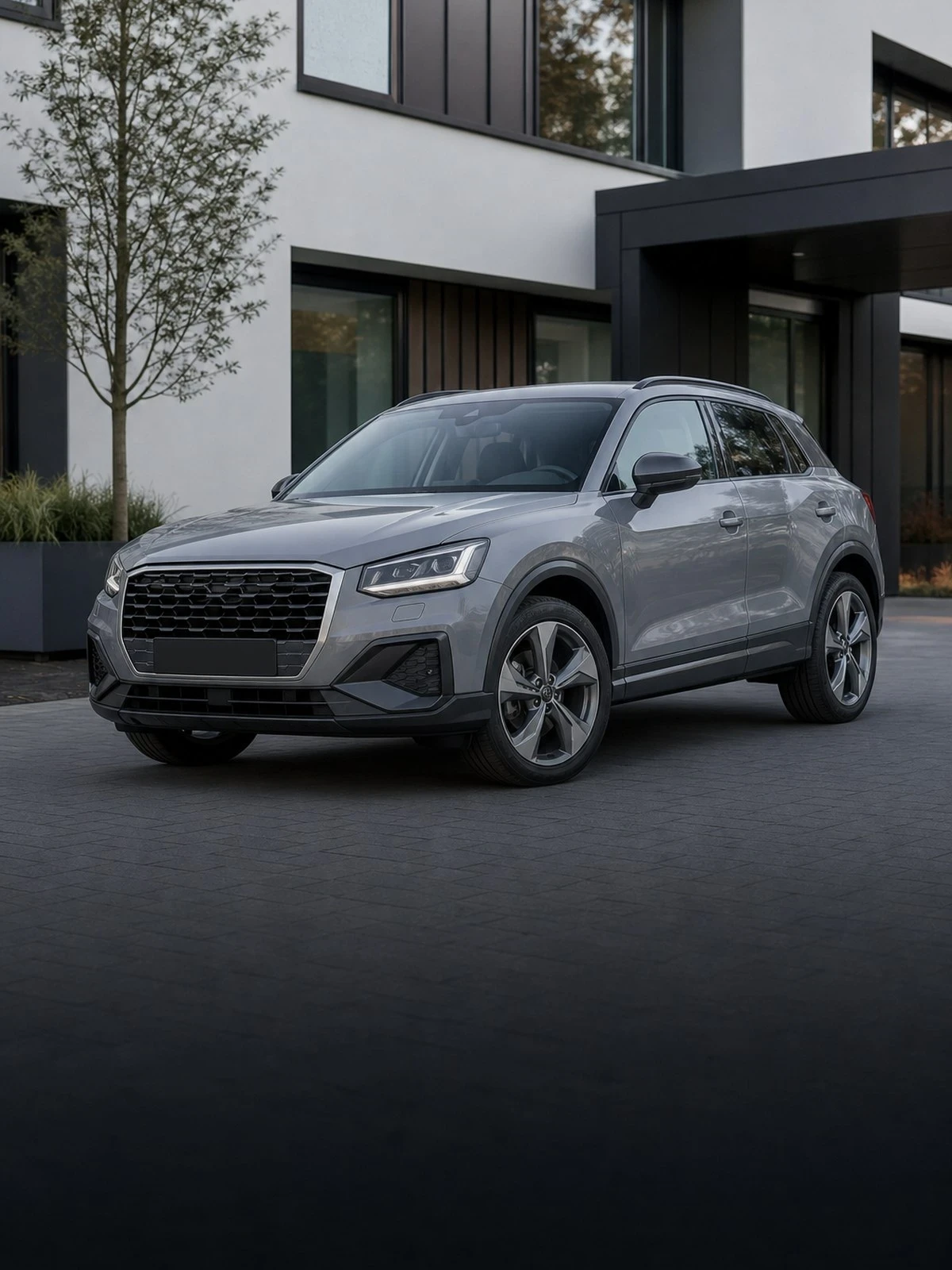
The Q2 is the smallest model in the marque's SUV line and is often bought as a first car, as a second car alongside a larger family car, or as a short-journey car in town. It is precisely those uses that make insurers look closely at the regular driveron this car: the person who drives it most often, not the person the registration is in.
That distinction is no formality. If the policy is in a parent's name while a child living at home uses the car every day, the declaration is incorrect. Article 7:928 DCC requires you to disclose, when you apply, everything relevant to assessing the risk, and the age and year of licence of the regular driver expressly belong to that. If it turns out after a claim that the actual driver is someone else, the insurer can reduce or refuse the payout under Article 7:930 DCC.
Beyond that, the claims pattern of a compact town car is one of many small items: a mirror, a door pillar, the corner of a bumper. Weigh up case by case whether claiming is worthwhile, and see whether the car can go on one policy as a second vehicle, so that the no-claims years built up do not stand still. For how the types of cover are built up, see comprehensive or third-party, fire and theft.
We compare your car insurance across dozens of insurers, explain where the real differences lie, and arrange the switch from start to finish — without you having to chase it yourself.
 Car insurance
 Compare
 Get covered
The structure of the cover in three parts, with an overview per situation below.
Damage you cause to others.
Causes beyond your control.
Including damage you cause yourself.
What is covered
| Situation | Third-party liability | Third-party, fire and theft | Comprehensive |
|---|---|---|---|
| Damage to the other party | Yes | Yes | Yes |
| Theft | No | Yes | Yes |
| Fire and storm | No | Yes | Yes |
| Damage you cause yourself | No | No | Yes |
| Wear and mechanical defects | No | No | No |
| Driving without a valid licence | No | No | No |
This overview is general in nature and is not personal advice. What is actually covered, including exclusions, limits and the excess, is set out in the policy conditions and the insurance card (verzekeringskaart) of the insurer; you receive both before you take out cover. Taking out cover without advice? Then read what execution only means for you.
Insurers weigh these details differently. That is where your saving is.
We look at the terms as well as the premium, and stay your point of contact when there is a claim.
We are not tied to one insurer and compare on the basis of an objective analysis of several companies.
You call or email someone who knows your file. No menu options, no changing call centres.
We cancel your old policy and align the start date, so you are never a day without cover.
We report the claim and monitor how it is handled. In urgent cases you can reach us on the emergency line.
Customers rate our service on four aspects: personal service, service delivery, availability and the outcome. The reviews are collected and published by NH1816 and come from customers who have actually taken out a policy with Finass Advies B.V. or reported a claim.
Four points that make the difference between a policy that pays out and one that does not.
The insurer works from the age, year of licence and home address of the main driver. If that changes, for example because a child goes off to study and takes the car, report it during the term. If you do not, the duty of disclosure under Article 7:928 DCC can be invoked when you claim. Third-party cover continues to apply towards the victim under Article 2 of the Dutch Motor Insurance Liability Act (WAM), but the insurer can recover the payment from you.
A clipped mirror or a scrape along a bollard costs relatively little to repair on this car, but an at-fault claim puts your no-claims years back. So first get a repair estimate and set it against your excess and the loss of a step. Do always report the incident within the period set out in your conditions; Article 7:941 DCC requires you to report in good time, even if you decide not to claim.
Lending the car occasionally to someone you know is usually covered, provided that person holds a valid licence. As soon as payment is involved the picture changes: hire, car sharing for payment and paid passenger transport are excluded on virtually every private policy. The same applies to driving without a valid licence or while disqualified and to driving under the influence. The insurer pays the other party, but then recovers the amount from the driver.
Not covered are wear and mechanical defects, damage from putting in the wrong fuel, and damage arising while the car was hired out or used for driving lessons for payment. Loss of value after a repair is not paid for either. Intent or recklessness on the part of the insured falls under Article 7:952 DCC and leads to a refusal. Personal luggage in the car falls under home contents or travel insurance, not under own-damage cover.
This is what people ask us most.
You may be the registered keeper and the policyholder, but you must declare your child as the main driver. If you do not, the declaration is incorrect and the insurer can rely on Article 7:928 of the Dutch Civil Code when you claim. The consequence is set out in Article 7:930 DCC: a reduced or refused payout. Declaring it costs premium; concealing it costs the cover.
Sometimes, but only on conditions that differ from insurer to insurer: it usually has to involve a family member living at home, the original policy has to be ended and a number of years are deducted. The years transferred are then permanently lost to the person giving them. Ask about this in writing in advance, because correcting it afterwards is almost never possible.
That depends on the age and the finance. If you drive a recent example or a loan or private lease is still running, the finance provider usually requires comprehensive cover. If the car is older and paid for, third-party, fire and theft covers the causes you cannot control: fire, storm, theft and glass damage.
Third-party cover follows the vehicle, so the other party is paid. The claim does count on your policy and costs you no-claims years, even though you were not driving. If the borrower had no valid licence or was under the influence, the insurer pays the other party and then recovers the amount from the driver.
Every situation is different. For these situations we have a separate page.
Request a quote without obligation. We will look at which insurer best matches your activities and your risk.
Prefer to call? 072 - 509 24 56, weekdays 09:00–17:00.
Claim on the road? Emergency line 06 - 55 20 40 72.
Finass Verzekert is a trading name of Finass Advies B.V. We advise on and arrange non-life insurance on the basis of an objective analysis of several insurers, and receive commission for this from the insurer, which is included in the premium. You pay no separate advice fee. Before you take out cover, we establish your wishes and needs.
You will find our licence, KvK and Kifid details and our complaints procedure at the foot of every page.
This page was compiled by Finass Verzekert (LinkedIn). Last updated on .
The information on this page is general in nature and is not personal advice.
Maandag- Vrijdag: 09:00- 17:00
We use cookies and similar technologies to improve your experience on our website.