

Third-party liability
- Compulsory from registration onwards
- Trailer insured while coupled
- Also for private use
You insure a van as a motor vehicle, but what makes it special is the registration, the fitting-out of the load space and the question of who all drives it.
This page in another language: Nederlands
Work out for yourself what it would cost.
Enter your details; you will receive a proposal within one working day.
A premium indication, not personal advice. Prefer to talk it through? Call 072 - 509 24 56.
For the insurer, a van is not a car. The vehicle is heavier, has an enclosed load space, is reversed more often in tight places and is rarely used by a single regular driver. Third-party liability cover is compulsory under Article 2 of the Dutch Motor Insurance Liability Act (WAM); on top of that you choose third-party, fire and theft or comprehensive cover.
The commercial vehicle registration (grijs kenteken) is a tax classification with requirements as to fitting-out and use. For the policy, a different question is decisive: is the vehicle used for business, privately or for both, and do several people drive it? That declaration determines the premium and is checked in the event of a claim.
Two items are not included in the list price and belong on the policy separately: the fitting-out of the load space - racking system, load floor, roof rack, towbar, refrigeration - and everything you carry. Anything lying loose in the load space is load, not vehicle, and falls outside every own-damage cover. For that, look at the insurance for carrying your own goods.
We compare your van insurance across dozens of insurers, explain where the real differences lie, and arrange the switch from start to finish — without you having to chase it yourself.
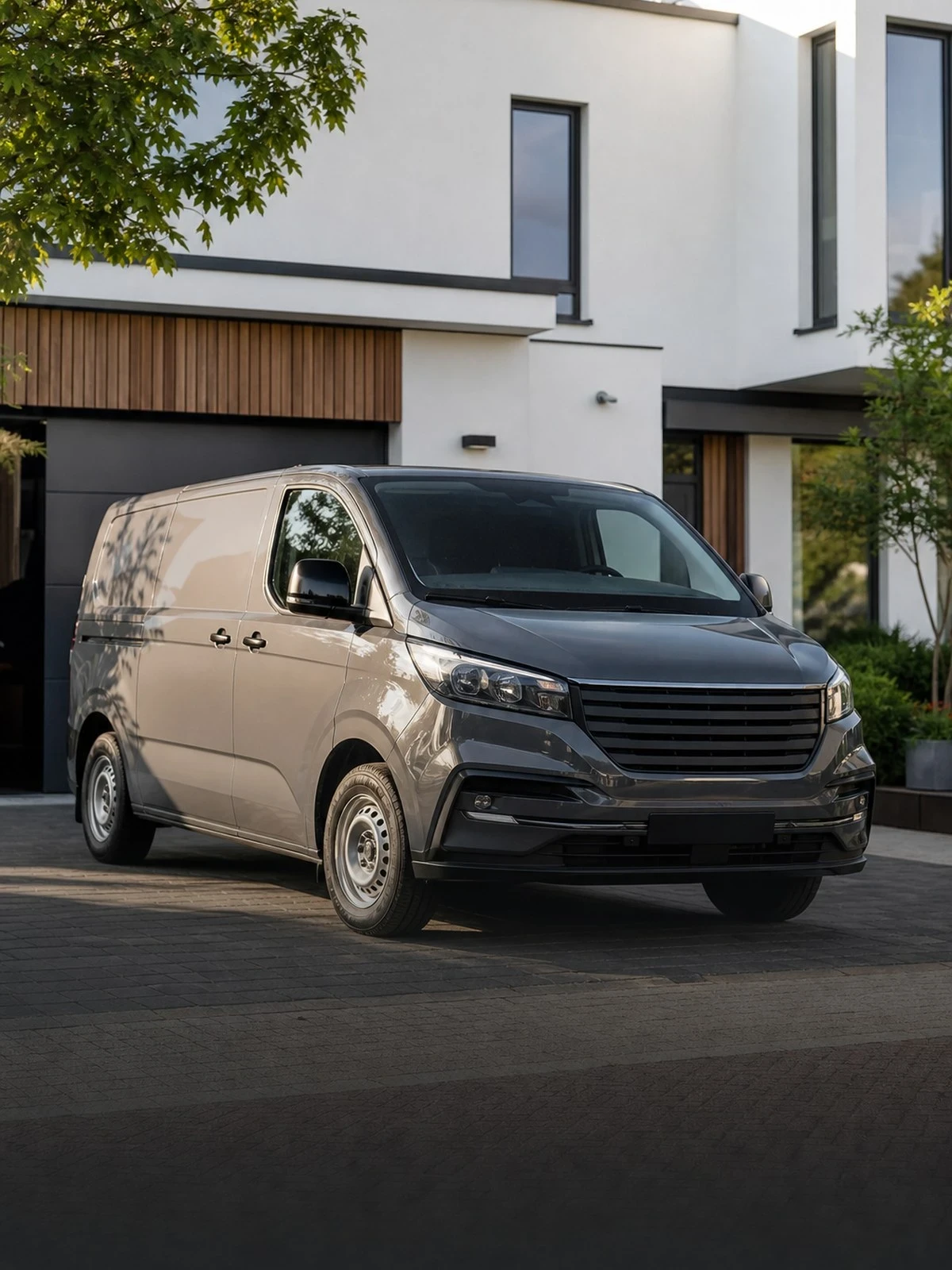 Van insurance
 Compare
 Get covered
The structure of the cover in three parts, with an overview per situation below.
Damage you cause to others with the van.
Theft, break-in damage, fire, storm and glass.
Tools, materials and the fit-out in the load space.
What is covered
| Situation | Third-party liability | Third-party, fire and theft | Comprehensive |
|---|---|---|---|
| Collision with another vehicle | Yes | Yes | Yes |
| Break-in damage to doors and locks | No | Yes | Yes |
| Tools stolen from the load space | No | No | No |
| Reversing into a post yourself | No | No | Yes |
| Racking system and load floor | No | Sometimes | Sometimes |
| Damage to third-party goods during loading and unloading | No | No | No |
This overview is general in nature and is not personal advice. What is actually covered, including exclusions, limits and the excess, is set out in the policy conditions and the insurance card (verzekeringskaart) of the insurer; you receive both before you take out cover. Taking out cover without advice? Then read what execution only means for you.
Insurers weigh these details differently. That is where your saving is.
We look at the terms as well as the premium, and stay your point of contact when there is a claim.
We are not tied to one insurer and compare on the basis of an objective analysis of several companies.
You call or email someone who knows your file. No menu options, no changing call centres.
We cancel your old policy and align the start date, so you are never a day without cover.
We report the claim and monitor how it is handled. In urgent cases you can reach us on the emergency line.
Customers rate our service on four aspects: personal service, service delivery, availability and the outcome. The reviews are collected and published by NH1816 and come from customers who have actually taken out a policy with Finass Advies B.V. or reported a claim.
Four points that make the difference between a policy that pays out and one that does not.
If several members of staff, agency workers or apprentices drive the van, declare this along with ages and driving licence details. A vehicle with a changing circle of drivers is a different risk from a van with a regular driver. Bear in mind your position as an employer as well: for damage a subordinate causes to third parties in the course of his work, you are liable under Article 6:170 of the Dutch Civil Code. That makes the level and the quality of the third-party liability cover a business interest.
If a member of staff is injured in a road accident during work, the motor policy is not the answer. The employer's obligations under Article 7:658 of the Dutch Civil Code and the duty of care of Article 7:611 of the Dutch Civil Code go further: an employer is expected to make proper arrangements for those taking part in traffic. Occupants' insurance or employee injury insurance fills that gap. Without that cover, an injury claim lands directly on your company.
A racking system, wooden load floor, roof rack, towbar, refrigeration or signwriting increases the value of the vehicle but is not included in the list price. If the van is written off without your having declared the fitting-out, only the bare vehicle is paid for while you have to have the fitting-out built again. Record the replacement value of the fitting-out separately on the policy and update it after a new fit-out or a transfer to another van.
The following, among others, are outside the cover: the load and the tools in the load space, even with comprehensive cover; damage to third-party goods during loading and unloading, which belongs with liability and runs into the care, custody and control exclusion there; and hire or transport for payment where this has not been declared. Driving without the right licence category for the permitted weight and damage caused intentionally or through gross fault are also excluded (Article 7:952 of the Dutch Civil Code).
A racking system, load floor, roof rack, towbar or refrigeration increases the value of the vehicle but is not included in the list price. Without a declaration, only the bare vehicle is paid for in the event of a total loss, while the fitting-out easily represents several thousand euros.
If several members of staff drive the van, or you use it for deliveries, that is a different risk from a van used by a self-employed professional. Declare the circle of drivers and the use correctly. This is looked at in the event of a claim, and an incorrect declaration can affect the payout.
This is what people ask us most.
Little directly. A commercial registration is a tax classification with requirements as to the fitting-out of the load space and its use. What counts for the insurer is whether the vehicle is used for business, privately or for both, and who drives it. If that declaration does not match practice, it affects the payout in the event of a claim. See also the page on commercial registrations.
Damage to the vehicle itself generally is, from third-party, fire and theft upwards: forced locks, a buckled sliding door, a damaged door. What has been taken from the load space is not. After repeated break-ins the insurer will impose additional requirements, such as extra locks, a deadlock system or an alarm. Prevention feeds straight through into acceptance here.
Your company. For damage an employee causes to third parties in the course of his work, you are liable as the employer under Article 6:170 of the Dutch Civil Code. The vehicle's third-party liability cover absorbs the road traffic damage. As for damage to the vehicle itself, you can only recover it from the employee in cases of intent or wilful recklessness, as Article 7:661 DCC provides.
To the vehicle itself yes, within the own-damage cover chosen. If in the process you damage a customer's goods or premises where you are unloading, that is liability and not motor damage. Property in your keeping often runs into the care, custody and control exclusion of the public and employers' liability insurance (AVB). Have that point checked explicitly if you regularly unload inside customers' premises.
Every situation is different. For these situations we have a separate page.
A selection. Which insurers appear in your comparison depends on your situation and the cover you choose.
Request a quote without obligation. We will look at which insurer best matches your activities and your risk.
Prefer to call? 072 - 509 24 56, weekdays 09:00–17:00.
Claim on the road? Emergency line 06 - 55 20 40 72.
Finass Verzekert is a trading name of Finass Advies B.V. We advise on and arrange non-life insurance on the basis of an objective analysis of several insurers, and receive commission for this from the insurer, which is included in the premium. You pay no separate advice fee. Before you take out cover, we establish your wishes and needs.
You will find our licence, KvK and Kifid details and our complaints procedure at the foot of every page.
This page was compiled by Finass Verzekert (LinkedIn). Last updated on .
The information on this page is general in nature and is not personal advice.
Maandag- Vrijdag: 09:00- 17:00
We use cookies and similar technologies to improve your experience on our website.