

Third-party liability
- Required by law
- As long as the registration is in your name
- Suspend the registration when not in use
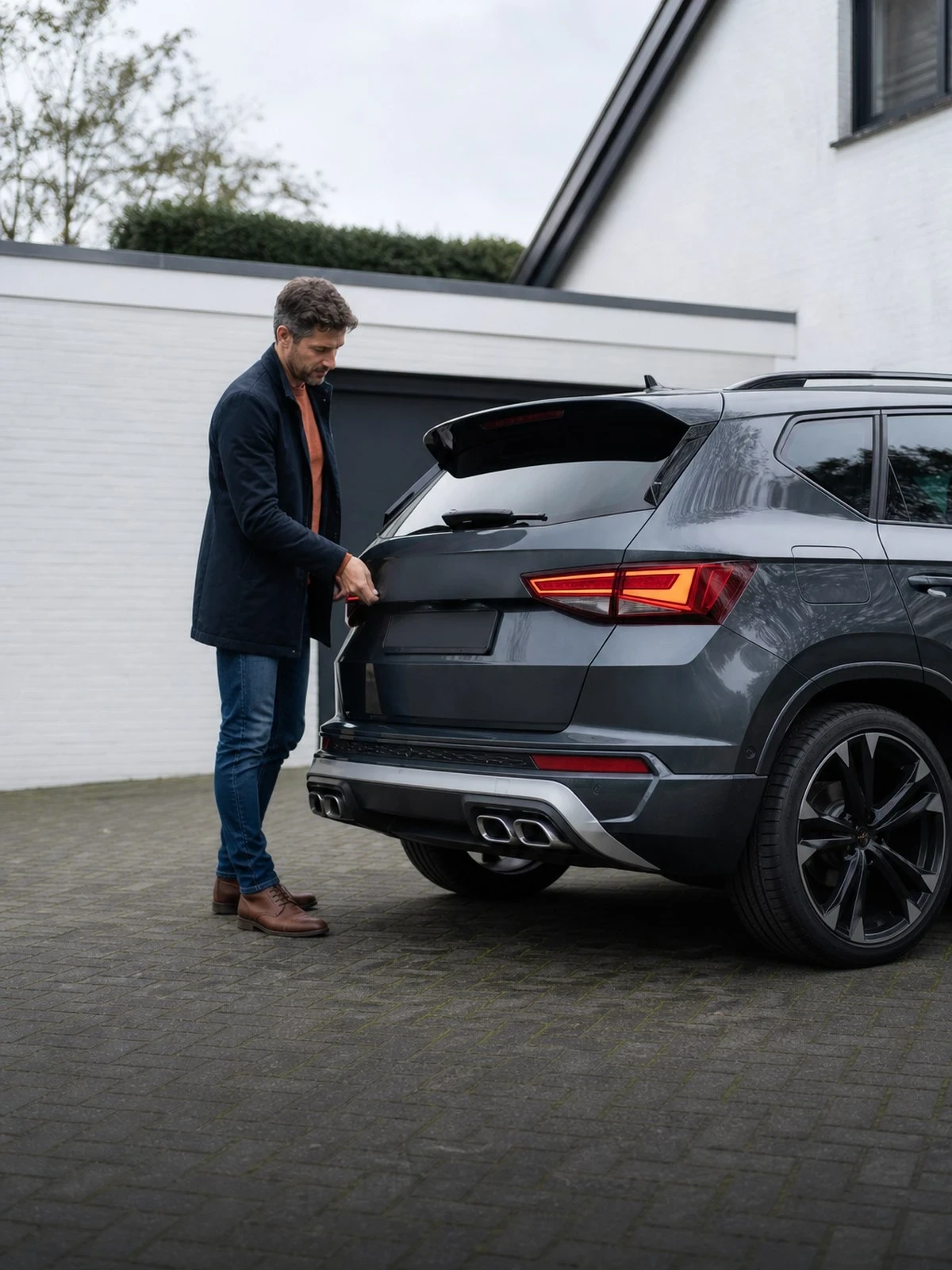
A SEAT is often the first or second car of a young driver, and that is precisely where a claim most often goes wrong on the question of who really drives it.
This page in another language: Nederlands
The calculator and the quote form below are in Dutch. Prefer to do this in English? Email info@finassverzekert.nl or call 072 - 509 24 56 and we will take it from there.
Work out for yourself what it would cost.
Enter your details; you will receive a proposal within one working day.
A premium indication, not personal advice. Prefer to talk it through? Call 072 - 509 24 56.
Models such as the Ibiza, the Arona and the Leon are at the top of the list of cars on which people build up their driving experience. Insurers assess that group strictly: a young driver with no no-claims years pays more premium and often gets a higher excess. That creates the temptation to put the policy in a parent's name.
That arrangement is exactly where things go wrong. The insurer wants to know who the regular driver is, not who pays the premium. If that declaration is wrong, the payment after a claim can be reduced proportionately, and where there is deliberate deception it can even be refused altogether.
The second point to note is modification of the car: lowering, a different exhaust, wider wheels or a software change. For the sportier versions from the same group, the CUPRA page is more relevant; within the same price segment, Opel is a logical comparison.
We compare your car insurance across dozens of insurers, explain where the real differences lie, and arrange the switch from start to finish — without you having to chase it yourself.
 Car insurance
 Compare
 Get covered
The structure of the cover in three parts, with an overview per situation below.
Damage you cause to others.
Causes beyond your control.
Including damage you cause yourself.
What is covered
| Situation | Third-party liability | Third-party, fire and theft | Comprehensive |
|---|---|---|---|
| Damage to the other party | Yes | Yes | Yes |
| Theft | No | Yes | Yes |
| Fire and storm | No | Yes | Yes |
| Damage you cause yourself | No | No | Yes |
| Wear and mechanical defects | No | No | No |
| Driving without a valid licence | No | No | No |
This overview is general in nature and is not personal advice. What is actually covered, including exclusions, limits and the excess, is set out in the policy conditions and the insurance card (verzekeringskaart) of the insurer; you receive both before you take out cover. Taking out cover without advice? Then read what execution only means for you.
Insurers weigh these details differently. That is where your saving is.
We look at the terms as well as the premium, and stay your point of contact when there is a claim.
We are not tied to one insurer and compare on the basis of an objective analysis of several companies.
You call or email someone who knows your file. No menu options, no changing call centres.
We cancel your old policy and align the start date, so you are never a day without cover.
We report the claim and monitor how it is handled. In urgent cases you can reach us on the emergency line.
Customers rate our service on four aspects: personal service, service delivery, availability and the outcome. The reviews are collected and published by NH1816 and come from customers who have actually taken out a policy with Finass Advies B.V. or reported a claim.
Four points that make the difference between a policy that pays out and one that does not.
This is the question most often answered incorrectly on these models. If a parent is named as policyholder and regular driver while a child drives the car every day, the duty of disclosure in Article 7:928 of the Dutch Civil Code has been breached. The insurer may then, under Article 7:930 of the Dutch Civil Code pay in proportion to the premium that matched the actual risk, or pay nothing where there was an intention to mislead.
Modifications to the suspension, exhaust, wheels or engine software have to be right on two counts: the RDW requirements and your insurer. An undeclared increase in power changes the risk and can cost you the cover, even where the damage had nothing to do with that modification. Wheels and audio equipment fitted later also fall under an accessories limit; anything above that you have to declare separately.
The third-party liability cover protects the victim and keeps paying, because that is the essence of the duty to insure under Article 2 of the Dutch Motor Insurance Liability Act (WAM). But the insurer may then recover the amount paid from you in full. Own damage to your own car is not paid in these situations; Article 7:952 of the Dutch Civil Code excludes damage caused by intent or recklessness. The same applies to driving with a suspended or missing licence.
On a first policy you start at the bottom of the bonus-malus ladder. Every claim-free year gains a step, but a single at-fault claim costs several at once. On a small claim it therefore pays to have it worked out in advance whether paying yourself is cheaper than reporting it. Your parents' no-claims years cannot be transferred to you; they belong to their policy and their driver.
This is what people ask us most.
A parent may be the policyholder, but the regular driver has to be the person who in fact drives it most. If that is declared incorrectly and damage occurs, the insurer may reduce the payment to what would have matched the correct premium. Where there is an intention to mislead, the entitlement lapses entirely and the incident is recorded in the incidents register.
Yes. Both the RDW and your insurer want to know that the car differs from the factory specification. An undeclared modification can lead to a reduction or refusal of the payment on a claim, even where the modification had nothing to do with the accident. Report it in writing and keep the confirmation with your policy documents.
No. No-claims years are tied to the driver and to the policy on which they were built up. Many insurers do, however, offer a starting discount for a second car within the same household, or a more favourable starting step for someone who can show they were named on a policy as an additional driver for years. Ask about that expressly when applying.
The victim has their loss paid, because the third-party liability cover may not be raised against third parties. The insurer then recovers the full amount paid from you. Your own own-damage claim is not paid and you also run the risk that the insurance is cancelled, after which taking out a new policy becomes considerably harder.
Every situation is different. For these situations we have a separate page.
Request a quote without obligation. We will look at which insurer best matches your activities and your risk.
Prefer to call? 072 - 509 24 56, weekdays 09:00–17:00.
Claim on the road? Emergency line 06 - 55 20 40 72.
Finass Verzekert is a trading name of Finass Advies B.V. We advise on and arrange non-life insurance on the basis of an objective analysis of several insurers, and receive commission for this from the insurer, which is included in the premium. You pay no separate advice fee. Before you take out cover, we establish your wishes and needs.
You will find our licence, KvK and Kifid details and our complaints procedure at the foot of every page.
This page was compiled by Finass Verzekert (LinkedIn). Last updated on .
The information on this page is general in nature and is not personal advice.
Maandag- Vrijdag: 09:00- 17:00
We use cookies and similar technologies to improve your experience on our website.