

Extended Cover
- Fire, smoke and water
- Theft after forced entry
- Storm and lightning strike
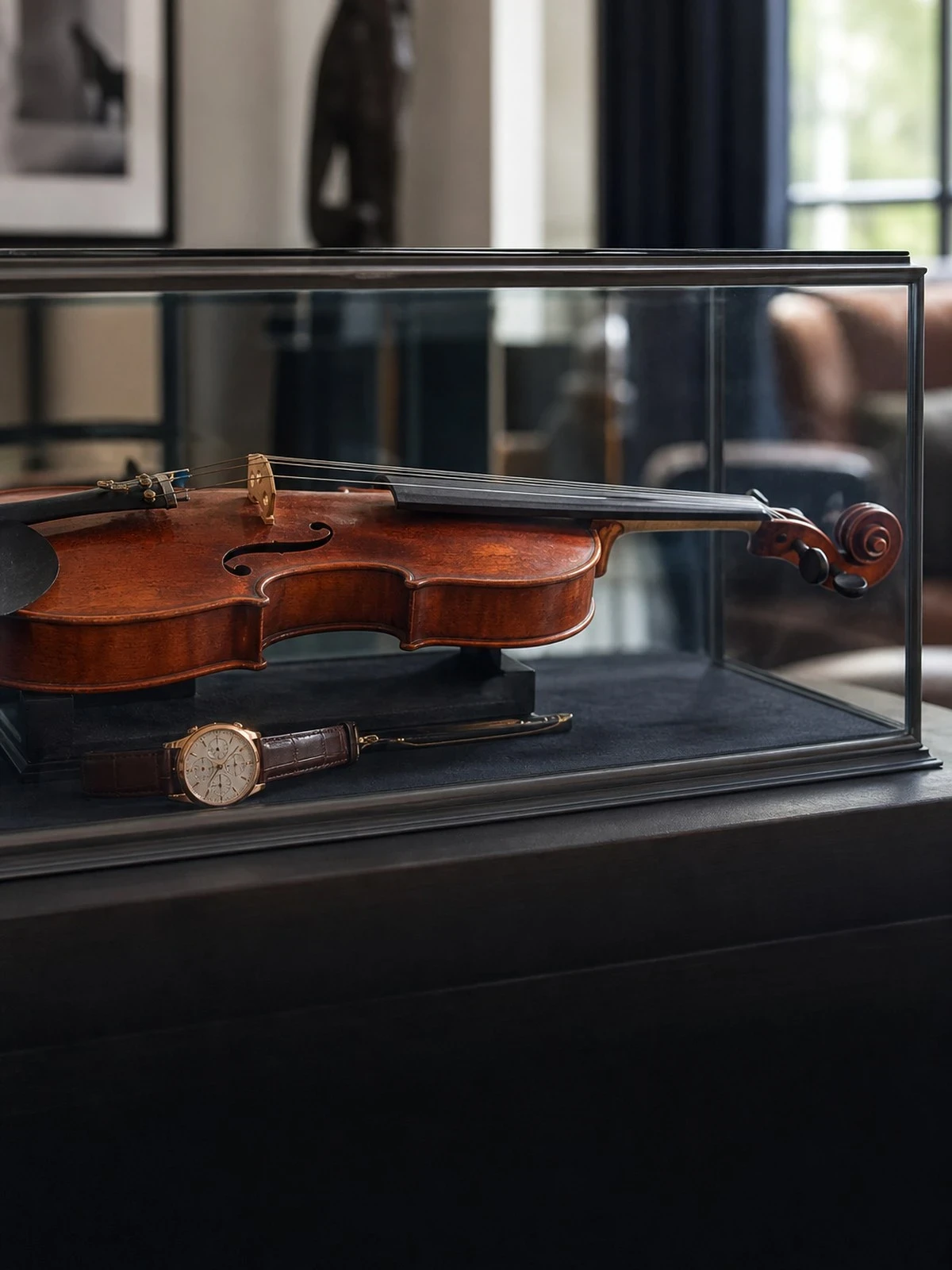
A Collection is more than the sum of its individual pieces: with a Collection the series determines the value, and that is exactly what makes it virtually uninsurable on an ordinary home contents policy.
This page in another language: Dutch
The calculator and the quote form below are in Dutch. Prefer to do this in English? E-mail info@finassesures.nl or call 072 - 509 24 56 and we will take it from there.
Work out for yourself what it would cost.
Enter your details; you will receive a proposal within one working day.
A premium indication, not Personal advice. Prefer to talk it through? Call 072 - 509 24 56.
On-home contents insurance sub-limitapplies to collections: an upper limit for the whole category together, regardless of what is actually there. With art, coins, stamps, books, wine, models or vintage instruments the real value rarely bears comparison with it. A separate Collection policy works the other way round: there is a specification underneath, and that specification is what is insured.
The value of a Collection is also tied to the object and cannot be derived from a purchase invoice. Origin, condition, edition size, provenance and whether a piece is still complete together determine what it is worth. That is why the Collection policy works with a valuation within the meaning of Article 7:960 of the Dutch Civil Code: once a loss occurs, the value established is no longer Open to question, provided the valuation is still valid.
Where a single valuable item is mainly about loss while out and about, a Collection is about the series: one missing piece can depress the value of the rest. That calls for an express series clause.
We compare your Valuables insurance across dozens of insurers, explain where the real differences lie, and arrange the switch from start to finish — without you having to chase it yourself.
 valuables insurance
 Compare
 Get covered
The structure of the cover in three parts, with an overview per Situation below.
The perils that are specifically named.
Also sudden damage from outside.
Items that exceed the sub-limits.
What is covered
| Situation | Extended | Comprehensive |
|---|---|---|
| Fire, smoke and water damage in the Home | Yes | Yes |
| Theft after forced entry | Yes | Yes |
| Knocks and falls at Home | No | Yes |
| Loss or theft away from Home | Provided that | Provided that |
| Damage during transport, repair or exhibition | Provided that | Provided that |
| Wear, shrinkage, damp and insect damage | No | No |
A home contents policy has sub-limits: for jewellery, audiovisual equipment and collections a lower limit applies than for the rest of the contents. If your items exceed that, you assure them separately on a valuables policy, usually on the basis of a valuation (7:960 DCC). Underinsurance leads to a proportionately lower payout.
This overview is general in nature and is not personal advice. What is actually covered, including exclusions, limits and the excess, is set out in the policy conditions and the Insurance card (insurance card) of the insurer; you receive both before you take out Cover. Taking out Cover without advice? Then read what Execution only means for you.
Insurers weigh these details differently. That's where your saving is.
We look at the terms as well as the premium, and stay your point of Contact when there is a claim.
We are not tied to one insurer and Compare on the basis of an objective analysis of several companies.
You call or email someone who knows your file. No menu options, no changing call centers.
We cancel your old policy and align the start date, so you are never a day without Cover.
We report the claim and monitor how it is handled. In urgent cases you can reach us on the emergency line.
Customers rate our service on four aspects: personal service, service delivery, availability and the outcome. The reviews are collected and published by NH1816 and come from customers who have actually taken out a policy with Finass Advies BV or reported a claim.
Four points that make the difference between a policy that pays out and one that does not.
If one piece from a Complete series disappears or is damaged, the value of what remains often falls further than the damaged piece itself was worth. Without an express provision the insurer only pays for that one item. Have it written in that damage to part of a series also brings payment for the loss in value of the whole, or that the insurer takes over the Complete series at the valued amount. That must be on the policy in advance.
A Collection expands. The policy does not do so by itself. New purchases fall outside the specification until you declare them, and many policies allow a notification period of a few weeks with temporary provisional cover up to a limited amount. Keep a running list with the date, purchase price, photograph and provenance, and send it in periodically. Without those records you cannot show what was there after a fire.
If you take pieces to a fair, an exhibition, an auction or a restorer, the Collection leaves the address on which the premium was calculated. Many policies cover that only up to a small part of the sum insured, or only if the transport was reported in advance. Storage with a third party, for example during building work, also falls outside. Arrange in writing for every move what applies before you pack anything.
Not covered are gradual effects: fading from light, warping from dry air, corrosion, mold and the decay of paper or cork. Inherent defect and the error of a restorer you engaged yourself also fall outside the cover, as does a fall in value because the market for your category collapses. If a piece disappears with no identifiable event, that is unexplained disappearance and not an assured event.
This is what people ask us most.
A valuation report is usually valid for three to five years. After that the fixed value lapses and you fall back on the ordinary assessment of value when a loss occurs. In categories whose prices move sharply, the shorter period is wiser. Combine the revaluation with updating your specification, so that additions and rises in value go onto the policy in one go.
Yes. You can have the key pieces specified individually and valued, and bring the rest under an unspecified amount with a maximum per item. That brings the Premium down and keeps the paperwork manageable. Do note that the series clause then only works within the specified part. A series that is half specified leads to argument when a loss occurs.
Then obtaining payment is difficult, even with a policy. With a specified collection policy the list is already with the insurer and that problem is solved. With an unspecified amount you have to make it plausible what was there. So keep photographs, purchase invoices, auction catalogs and certificates away from the premises or in the cloud, because paper kept next to the collection burns with it.
On a Comprehensive collection policy, usually yes: if you drop an item yourself while cleaning or rearranging, that is a sudden event. Where damage arises during treatment, restoration or cleaning by a professional, it falls under that party's professional negligence and not under your policy. Set out who bears which risk before you hand a piece over.
Every Situation is different. For these situations we have a separate page.
Request a Quote without obligation. We will look at which insurer best matches your activities and your risk.
Prefer to call? 072 - 509 24 56, weekdays 09:00–17:00.
Claim on the road? Emergency line 06 - 55 20 40 72.
Finass Verzekert is a trading name of Finass Advies BV We advise on and arrange non-life insurance on the basis of an objective analysis of several insurers, and receive commission for this from the insurer, which is included in the premium. You pay no separate advice fee. Before you take out cover, we establish your wishes and needs.
You will find our license, Chamber of Commerce and Kifid details and our complaints procedure at the foot of every page.
This page was compiled by Finass Insures (LinkedIn). Last updated on .
The information on this page is general in nature and is not Personal advice.
Monday-Friday: 09:00-17:00
We use cookies and similar technologies to improve your experience on our website.