

Ordinary home
- A rebuild value calculator or address scan
- Guarantee against underinsurance
- Extended or comprehensive
- A wide choice of insurers
Not every property fits the same buildings policy. The type of home, the roof covering and the use determine which form of buildings insurance (opstalverzekering) is needed and which insurers will accept the risk.
This page in another language: Nederlands
Work out for yourself what it would cost.
Enter your details; you will receive a proposal within one working day.
A premium indication, not personal advice. Prefer to talk it through? Call 072 - 509 24 56.
All buildings policies share the same core: they cover the building and everything permanently attached to the home, with the rebuild value as the sum insured. The differences lie in how that value is determined, in the acceptance requirements and in the additional conditions the insurer sets for a particular property.
For an ordinary brick home with a tiled roof, a rebuild value calculator or an address scan is usually enough, with guarantee against underinsurance as the result. For a listed building, a thatched roof, a converted farmhouse, a canal house or a villa with an unusual finish, a valuation reportis used, because a standard calculator cannot reliably work out the rebuild costs for that type of property.
The use also determines the form. A a let home, a holiday home or a second home has longer periods without occupation and therefore different conditions. With a flat, the owners' association insures the whole building. See also the page on buildings insurance for the basic cover.
We compare your buildings insurance across dozens of insurers, explain where the real differences lie, and arrange the switch from start to finish — without you having to chase it yourself.
 Buildings insurance
 Compare
 Get covered
In practice, virtually every property falls into one of these three categories.
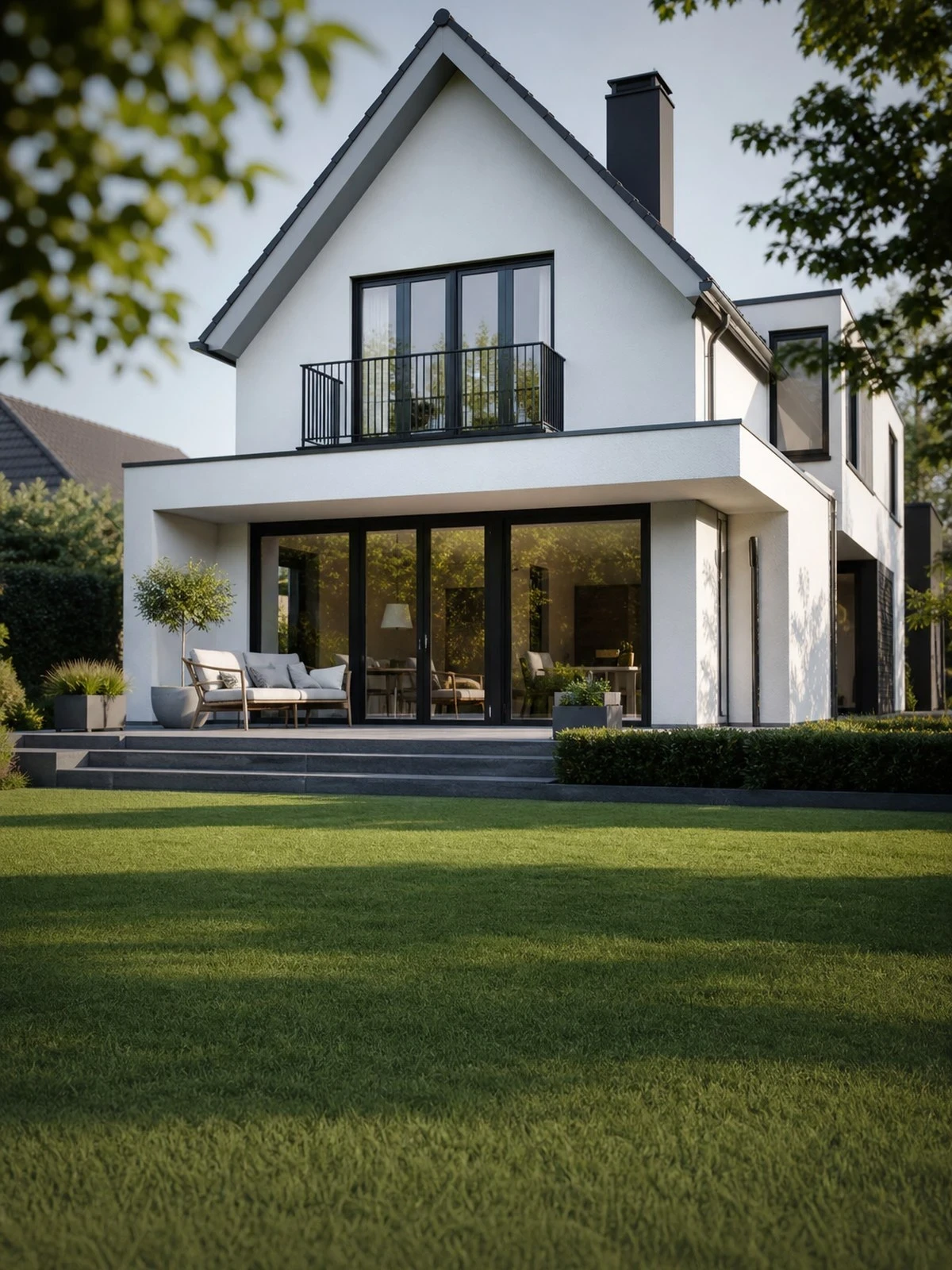
Brick construction with a hard roof covering, owner-occupied.
Listed building, thatched roof, converted farmhouse, canal house, houseboat or villa.
Letting, holiday use, second home, garage unit or shop with living accommodation.
What is covered
| Situation | Home policy | Unusual property |
|---|---|---|
| Sum insured via a rebuild value calculator | Yes | No |
| Sum insured based on a valuation report | Provided that | Yes |
| Additional prevention requirements on acceptance | No | Yes |
| All-risks available as a form of cover | Yes | Provided that |
| Letting or holiday use included | Provided that | Provided that |
| Subsidence, pile rot and deferred maintenance | No | No |
What is actually covered, including exclusions, limits and the excess, is set out in the policy conditions and the insurance card (verzekeringskaart) that you receive before you take out cover.
Insurers weigh these details differently. That is where your saving is.
We look at the terms as well as the premium, and stay your point of contact when there is a claim.
We are not tied to one insurer and compare on the basis of an objective analysis of several companies.
You call or email someone who knows your file. No menu options, no changing call centres.
We cancel your old policy and align the start date, so you are never a day without cover.
We report the claim and monitor how it is handled. In urgent cases you can reach us on the emergency line.
Customers rate our service on four aspects: personal service, service delivery, availability and the outcome. The reviews are collected and published by NH1816 and come from customers who have actually taken out a policy with Finass Advies B.V. or reported a claim.
Where the forms diverge and where they are exactly the same.
A rebuild value calculator works with volume, type of construction and level of finish and works well for average homes. For a listed building, thatched roof or canal house that calculation falls short: craft work, permits and material requirements make rebuilding more expensive. That calls for a valuation. Under Article 7:960 of the Dutch Civil Code, such a report fixes the value for a set period, so that within that period the insurer cannot invoke underinsurance.
With a holiday home or second home there are often requirements around supervision, draining water pipes in winter and the maximum period of non-occupation. For a a let home cover for vandalism and water damage is regularly more limited, and letting by the room is by no means accepted by every insurer on a private policy. A shop with living accommodation or a garage unit sometimes falls under a commercial buildings policy.
Whichever form you choose, the same risks remain outside cover: subsidence, foundation damage and pile rot, deferred maintenance, wear, rust, wood rot and construction or material defects, and damage caused by vermin, woodworm, mould and slowly penetrating damp. Groundwater and flooding caused by the failure of a primary flood defence also fall outside, and intent or recklessness is excluded under Article 7:952 of the Dutch Civil Code.
If you own an apartment right, the owners' association insures the whole building with a single buildings policy. You contribute through the service charge. The division regulations, for which Article 5:112 of the Dutch Civil Code provides the basis, determine what is communal and what is for the individual owner's account. With a dormant VvE there is often no current policy, and then the whole building is uninsured.
This is what people ask us most.
Rebuilding a listed building costs more and takes longer because of material requirements, craft work and permit procedures. A standard rebuild value calculator does not allow for that. Insurers therefore ask for a valuation report and more often set requirements for the chimney, the lightning protection and the electrical installation. The number of insurers that accept this type of property is also smaller.
No. Thatch raises the fire risk and not every insurer accepts it. Those that do usually set requirements for the chimney, the distance to naked flames, the lightning protection and sometimes a fire alarm system. Always state the roof covering on your application. It is one of the details expressly asked about and on which acceptance is based.
Letting changes the risk and should be reported. Where a property is let, cover for vandalism and water damage is often more limited, and letting by the room is by no means accepted by every insurer on a private policy. If you let several homes, a commercial buildings policy or a block policy is usually more practical than separate private policies.
Only if the unit is on the same plot as the home. A garage unit at another location is a separate building and needs its own buildings insurance. The insurer then looks at the use: storing household goods is assessed differently from a workshop or the parking of a car with fuel and batteries.
That is possible with several let homes or with a property portfolio, through a block policy. The advantage is one set of paperwork, one renewal date and usually one set of conditions. All properties do have to meet the same acceptance conditions. A listed building or thatched roof in the portfolio may call for a separate arrangement.
Every situation is different. For these situations we have a separate page.
Request a quote without obligation. We determine the right form and check the rebuild value.
Prefer to call? 072 - 509 24 56, weekdays 09:00–17:00.
Claim on the road? Emergency line 06 - 55 20 40 72.
Finass Verzekert is a trading name of Finass Advies B.V. We advise on and arrange non-life insurance on the basis of an objective analysis of several insurers, and receive commission for this from the insurer, which is included in the premium. You pay no separate advice fee. Before you take out cover, we establish your wishes and needs.
You will find our licence, KvK and Kifid details and our complaints procedure at the foot of every page.
This page was compiled by Finass Verzekert (LinkedIn). Last updated on .
The information on this page is general in nature and is not personal advice.
Maandag- Vrijdag: 09:00- 17:00
We use cookies and similar technologies to improve your experience on our website.