

Liability
- Damage to third parties
- Employers' liability
- Care, custody and control as an extension
What glass cover is worth depends on the glass actually installed: single, insulating, laminated, fire-resisting or a toughened glass frontage at height.
This page in another language: Nederlands
Work out for yourself what it would cost.
Enter your details; you will receive a proposal within one working day.
A premium indication, not personal advice. Prefer to talk it through? Call 072 - 509 24 56.
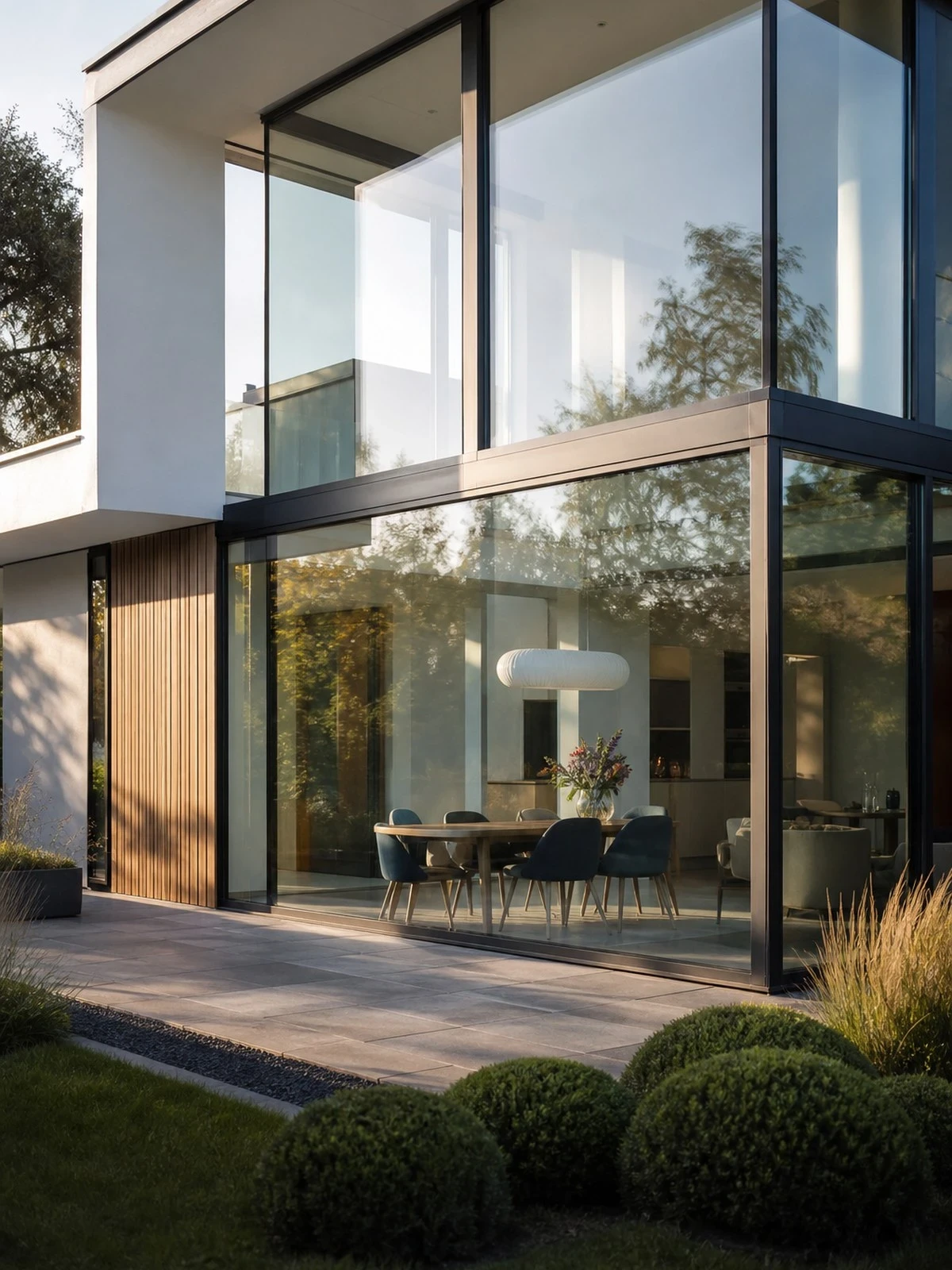
On a glass insurance the subject is panes serving to admit light in the building. That sounds simple, but a building rarely contains just one type of glass. Single glazing in a rear extension, insulating glazing in the window frames, laminated glass in an entrance, fire-resisting glazing in a partition wall and a toughened glass frontage at ground level each have their own repair cost and lead time.
On replacement, the requirement of like-for-like repairapplies: fire-resisting glass must again be fire-resisting, insulating glass again insulating. That is the difference between cover that solves the problem and cover that leaves part of the bill unpaid. Accessibility counts as well: a pane on the fifth floor calls for scaffolding, a cherry picker or a glass vacuum lifter.
This page is about glass as part of the building. On who has to insure it under the lease, and how you arrange that across a whole portfolio, see glass insurance for property investors.
We compare your commercial buildings insurance across dozens of insurers, explain where the real differences lie, and arrange the switch from start to finish — without you having to chase it yourself.
 Commercial buildings insurance
 Compare
 Get covered
The structure of the cover in three parts, with an overview per situation below.
AVB for property damage and injury, BAV for professional errors.
Business contents, goods and lost turnover during downtime.
Sickness absence, accidents and the traffic risk.
What is covered
| Situation | AVB | BAV | Cyber |
|---|---|---|---|
| Injury to a visitor or customer | Yes | No | No |
| Damage to a client's property | Sometimes | No | No |
| Financial loss caused by an advisory or calculation error | No | Yes | No |
| Downtime after a ransomware attack | No | No | Yes |
| Data breach involving personal data | No | Sometimes | Yes |
| Damage to property in your care | No | No | No |
This overview is general in nature and is not personal advice. What is actually covered, including exclusions, limits and the excess, is set out in the policy conditions and the insurance card (verzekeringskaart) of the insurer; you receive both before you take out cover. Taking out cover without advice? Then read what execution only means for you.
Insurers weigh these details differently. That is where your saving is.
We look at the terms as well as the premium, and stay your point of contact when there is a claim.
We are not tied to one insurer and compare on the basis of an objective analysis of several companies.
You call or email someone who knows your file. No menu options, no changing call centres.
We cancel your old policy and align the start date, so you are never a day without cover.
We report the claim and monitor how it is handled. In urgent cases you can reach us on the emergency line.
Customers rate our service on four aspects: personal service, service delivery, availability and the outcome. The reviews are collected and published by NH1816 and come from customers who have actually taken out a policy with Finass Advies B.V. or reported a claim.
Four points that make the difference between a policy that pays out and one that does not.
The cover relates to panes that serve to admit light and are fixed in the building. Outside it fall, usually, mirrors, shower screens, glass table tops, aquarium glass, plastic roof lights and separate panes in outbuildings. Also, stained or leaded glass and etched glass are often limited to the value of ordinary glass. If you want those items covered, they must appear expressly on the policy schedule.
With insulating glazing the edge seal fails over time and moisture forms between the panes. That is not breakage but wear, and it falls outside the cover; glass insurance does not pay for failed double glazing. The same applies to scratches, damaged coatings and glass attacked by cleaning agents or facade cleaning. Only actual breakage or cracking leads to payment.
After a breakage the building is open. Boarding up with sheet material, clearing broken glass and securing the premises until the glazier arrives are cost items that are not included in every policy. The same goes for the use of a cherry picker or scaffolding on tall facades. Check whether these additional costs are covered and up to what limit. On large frontages they mount up quickly.
During conversion work glass breaks more often, and then through the actions of third parties; most policies exclude breakage during construction, demolition or maintenance work from. Glass that breaks while the building stands empty is also often not covered, or covered only on a limited basis. You must report both situations under Article 7:928 DCC; you report a loss without unnecessary delay, as Article 7:941 DCC requires.
This is what people ask us most.
No. Moisture between the panes arises because the edge seal stops doing its job after years. That is wear of the unit and not breakage. Glass insurance pays only for actual breakage or cracking. Replacing failed insulating glazing is therefore maintenance and is for the owner's account.
Usually not. The cover is limited to panes that serve to admit light and are fixed in the building. Mirrors, glass shower screens, table tops and internal glass doors fall outside it, as do plastic roof domes. If you want them included, they have to be described separately on the policy schedule.
Vacancy increases the risk of vandalism and broken windows. Insurers then often restrict cover, or let it lapse entirely after a certain period. So report vacancy before it starts. It is a circumstance that affects the assessment of the risk. We discuss in advance which insurer accepts vacancy and on what conditions.
That depends on the conditions. Emergency boarding, clearing broken glass and the use of a cherry picker or scaffolding are additional costs that are not included in every policy or that have a limit of their own. On large frontages that is a substantial amount. We check this item before you sign.
Every situation is different. For these situations we have a separate page.
Request a quote without obligation. We will look at which insurer best matches your activities and your risk.
Prefer to call? 072 - 509 24 56, weekdays 09:00–17:00.
Claim on the road? Emergency line 06 - 55 20 40 72.
Finass Verzekert is a trading name of Finass Advies B.V. We advise on and arrange non-life insurance on the basis of an objective analysis of several insurers, and receive commission for this from the insurer, which is included in the premium. You pay no separate advice fee. Before you take out cover, we establish your wishes and needs.
You will find our licence, KvK and Kifid details and our complaints procedure at the foot of every page.
This page was compiled by Finass Verzekert (LinkedIn). Last updated on .
The information on this page is general in nature and is not personal advice.
Maandag- Vrijdag: 09:00- 17:00
We use cookies and similar technologies to improve your experience on our website.