

Insurance for an exclusive yacht
On a large yacht, hull damage is rarely the problem. The problem is the crew, the yard period and the question of which sailing area is stated on the policy schedule.
- Several insurers compared objectively
- 9.5 customer rating for a new policy
- AFM licence 12016589
- Personal 072 - 509 24 56, weekdays 9–17
This page in another language: Nederlands
Work out for yourself what it would cost.
Enter your details; you will receive a proposal within one working day.
- We compare the offerings of several insurers
- An adviser checks whether the cover suits your situation
- We arrange the switch, including cancellation
A premium indication, not personal advice. Prefer to talk it through? Call 072 - 509 24 56.
- Independent advice
- Several insurers
- Switching arranged
- Help with claims
In brief
A yacht of any size is not simply a larger sloop. It comes with staff, the vessel crosses national borders, there are tenders and water toys on deck, and it spends periods at a yard for maintenance or conversion. Each of those elements has its own policy provision. The general product explanation can be found at exclusive yacht insurance and at insuring a yacht; what follows deals with the points that actually go wrong in this segment.
Start with the valuation. For a vessel in this class, market value does not work: there is no comparable market on which to base a value, and the fit-out is almost always bespoke. A valuation report from a recognised expert fixes the value in advance, including navigation electronics, tenders and equipment added later. Article 7:960 of the Dutch Civil Code limits the payment to the loss suffered, but a valid valuation prevents that discussion from being held only after a fire or a collision. Have the valuation renewed in good time. An expired report puts you back on market value.
If there is crew working on board, you are an employer. Article 7:658 of the Dutch Civil Code imposes a duty of care on you for a safe workplace, and that applies on a deck just as much as in a factory: fall protection when working up the mast, safe tender procedures, instruction on working with the crane. Injury to a deckhand is neither hull damage nor ordinary liability; that calls for the employers' liability section. If you take on a skipper only for passages, declare that too, because the duty of care extends to hired-in workers.
This page deals with one situation. The full overview is on Compare pleasure craft insurance.
Independent, personal, sorted quickly
We compare your pleasure craft insurance across dozens of insurers, explain where the real differences lie, and arrange the switch from start to finish — without you having to chase it yourself.
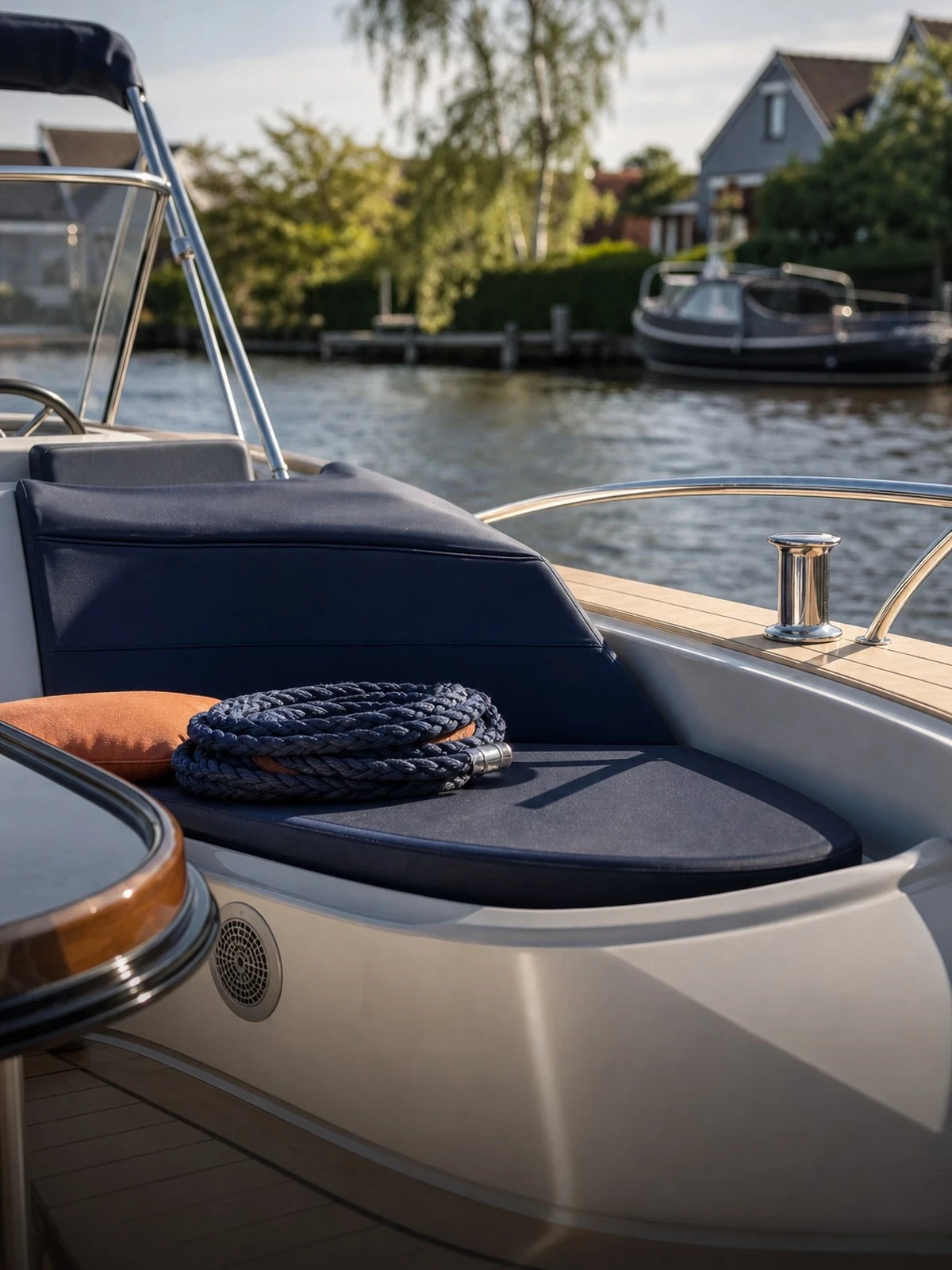 Pleasure craft insurance
 Compare
 Get covered
Why arrange it through Finass Verzekert?
We look at the terms as well as the premium, and stay your point of contact when there is a claim.
Independent
We are not tied to one insurer and compare on the basis of an objective analysis of several companies.
One fixed adviser
You call or email someone who knows your file. No menu options, no changing call centres.
Switching without hassle
We cancel your old policy and align the start date, so you are never a day without cover.
Help with claims
We report the claim and monitor how it is handled. In urgent cases you can reach us on the emergency line.
What to look out for
Four points that lead to a dispute in this segment more often than the level of the sum insured does.
The yard and refit period
If the vessel is at a yard for maintenance or conversion, the risk changes completely: welding, sanding, paintwork and dismantled systems. Many policies have a duty to notify or a separate yard clause for this. Without a declaration, a fire during hot work can fall outside the cover. At the same time, establish who is liable for damage caused by the yard itself, and whether the yard has its own liability cover.
Tenders, jet skis and water toys
A tender in davits, a jet ski on the aft deck and inflatable toys are risks in their own right. They have to appear on the policy by name, value and use; otherwise damage while launching or towing them is uninsured. If you let a guest use the jet ski, the liability for that may not fall under the mother vessel. See also insuring a jet ski.
Exclusions on a vessel in this class
Excluded are, among others commercial charter and any form of carriage for payment without a separate charter licence and cover, taking part in races above the agreed class, damage caused by an inherent defect, osmosis, corrosion and deferred maintenance, and sailing outside the agreed sailing area or outside the sailing season. Recklessness and deliberate acts remain excluded under Article 7:952 of the Dutch Civil Code.
Wreck removal and environmental damage
If the vessel sinks or runs aground, a harbour or coastal authority can require it to be removed, whatever the yacht is still worth. Those costs, and the cost of a fuel spill, mount quickly and have their own limit alongside the sum insured for the hull. Check that this limit suits the waters you sail in, because protected coastal areas apply stricter requirements to salvage and clean-up.
What does your premium depend on?
- Agreed value and year of build: including bespoke fit-out and electronics
- Length, tonnage and speed: decisive for salvage and collision risk
- Sailing area and season. North Sea, Mediterranean or wider, and the winter period
- Crew on board: permanent, seasonal or hired in for each passage
- Mooring and security: marina with security, an on-board alarm and a fire detection system
- Tenders and watersports equipment: tender, jet ski and diving or ski equipment on board
Insurers weigh these details differently. That is where your saving is.
What is covered
| Situation | Third-party liability | Comprehensive |
|---|---|---|
| You run into the marina jetty while coming alongside | Yes | Yes |
| The hull is damaged because you strike an unmarked shallow | No | Yes |
| The yacht sinks at its lines after a cooling water hose comes loose | No | Yes |
| The outboard motor of the tender is stolen from winter storage | No | Provided that |
| You sail outside the sailing area stated on the policy and suffer damage there | No | No |
| The engine fails through wear and has to be overhauled | No | No |
The agreed value determines what is paid on a total loss. The sailing area determines whether anything is paid at all.
Frequently asked questions
This is what people ask us most.
Why does a valuation report matter so much on a yacht?
Because there is no active market against which a surveyor can measure the market value. Without a valuation the insurer determines after the loss what the vessel was worth, and that outcome is almost always lower than what you have put into it. A report from a recognised expert fixes the value in advance, fit-out included, and limits the discussion to the extent of the damage.
May I hire out my yacht occasionally?
Not under a private policy. As soon as there is carriage for payment or charter, the nature of the risk changes and commercial cover is needed, with its own requirements on crew, certification and liability towards guests. If you hire it out anyway, you run the risk that a loss during a charter week falls entirely on you, including liability for injury to guests.
Is injury to a guest on board covered?
Only through the liability section, and only if you are at fault within the meaning of Article 6:162 of the Dutch Civil Code. A guest who slips on a wet deck has to show that you failed to take sufficient care. If you want to offer guests something regardless of fault, you need personal accident cover for those on board. That pays out on the basis of the injury itself.
What happens if I go outside the sailing area?
Own-damage cover lapses for that period. The sailing area is not a guideline but a limit of cover. If you want to make a passage that falls outside it, ask for an extension for that trip in advance. Also report changes in the use of the vessel; Article 7:928 DCC requires you to disclose the circumstances that matter for assessing the risk.
Every situation is different. For these situations we have a separate page.
- Compare pleasure craft insuranceThe main page
- Insuring a yachtValuation, sailing area, crew
- Compare exclusive yacht insuranceValuation, sailing area, crew
- Yacht and pleasure craft insurance through HienfeldBespoke underwriting, classic vessels, abroad
- Insurance for a tenderTender, lifting and towing, separate policy or included
- Insuring a yacht and motorboatOwn-damage cover, sailing area, winter storage
- Boat insurance through Turien & CoClaims handling, surveys, recovery from third parties
- Insuring a yachtOwn-damage cover, valuation, sailing area