

Third-party liability
- Required by law
- As long as the registration is in your name
- Suspend the registration when not in use
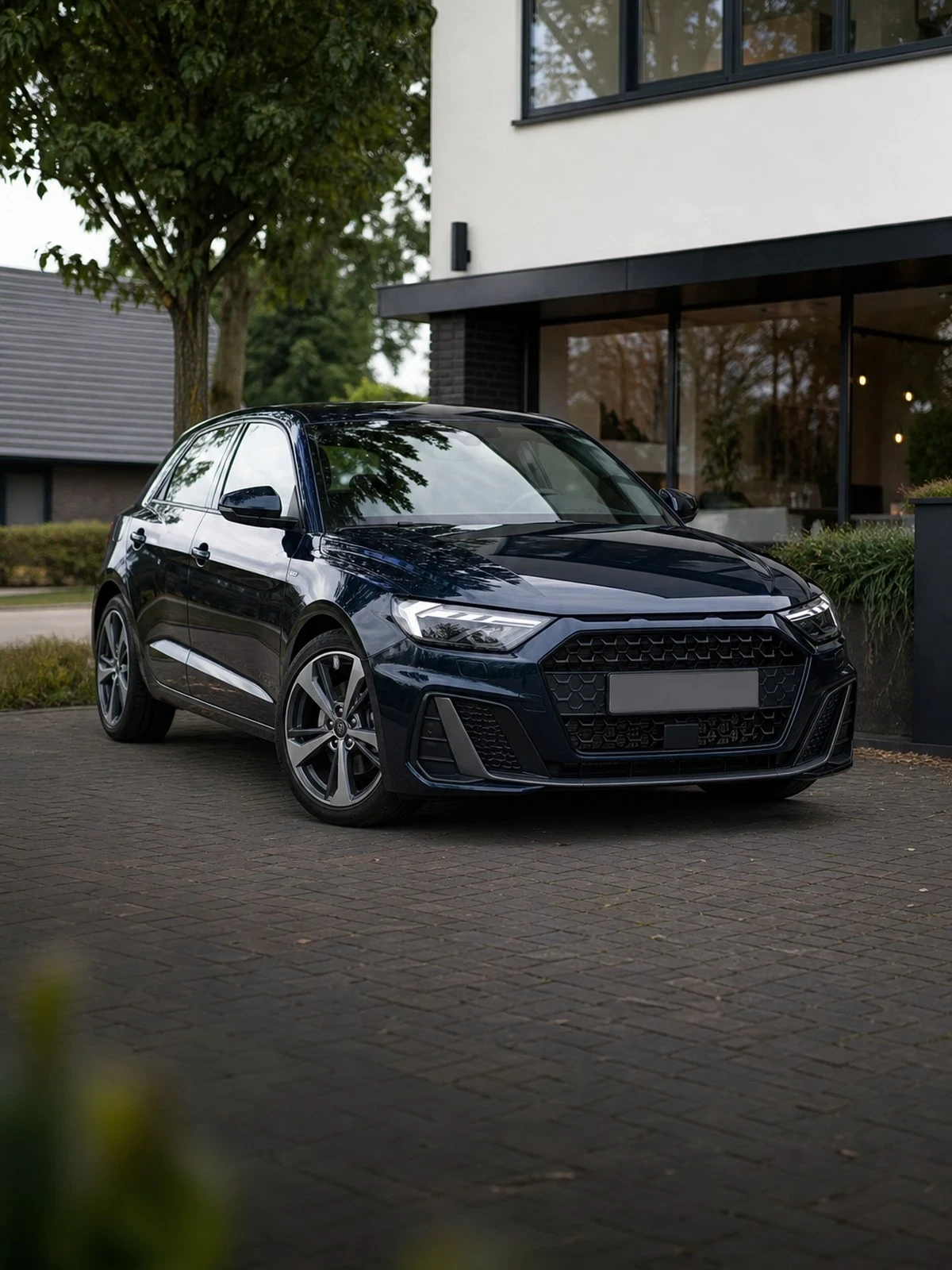
The A1 is a compact premium hatchback used mainly in town; here it is not the rating group but the driver and parking damage that determine what you pay.
This page in another language: Nederlands
Work out for yourself what it would cost.
Enter your details; you will receive a proposal within one working day.
A premium indication, not personal advice. Prefer to talk it through? Call 072 - 509 24 56.
The Audi A1 shares its engineering with the compact models in the Volkswagen group and therefore falls into a low weight and rating group. The result is that the car itself accounts for only a modest share of the premium. What remains is determined by the driver: age, no-claims years built up and the postcode where the car is kept at night count for more on this model than on almost any other Audi.
How the car is used is decisive here. The A1 is widely driven as a first car, as a second car alongside a larger family car, and as a commuting car in urban areas. That means short journeys and plenty of them: many starts, many parking manoeuvres and, proportionately, many small collisions. It is precisely that type of damage that is expensive, not in absolute amounts but because every at-fault claim puts your bonus-malus step back.
We therefore look above all at the balance between the excess, the type of cover and the number of steps you drop after a claim. See also the Audi overview page and the explanation of comprehensive cover.
We compare your car insurance across dozens of insurers, explain where the real differences lie, and arrange the switch from start to finish — without you having to chase it yourself.
 Car insurance
 Compare
 Get covered
The structure of the cover in three parts, with an overview per situation below.
Damage you cause to others.
Causes beyond your control.
Including damage you cause yourself.
What is covered
| Situation | Third-party liability | Third-party, fire and theft | Comprehensive |
|---|---|---|---|
| Damage to the other party | Yes | Yes | Yes |
| Theft | No | Yes | Yes |
| Fire and storm | No | Yes | Yes |
| Damage you cause yourself | No | No | Yes |
| Wear and mechanical defects | No | No | No |
| Driving without a valid licence | No | No | No |
This overview is general in nature and is not personal advice. What is actually covered, including exclusions, limits and the excess, is set out in the policy conditions and the insurance card (verzekeringskaart) of the insurer; you receive both before you take out cover. Taking out cover without advice? Then read what execution only means for you.
Insurers weigh these details differently. That is where your saving is.
We look at the terms as well as the premium, and stay your point of contact when there is a claim.
We are not tied to one insurer and compare on the basis of an objective analysis of several companies.
You call or email someone who knows your file. No menu options, no changing call centres.
We cancel your old policy and align the start date, so you are never a day without cover.
We report the claim and monitor how it is handled. In urgent cases you can reach us on the emergency line.
Customers rate our service on four aspects: personal service, service delivery, availability and the outcome. The reviews are collected and published by NH1816 and come from customers who have actually taken out a policy with Finass Advies B.V. or reported a claim.
Four points that make the difference between a policy that pays out and one that does not.
A scrape along a bollard or a dented door in a multi-storey car park is the most common scenario on this car. An at-fault claim puts you back several steps on the bonus-malus ladder and that feeds through into your premium for years. So work it out before you report it: if the repair costs are close to your excess, paying yourself is often cheaper. You can always report a claim; whether to claim is a separate decision.
Newer versions carry parking sensors, cameras and radar modules in the bumper and mirrors. A collision that looks minor then also affects the sensors, which have to be recalibrated after the repair. The same applies to matrix headlights, which are replaced as a complete unit. On a car with a modest market value, that pushes repair costs towards the threshold above which the insurer declares a total loss sooner.
This car is often registered to a parent while a younger member of the family drives it every day. That is an incorrect declaration of the main driver and touches on the duty of disclosure under Article 7:928 of the Dutch Civil Code. When you claim, the insurer can reduce or refuse the payout. The proper route is a second-driver arrangement or young driver clause with an increased excess, under which the younger driver also builds up no-claims years of their own.
Wear, mechanical failure and a defective clutch or turbo are not a sudden event and fall outside own-damage cover. Scratches from normal use and damage you cannot tie to a single moment are refused. Driving without a valid licence or under the influence rules out cover, as does intent under Article 7:952 of the Dutch Civil Code. Undeclared wheels, lowered suspension or chip tuning are not insured.
This is what people ask us most.
Broadly, yes: the low weight and modest list price mean a favourable rating. The premium is then determined mainly by your age and the absence of no-claims years. With a young driver, decide deliberately whether or not to go for a more powerful engine, because that difference feeds through considerably, and discuss a young driver clause with an increased excess.
Add your annual premium and your excess together and set that against the market value. If that value falls below roughly three to four times that outlay, comprehensive cover is hard to justify. With a financed or leased A1 it is different, because the lender usually requires comprehensive cover while money is owing. Also look at how long the replacement value as new rule runs.
The registration may stay as it is, but the application form must show who the main driver is. If your son drives it every day, that is him. An incorrect declaration touches on Article 7:928 of the Dutch Civil Code and can lead to a reduced or refused payout when you claim. Ask instead about a second-driver arrangement, under which he drives legally and builds up no-claims years of his own.
Because the bumpers, mirrors and windscreen contain sensors, cameras and radar. After the repair those systems have to be recalibrated, and that is done by a specialist firm. Matrix headlights are replaced as a whole. On a car whose market value has fallen, those costs reach the threshold above which the insurer declares a total loss rather than repairing it sooner.
Every situation is different. For these situations we have a separate page.
Request a quote without obligation. We will look at which insurer best matches your activities and your risk.
Prefer to call? 072 - 509 24 56, weekdays 09:00–17:00.
Claim on the road? Emergency line 06 - 55 20 40 72.
Finass Verzekert is a trading name of Finass Advies B.V. We advise on and arrange non-life insurance on the basis of an objective analysis of several insurers, and receive commission for this from the insurer, which is included in the premium. You pay no separate advice fee. Before you take out cover, we establish your wishes and needs.
You will find our licence, KvK and Kifid details and our complaints procedure at the foot of every page.
This page was compiled by Finass Verzekert (LinkedIn). Last updated on .
The information on this page is general in nature and is not personal advice.
Maandag- Vrijdag: 09:00- 17:00
We use cookies and similar technologies to improve your experience on our website.