

Buildings insurance (opstalverzekering) for let property
Anyone who lets property is insuring not their own conduct but that of tenants they do not see every day. That is what acceptance turns on, and that is where the exclusions sit.
- Several insurers compared objectively
- 9.5 customer rating for a new policy
- AFM licence 12016589
- Personal 072 - 509 24 56, weekdays 9–17
This page in another language: Nederlands
The calculator and the quote form below are in Dutch. Prefer to do this in English? Email info@finassverzekert.nl or call 072 - 509 24 56 and we will take it from there.
Work out for yourself what it would cost.
Enter your details; you will receive a proposal within one working day.
- We compare the offerings of several insurers
- An adviser checks whether the cover suits your activities
- We arrange the switch, including cancellation
A premium indication, not personal advice. Prefer to talk it through? Call 072 - 509 24 56.
- Independent advice
- Several insurers
- Switching arranged
- Help with claims
In brief
Where an owner occupies premises themselves, an insurer knows what goes on inside. With letting it is different: the actual use by the tenant determines the risk, and that use can change without your noticing. That is why, with investment property, an insurer asks not only about the year of construction and the rebuild value, but above all about the use of each unit, the mix of tenants and the level of vacancy. How commercial buildings cover is structured is described on the page about commercial buildings insurance.
Vacancy is the sharpest point. As soon as a building or part of it stands empty, most policies restrict cover to a number of named perils, usually fire, explosion, storm and aircraft. Burglary, vandalism and water damage then drop out. That restriction takes effect under the conditions, even if you have not reported the vacancy; reporting it prevents a further argument about Articles 7:928 and 7:930 of the Dutch Civil Code.
A second block concerns the basis of value. Insurance is on rebuild value, not on the market value or the purchase price of the building. A valuation by an expert gives protection against underinsurance under Article 7:960 of the Dutch Civil Code, provided the report has not expired. Underinsurance leads to a proportionate reduction, even on a small claim. You can read more about that at what happens if you are underinsured.
This page deals with one situation. The full overview is on Compare commercial buildings insurance.
Independent, personal, sorted quickly
We compare your commercial buildings insurance across dozens of insurers, explain where the real differences lie, and arrange the switch from start to finish — without you having to chase it yourself.
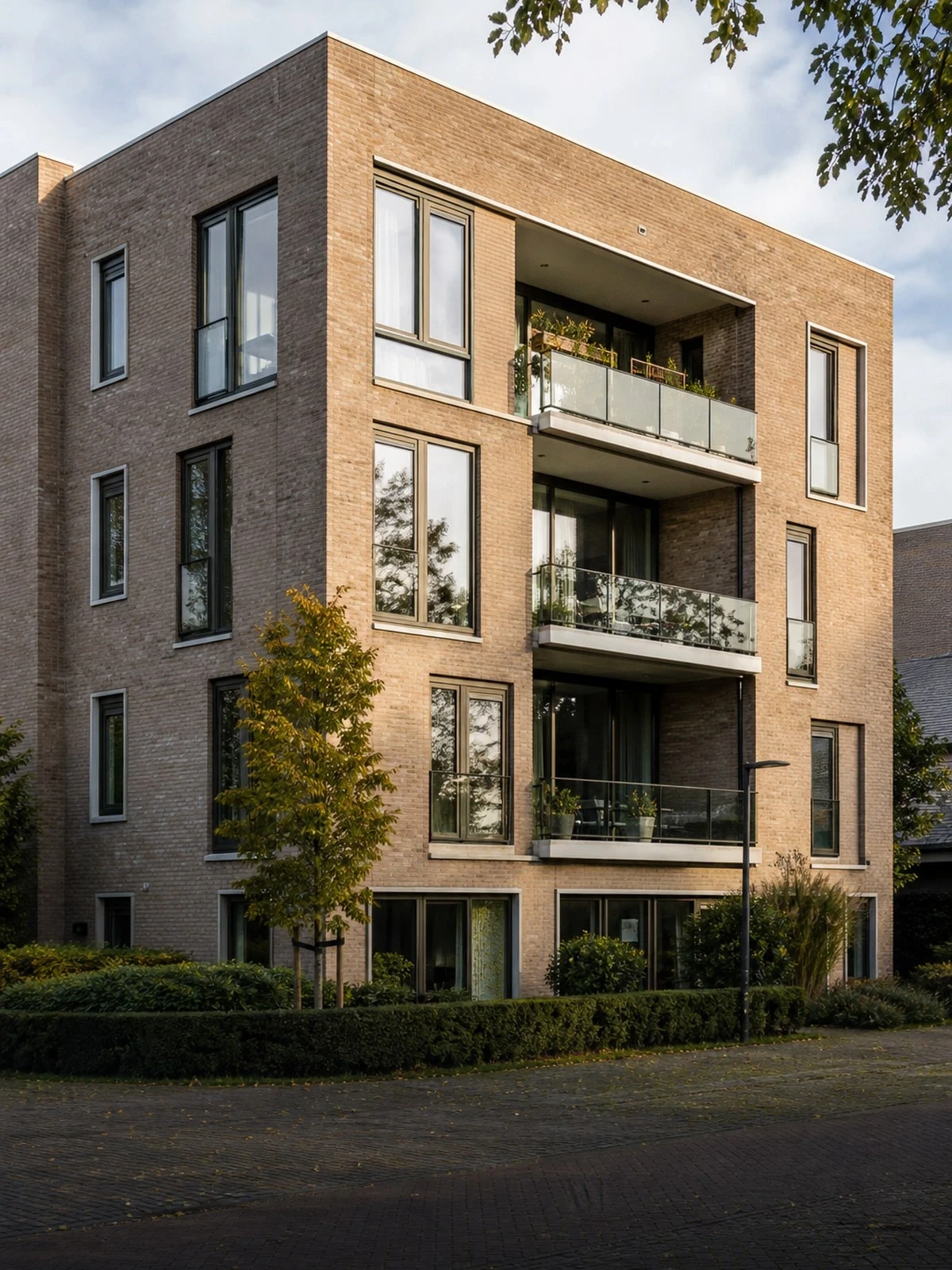 Commercial buildings insurance
 Compare
 Get covered
Why arrange it through Finass Verzekert?
We look at the terms as well as the premium, and stay your point of contact when there is a claim.
Independent
We are not tied to one insurer and compare on the basis of an objective analysis of several companies.
One fixed adviser
You call or email someone who knows your file. No menu options, no changing call centres.
Switching without hassle
We cancel your old policy and align the start date, so you are never a day without cover.
Help with claims
We report the claim and monitor how it is handled. In urgent cases you can reach us on the emergency line.
What to look out for
Four subjects that come up again and again with a property portfolio.
A change of use by the tenant
An office unit that becomes a workshop, a storage space in which a kitchen appears, a multi-tenant building that gains a restaurant: each of those changes alters the fire picture. Include in the lease an obligation to report a change of use and pass the change on to the insurer. With illegal use, such as cannabis cultivation, cover almost always lapses.
Loss of rent and the length of the repairs
After a fire the rental income falls away while the mortgage payments continue. Loss of rent is a separate cover with a indemnity period that you choose yourself. Set that period on the basis of a realistic timeline for demolition, permits and rebuilding, not on the construction time alone. If the period expires before the building can be let again, the payment stops whatever the situation.
You are liable as possessor of the building
For a facade panel that comes loose, a balcony that gives way or a falling roof tile you are liable as possessor under Article 6:174 of the Dutch Civil Code, even where nothing can be held against you. That claim does not belong on the buildings policy but on liability insurance. Record maintenance and inspections. The file determines whether you can rebut the allegation of a defect.
What a buildings policy structurally does not cover
Outside the cover are deferred maintenance, inherent defect and construction defects, repairs to foundations and subsidence, gradual action of damp and wood rot, vermin, and the additional cost of asbestos removal where it has not been separately included. Soil contamination after a fire is a product in its own right: the environmental damage insurance. And damage the insured causes deliberately stays outside every policy under Article 7:952 of the Dutch Civil Code.
What does your premium depend on?
- Use of each building or unit: residential, office, storage, hospitality or production
- Year of construction and construction type: including roof covering and compartmentation
- Level of vacancy: structural or between two tenants
- Rebuild value and valuation: and how long the report remains valid
- Prevention and inspections: electrical inspection, detection and securing the site
- Claims history and excess: assessed across the whole portfolio
Insurers weigh these details differently. That is where your saving is.
What is covered
| Situation | Let and in use | Unoccupied |
|---|---|---|
| A fire starts in the building's meter cupboard | Yes | Yes |
| A storm lifts part of the roof covering | Yes | Yes |
| Burglars strip the copper pipework out of the building | Yes | No |
| The windows are smashed and the facade is daubed with graffiti | Yes | No |
| A burst pipe on the first floor runs unnoticed for weeks | Provided that | No |
| On handover it emerges that the previous tenant ran a cannabis nursery | No | No |
The day the tenant hands back the keys is the day the right-hand column starts to apply.
Frequently asked questions
This is what people ask us most.
Do I have to report a vacancy between two tenants?
Yes, even for a short period. The conditions tie the restricted cover to the fact of vacancy, not to your notification, but by reporting it you avoid an argument about the duty of disclosure under Article 7:928 of the Dutch Civil Code. For longer vacancies, discuss an additional arrangement with supervision, lighting and shutting off water and gas.
Who insures the fit-out the tenant has installed?
That usually belongs to the tenant and belongs on their own policy, under the heading of tenant's improvements. Your buildings policy covers the shell as you let it. Record in the lease who insures what and what happens to the alterations at the end of the tenancy, or an uninsured part remains after a loss.
Is damage caused by a tenant covered?
Fire and water damage caused by a tenant falls in principle under your buildings cover, after which the insurer can recover from the tenant or their liability insurer. Vandalism by your own tenant, deliberate damage and damage resulting from illegal use are, by contrast, excluded almost everywhere. That makes tenant screening part of your risk management.
What happens if the valuation has expired?
A valuation report that meets the requirements gives protection against underinsurance for as long as it remains valid. Once that period has passed, you fall back on the ordinary rule and the loss adjuster assesses the rebuild value at the time of the loss. If that is higher than the sum insured, a proportionate reduction follows. Put the expiry date in your diary.
Every situation is different. For these situations we have a separate page.
- Buildings insurance (opstalverzekering) and commercial buildings insurance (gebouwenverzekering): the same or not?The main page
- Commercial buildings insurance (opstalverzekering) when letting your premisesLoss of rent, vacancy, tenant's improvements
- Insurance for commercial buildingsRebuild value, tenants, vacancy
- Buildings insurance for propertyPortfolio, loss of rent, vacancy
- Buildings insurance for businessesRebuild value, what counts as part of the building, clearing-up costs
- Buildings and premises insurance for propertyRebuild value, loss of rent, glass
- Buildings insurance for businesses through De VereendeRefusal, limited cover, clauses
- Commercial buildings insurance (opstalverzekering): the importance of the correct described business activityUse, rebuild value, change in the risk
- Insuring a multi-tenant business building through OOM VerzekeringenChanging tenants, heaviest use, loss of rent