

Liability
- Cables and pipes
- Damage to buildings
- Injury to bystanders
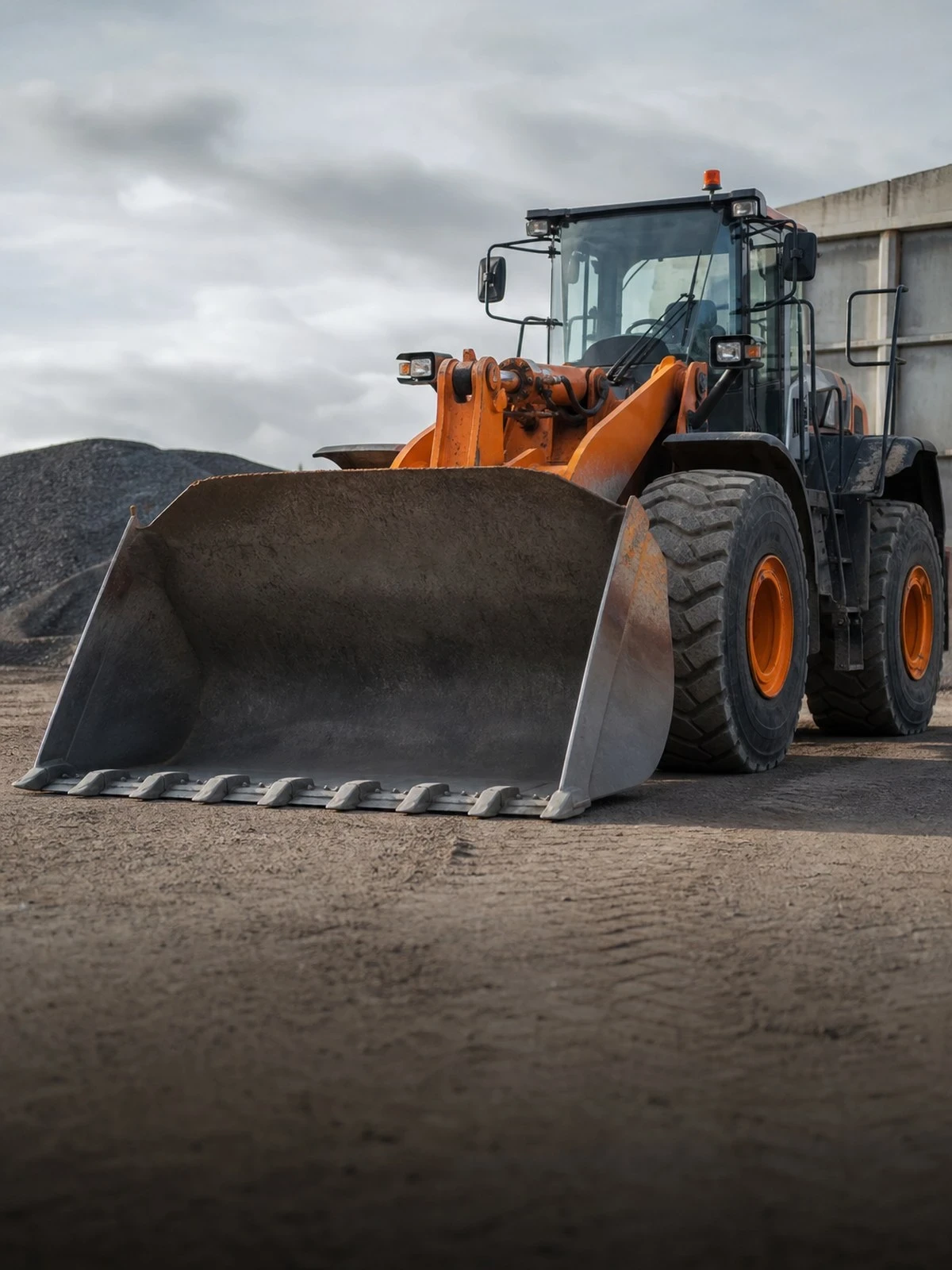
A heavy wheel loader in recycling and transhipment works all day in material that can catch fire, which makes fire prevention here a policy condition rather than a piece of advice.
This page in another language: Nederlands
The calculator and the quote form below are in Dutch. Prefer to do this in English? Email info@finassverzekert.nl or call 072 - 509 24 56 and we will take it from there.
Work out for yourself what it would cost.
Enter your details; you will receive a proposal within one working day.
A premium indication, not personal advice. Prefer to talk it through? Call 072 - 509 24 56.
Ljungby Maskin builds heavy wheel loaders that in the Netherlands work mainly on waste and transhipment sites: sorting halls, rubble crushers, biomass and scrap. The risk on such a site lies not in traffic and not in the ground, but in fire. Dust, hydraulic oil and hot engine parts come together on one machine, and the material that machine works in is itself flammable.
Insurers that accept this segment set conditions in advance. An extinguishing system in the engine compartment, daily cleaning of the engine compartment and the cooling pack, and agreements about where the machine stands after work. Failure to meet those is not a detail but a stand-alone ground for refusing a payout.
A fire on such a site also rarely affects the machine alone. The hall, the installations and third parties' stored batches are right next to it. For that damage you look to your liability cover, and it is precisely there that an exclusion catches many businesses in this sector by surprise.
We compare your plant and machinery insurance across dozens of insurers, explain where the real differences lie, and arrange the switch from start to finish — without you having to chase it yourself.
 Plant and machinery insurance
 Compare
 Get covered
The structure of the cover in three parts, with an overview per situation below.
Damage you cause to others with the machine.
Damage to and theft of the machine, including inherent defect.
What comes into play with breakdown and transport.
What is covered
| Situation | Covered |
|---|---|
| Theft from the building site | Sometimes |
| Fire and storm damage | Yes |
| Inherent defect in the hydraulics | Sometimes |
| Damage to cables and pipes | Sometimes |
| Normal wear and tracks | No |
| Damage due to deferred maintenance | No |
This overview is general in nature and is not personal advice. What is actually covered, including exclusions, limits and the excess, is set out in the policy conditions and the insurance card (verzekeringskaart) of the insurer; you receive both before you take out cover. Taking out cover without advice? Then read what execution only means for you.
Insurers weigh these details differently. That is where your saving is.
We look at the terms as well as the premium, and stay your point of contact when there is a claim.
We are not tied to one insurer and compare on the basis of an objective analysis of several companies.
You call or email someone who knows your file. No menu options, no changing call centres.
We cancel your old policy and align the start date, so you are never a day without cover.
We report the claim and monitor how it is handled. In urgent cases you can reach us on the emergency line.
Customers rate our service on four aspects: personal service, service delivery, availability and the outcome. The reviews are collected and published by NH1816 and come from customers who have actually taken out a policy with Finass Advies B.V. or reported a claim.
Four points that make the difference between a policy that pays out and one that does not.
For plant in waste processing, acceptance is almost always tied to prevention: an automatic extinguishing system in the engine compartment, a set cleaning interval and a logbook in which it is recorded. Those are warranty conditions. If it emerges after a fire that the system had not been maintained or that the cleaning was let slip, the insurer may reduce or refuse the payout entirely. Record what is done each day, not afterwards.
Lithium batteries, aerosols and hot material end up in the stream unnoticed and ignite in the bucket or in the bunker. The machine's own-damage cover may then respond, but damage from smouldering and spontaneous combustion of the processed material itself is excluded as standard. The cost of clearing away a burnt batch also falls outside it. Consider separately whether your buildings or goods cover deals with that side.
If the fire spreads to the building or to customers' batches, that is liability damage under Article 6:162 of the Dutch Civil Code. The pitfall lies in the care, custody and control exclusion: many liability policies exclude damage to goods in your care or goods you were working on. On a processing site those are precisely the third-party goods you are handling. Have it expressly recorded whether goods being processed are included.
On a scrap or rubble site, tyres are a recurring cost item. Cuts, embedded objects and accelerated wear are operational damage and fall outside any own-damage cover, even where a tyre is ruined in a day. Impact damage to gantries, sorting plant and buildings is insurable, but runs through the liability cover and not through own damage. Keep those two items separate in your budget.
Parts come from Sweden. A service contract reduces downtime considerably.
Not every company applies the same policy for this make. With unusual versions, the question is not what it costs but who will accept it.
This is what people ask us most.
Fire falls under own-damage cover, but in this sector that cover is tied to prevention conditions. If the extinguishing system is missing or the engine compartment has not been cleaned as agreed, the insurer may reduce or refuse the payout. Record the cleaning and the maintenance of the extinguishing system daily, because that logbook is your evidence when you claim.
That is liability damage under Article 6:162 of the Dutch Civil Code. Watch out for the care, custody and control exclusion: damage to goods in your care or goods you were working on is often excluded. On a processing site that means the batches you are handling. Have it recorded in advance whether goods being processed fall under the cover.
No. Cuts, embedded objects and accelerated wear count as operational damage and fall outside own-damage cover, even where a tyre is ruined in a day. Only tyre damage resulting from a covered event, such as a fire or a collision, is included. Budget tyre costs as an operating expense, therefore, and not as insurance.
Usually an automatic extinguishing system in the engine compartment, daily cleaning of the engine compartment and the cooling pack, and agreements about where the machine stands after work. An inspection of the electrical installation is often added. The precise requirements appear as a clause in your policy and count as a condition, not a recommendation.
Every situation is different. For these situations we have a separate page.
Request a quote without obligation. We will look at which insurer best matches your activities and your risk.
Prefer to call? 072 - 509 24 56, weekdays 09:00–17:00.
Claim on the road? Emergency line 06 - 55 20 40 72.
Finass Verzekert is a trading name of Finass Advies B.V. We advise on and arrange non-life insurance on the basis of an objective analysis of several insurers, and receive commission for this from the insurer, which is included in the premium. You pay no separate advice fee. Before you take out cover, we establish your wishes and needs.
You will find our licence, KvK and Kifid details and our complaints procedure at the foot of every page.
This page was compiled by Finass Verzekert. Last updated on .
The information on this page is general in nature and is not personal advice.
Maandag- Vrijdag: 09:00- 17:00
We use cookies and similar technologies to improve your experience on our website.