

Third-party liability
- Required by law
- As long as the registration is in your name
- Suspend the registration when not in use
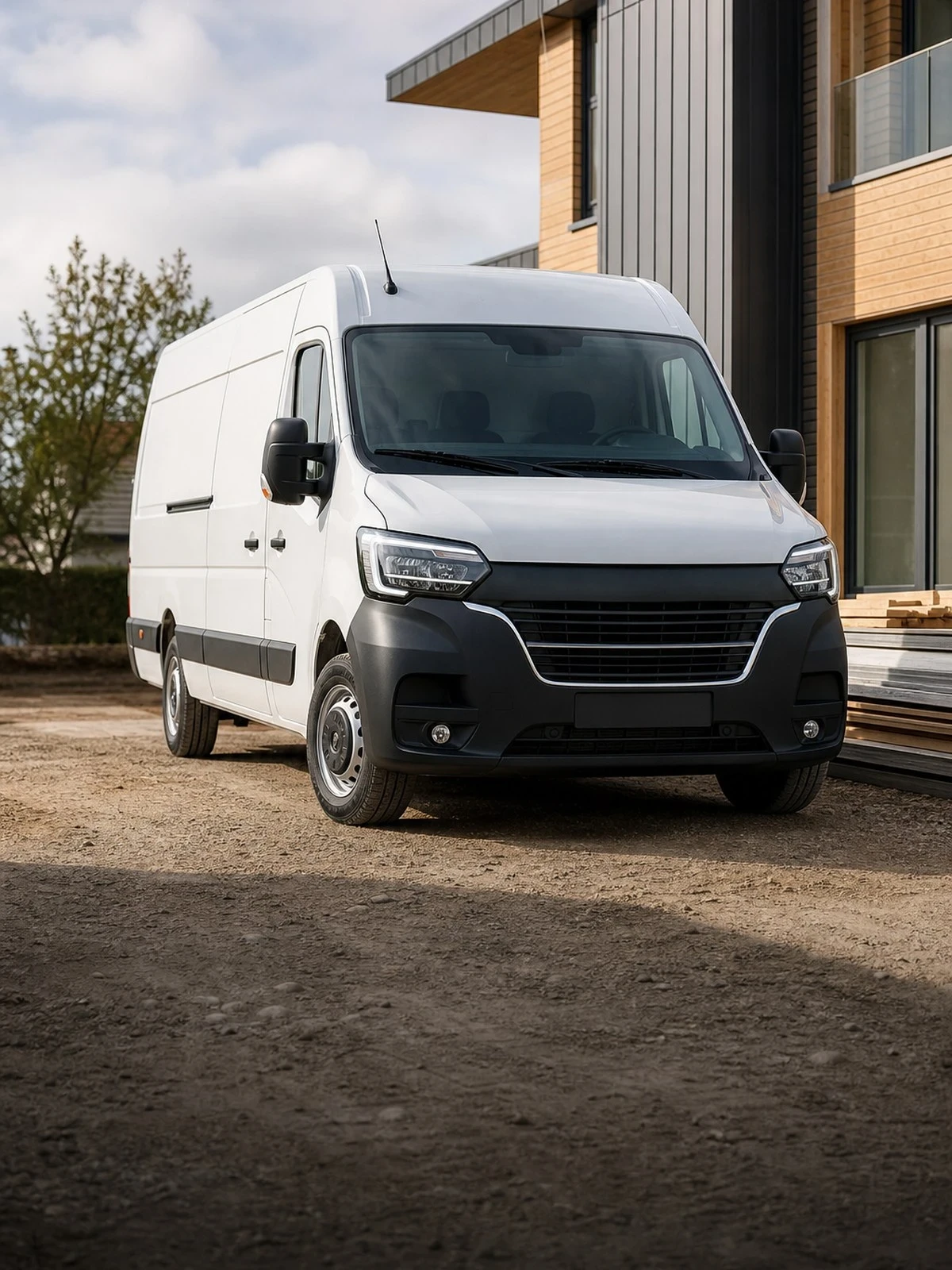
On the Master the risk rarely sits in the van itself but in the seat in front of it: changing drivers, lending and hiring out determine the cover here.
This page in another language: Nederlands
Work out for yourself what it would cost.
Enter your details; you will receive a proposal within one working day.
A premium indication, not personal advice. Prefer to talk it through? Call 072 - 509 24 56.
The Master is a commercial van that rarely stays with one fixed driver. It is lent to staff, handed over to a subcontractor, used by an agency worker or pressed into service by the family at the weekend for a house move. Each of those situations touches a different provision on the policy schedule.
Insurers rate on the regular driver. If that names an experienced fifty-year-old while in practice a driver of twenty is at the wheel, the declaration is wrong. That is no detail: it touches the duty of disclosure in Article 7:928 of the Dutch Civil Code and gives the insurer scope, through Article 7:930 of the Dutch Civil Code to reduce the payment.
For the passenger car models of the same make, we refer you to Renault car insurance; general information about commercial vans can be found on van insurance.
We compare your van insurance across dozens of insurers, explain where the real differences lie, and arrange the switch from start to finish — without you having to chase it yourself.
 Van insurance
 Compare
 Get covered
The structure of the cover in three parts, with an overview per situation below.
Damage you cause to others.
Causes beyond your control.
Including damage you cause yourself.
What is covered
| Situation | Third-party liability | Third-party, fire and theft | Comprehensive |
|---|---|---|---|
| Damage to the other party | Yes | Yes | Yes |
| Theft | No | Yes | Yes |
| Fire and storm | No | Yes | Yes |
| Damage you cause yourself | No | No | Yes |
| Wear and mechanical defects | No | No | No |
| Driving without a valid licence | No | No | No |
This overview is general in nature and is not personal advice. What is actually covered, including exclusions, limits and the excess, is set out in the policy conditions and the insurance card (verzekeringskaart) of the insurer; you receive both before you take out cover. Taking out cover without advice? Then read what execution only means for you.
Insurers weigh these details differently. That is where your saving is.
We look at the terms as well as the premium, and stay your point of contact when there is a claim.
We are not tied to one insurer and compare on the basis of an objective analysis of several companies.
You call or email someone who knows your file. No menu options, no changing call centres.
We cancel your old policy and align the start date, so you are never a day without cover.
We report the claim and monitor how it is handled. In urgent cases you can reach us on the emergency line.
Customers rate our service on four aspects: personal service, service delivery, availability and the outcome. The reviews are collected and published by NH1816 and come from customers who have actually taken out a policy with Finass Advies B.V. or reported a claim.
Four points that make the difference between a policy that pays out and one that does not.
The policy names a regular driver and calculates the rate on that basis. If someone else drives it regularly, for example a young employee or a son who has just passed his test, the risk differs from what has been declared. Report that. Lending occasionally to a colleague is usually covered, but whoever in fact uses the van most should be on the policy schedule.
If you hire the van out, even occasionally and even for no more than a fuel contribution, that is hire and not lending. An ordinary policy excludes it. If something then happens, the injured third party remains protected by the compulsory insurance under Article 2 of the Dutch Motor Insurance Liability Act (WAM), but the insurer recovers the amount paid from you. You will not be paid for the own damage to your own van.
If an employee causes damage, you as the employer are liable under Article 6:170 of the Dutch Civil Code. Recovery from the employee is only possible where there is intent or conscious recklessness. That follows from Article 7:661 of the Dutch Civil Code. Simply deducting the excess from wages is therefore not allowed without a valid written agreement. Set down the rules for using the van before you hand over the key.
Not covered are: damage during hire without the right cover, driving without a valid licence or while disqualified, damage caused by loading above the permitted mass, and the load and tools in the load space. Wear and mechanical defects always stay outside the policy. Article 7:952 of the Dutch Civil Code excludes intent and recklessness, including driving under the influence.
This is what people ask us most.
Yes, provided that fits what the policy states. If a young employee drives it regularly, declare that person as the regular driver. Occasional use is usually covered. Set down in writing who may drive and on what conditions. That helps both with settling a claim and with the question whether you may pass on the excess.
Not on an ordinary policy. As soon as there is a payment in return, it is hire and that is excluded as standard. The injured third party remains protected by the WAM, but the insurer then recovers the amount paid from you and the damage to your own van goes unpaid. For regular hiring out there is separate hire cover.
On an at-fault claim, yes. The policy looks at the vehicle and not at who was driving. With business registration, moreover, no-claims years are often kept in the name of the business and not of the driver. On small claims we work out for you whether paying yourself is more advantageous than dropping down the bonus-malus scale.
In principle, no. Article 7:661 of the Dutch Civil Code protects the employee against liability for damage arising during work, except where there is intent or conscious recklessness. Only with a valid written agreement and within the limits of the law can you pass on part of it. Deducting from wages without thought leads to an employment dispute.
Every situation is different. For these situations we have a separate page.
Request a quote without obligation. We will look at which insurer best matches your activities and your risk.
Prefer to call? 072 - 509 24 56, weekdays 09:00–17:00.
Claim on the road? Emergency line 06 - 55 20 40 72.
Finass Verzekert is a trading name of Finass Advies B.V. We advise on and arrange non-life insurance on the basis of an objective analysis of several insurers, and receive commission for this from the insurer, which is included in the premium. You pay no separate advice fee. Before you take out cover, we establish your wishes and needs.
You will find our licence, KvK and Kifid details and our complaints procedure at the foot of every page.
This page was compiled by Finass Verzekert (LinkedIn). Last updated on .
The information on this page is general in nature and is not personal advice.
Maandag- Vrijdag: 09:00- 17:00
We use cookies and similar technologies to improve your experience on our website.