

Third-party liability
- Required by law
- As long as the registration is in your name
- Suspend the registration when not in use
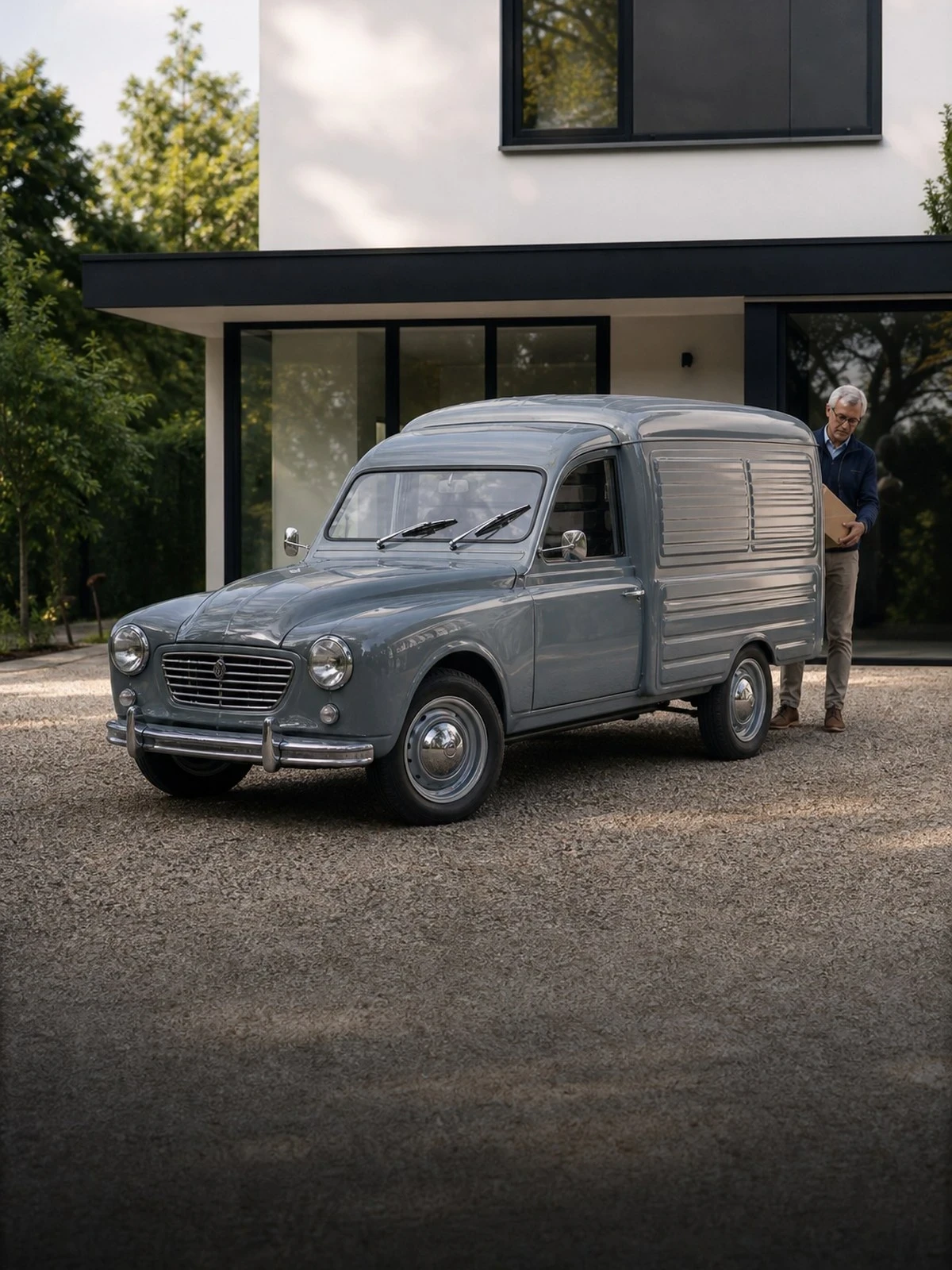
A classic van is judged on two things at once: the age of the vehicle and whether anything is still loaded into it.
This page in another language: Nederlands
Work out for yourself what it would cost.
Enter your details; you will receive a proposal within one working day.
A premium indication, not personal advice. Prefer to talk it through? Call 072 - 509 24 56.
With a classic van two regimes run into each other. Because of its age the vehicle qualifies for an enthusiast scheme with a limited mileage and a value established in advance. Because of the commercial vehicle registration (grijs kenteken) it formally remains a commercial vehicle, with the rules on use and tax that go with it. Insurers look mainly at the second: is it still being worked with?
If you only drive the van to shows, weddings and club runs, an enthusiast policy with an agreed value goes with that. A valuation report from a recognised valuer fixes the value under Article 7:960 of the Dutch Civil Code, so that on a total loss there is no need to negotiate over the market value of a thirty-year-old van. Without a report the insurer pays market value and your restoration does not count.
If goods are still being carried in it for your business, you belong with the business van insurance and not on a classic car policy. For younger vans that do not yet meet the age threshold, the youngtimer scheme is the alternative.
We compare your classic car insurance across dozens of insurers, explain where the real differences lie, and arrange the switch from start to finish — without you having to chase it yourself.
 Classic car insurance
 Compare
 Get covered
The structure of the cover in three parts, with an overview per situation below.
Damage you cause to others.
Causes beyond your control.
Including damage you cause yourself.
What is covered
| Situation | Third-party liability | Third-party, fire and theft | Comprehensive |
|---|---|---|---|
| Damage to the other party | Yes | Yes | Yes |
| Theft | No | Yes | Yes |
| Fire and storm | No | Yes | Yes |
| Damage you cause yourself | No | No | Yes |
| Wear and mechanical defects | No | No | No |
| Driving without a valid licence | No | No | No |
This overview is general in nature and is not personal advice. What is actually covered, including exclusions, limits and the excess, is set out in the policy conditions and the insurance card (verzekeringskaart) of the insurer; you receive both before you take out cover. Taking out cover without advice? Then read what execution only means for you.
Insurers weigh these details differently. That is where your saving is.
We look at the terms as well as the premium, and stay your point of contact when there is a claim.
We are not tied to one insurer and compare on the basis of an objective analysis of several companies.
You call or email someone who knows your file. No menu options, no changing call centres.
We cancel your old policy and align the start date, so you are never a day without cover.
We report the claim and monitor how it is handled. In urgent cases you can reach us on the emergency line.
Customers rate our service on four aspects: personal service, service delivery, availability and the outcome. The reviews are collected and published by NH1816 and come from customers who have actually taken out a policy with Finass Advies B.V. or reported a claim.
Four points that make the difference between a policy that pays out and one that does not.
A restored van is worth more than its market value, but that has to be recorded in advance. A valuation report by a recognised valuer makes the value binding under Article 7:960 of the Dutch Civil Code and prevents the claims handler from working on a total loss from the trade value of a used commercial vehicle. Watch the period of validity of the report. If it expires, you fall back on market value without noticing.
A classic van that drives to events empty is a different risk from one that carries tools, market stalls or trading stock. If the policy states hobby use and you are in fact using it for your business, that departs from your declaration for the purposes of Article 7:928 of the Dutch Civil Code. And note: the load itself is never included on the motor policy. That needs separate goods in transit or own goods in transit cover.
Enthusiast conditions tie the rate to a maximum annual mileage and to storage in a locked space. Those are not guidelines but policy conditions. If you consistently drive more, or the van stands outside in the street while you declared a shed, the insurer can limit the payment. Report it as well when you keep the van somewhere else temporarily during a restoration. That location counts in the acceptance.
Three exclusions come back time after time with classic vans. Wear, rust and mechanical defects are never covered; a classic breaks down because it is old, not because of an event. Damage during demonstration runs, speed tests or competitions falls outside the cover. And damage arising during the restoration itself, for example while welding or spraying in the workshop, belongs with the liability of the firm carrying out the work.
This is what people ask us most.
You can, provided the actual use matches the declaration. The registration says something about the tax status of the vehicle, the policy about what you use it for. If you only drive to club events and shows, enthusiast cover fits. If you still carry goods for your business, the van belongs on a business van policy with the conditions that go with it.
The binding statement of value falls away and the insurer settles on market value. For a restored van that makes a considerable difference, because the trade value of an old commercial vehicle does no justice to the restored whole. Put the expiry date of the report in your diary and arrange a revaluation in good time, particularly if you have had it resprayed or welded or the interior renewed in the meantime.
No. A motor policy covers the vehicle, not what is inside it. Tools, market equipment or trading stock fall under separate business contents or goods cover, often with requirements about storage and about leaving items in the vehicle. Report separately fitted equipment such as racking or a workbench, otherwise it does not count towards the payment after a loss.
Within the territorial limits on your policy, yes. Check those limits before a rally or show abroad and report longer stays in advance. Watch the condition about storage as well: if the van stands in the street for days during the trip, that can affect the theft cover. Breakdown or recovery assistance is a separate module and is not included as standard.
Every situation is different. For these situations we have a separate page.
Request a quote without obligation. We will look at which insurer best matches your activities and your risk.
Prefer to call? 072 - 509 24 56, weekdays 09:00–17:00.
Claim on the road? Emergency line 06 - 55 20 40 72.
Finass Verzekert is a trading name of Finass Advies B.V. We advise on and arrange non-life insurance on the basis of an objective analysis of several insurers, and receive commission for this from the insurer, which is included in the premium. You pay no separate advice fee. Before you take out cover, we establish your wishes and needs.
You will find our licence, KvK and Kifid details and our complaints procedure at the foot of every page.
This page was compiled by Finass Verzekert (LinkedIn). Last updated on .
The information on this page is general in nature and is not personal advice.
Maandag- Vrijdag: 09:00- 17:00
We use cookies and similar technologies to improve your experience on our website.