

Third-party liability
- Required by law
- Also when not in use
- Registration in your name
With a classic motorcycle the problem is not the age but establishing the value: without a valuation the insurer works with market value.
This page in another language: Nederlands
The calculator and the quote form below are in Dutch. Prefer to do this in English? Email info@finassverzekert.nl or call 072 - 509 24 56 and we will take it from there.
Work out for yourself what it would cost.
Enter your details; you will receive a proposal within one working day.
A premium indication, not personal advice. Prefer to talk it through? Call 072 - 509 24 56.
A classic is built up, not bought. Hours of work, parts tracked down and a respray are in the machine but not in any market value table. This form of policy therefore works with an agreed value valuation: an expert's report that fixes the value in advance and that, under Article 7:960 of the Dutch Civil Code, binds the parties for as long as it is valid.
An enthusiast policy also carries clauses you will not meet on an ordinary motorcycle policy: a maximum number of miles per year, locked storage, a minimum age for the rider and sometimes the requirement that you have a second vehicle for everyday use. Those clauses are conditions of cover, not suggestions.
Not covered: corrosion, deferred maintenance and wear, damage while working on the machine or running it up off the public road, and loose parts waiting in the shed to be fitted. Compare as well the rules for an oldtimer motorcycle, which turn mainly on age and registration status.
We compare your classic car insurance across dozens of insurers, explain where the real differences lie, and arrange the switch from start to finish — without you having to chase it yourself.
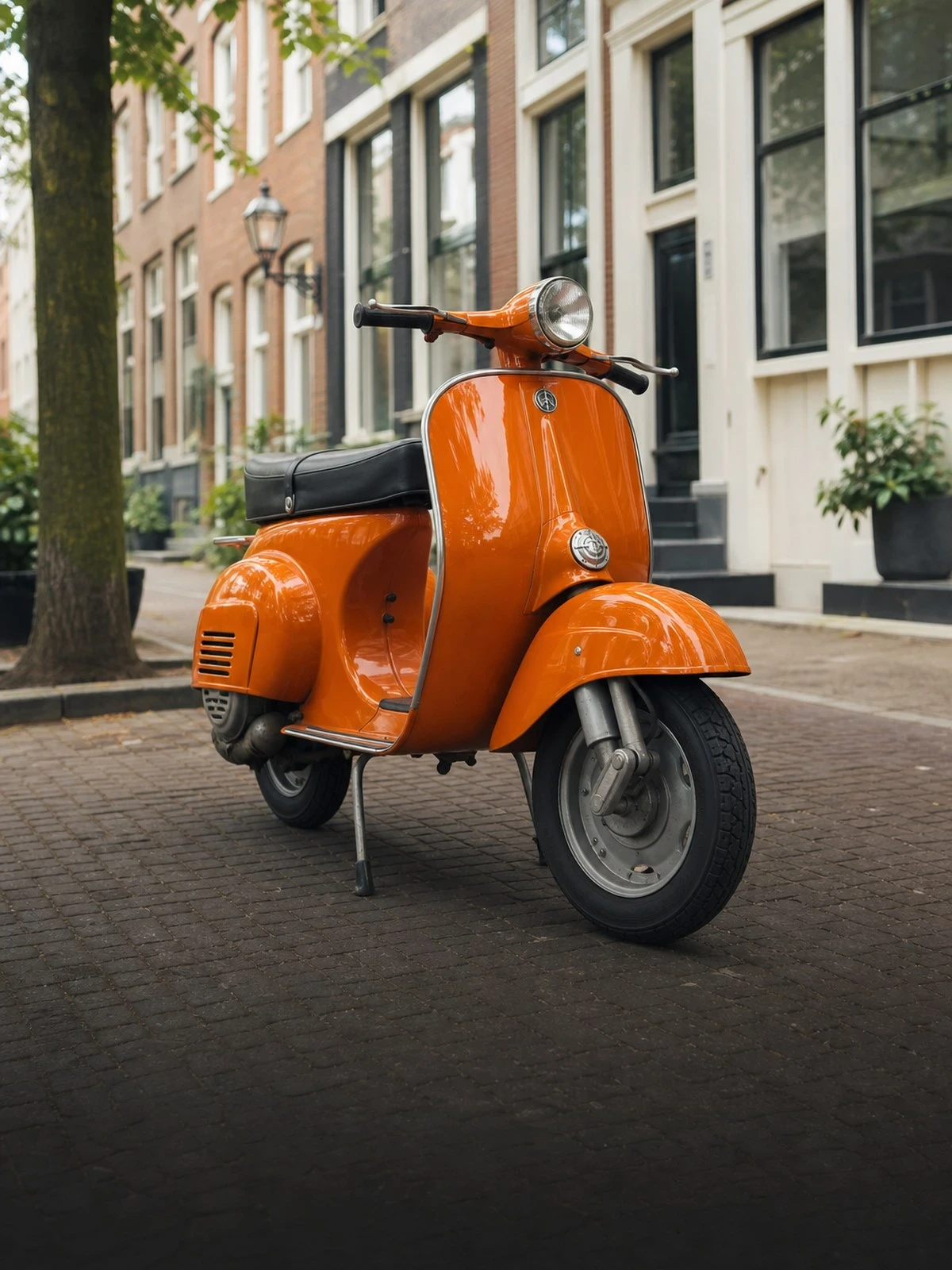 Classic car insurance
 Compare
 Get covered
The structure of the cover in three parts, with an overview per situation below.
Damage you cause to others.
Fixed causes that are beyond your control.
Including damage you cause yourself.
What is covered
| Situation | Third-party liability | Third-party, fire and theft | Comprehensive |
|---|---|---|---|
| Damage to the other party | Yes | Yes | Yes |
| Theft of the motorcycle | No | Yes | Yes |
| Falling with no other party involved | No | No | Yes |
| Damage while in storage | No | Sometimes | Yes |
| Helmet and motorcycle clothing | No | Sometimes | Sometimes |
| Driving without a valid licence | No | No | No |
This overview is general in nature and is not personal advice. What is actually covered, including exclusions, limits and the excess, is set out in the policy conditions and the insurance card (verzekeringskaart) of the insurer; you receive both before you take out cover. Taking out cover without advice? Then read what execution only means for you.
Insurers weigh these details differently. That is where your saving is.
We look at the terms as well as the premium, and stay your point of contact when there is a claim.
We are not tied to one insurer and compare on the basis of an objective analysis of several companies.
You call or email someone who knows your file. No menu options, no changing call centres.
We cancel your old policy and align the start date, so you are never a day without cover.
We report the claim and monitor how it is handled. In urgent cases you can reach us on the emergency line.
Customers rate our service on four aspects: personal service, service delivery, availability and the outcome. The reviews are collected and published by NH1816 and come from customers who have actually taken out a policy with Finass Advies B.V. or reported a claim.
Four points that make the difference between a policy that pays out and one that does not.
A report from a recognised valuer fixes the value before any damage occurs. Under Article 7:960 of the Dutch Civil Code the insurer cannot simply depart from it. The valuation amount applies, even if the market later takes a different view. The report carries a period of validity. Once it expires you fall back on market value, and for a restored motorcycle that is almost always a fraction of what has gone into it.
When a classic is damaged, the question is not what a part costs but whether it still exists. A dented tank, a cracked casting or a unique instrument has to be found, reproduced or reconditioned, and that takes months. Have it set out in advance that repair using used or reproduction parts is permitted, and what happens if the cost of repair approaches the agreed value.
A limited mileage, locked and dry storage, a minimum age for the rider and a ban on using the motorcycle to commute all appear as clauses on the policy schedule. If you consistently ride more, or the motorcycle stands under a sheet beside the house, the insurer can reduce the payment. Declare a realistic mileage, therefore, rather than the lowest possible one.
A motorcycle converted into a cafe racer or a bobber is a different object from the one that was valued. The frame, engine, brakes and lighting all bear on acceptance. Report a conversion under Article 7:928 of the Dutch Civil Code and have the machine valued again once the work is finished, because with a classic the value rises after a restoration instead of falling. Parts not yet fitted do not fall under the motorcycle policy.
This is what people ask us most.
Without a valuation the insurer works with market value in the event of a total loss, and that does no justice to restoration hours and parts tracked down. A valuation in advance fixes the amount and binds both parties under Article 7:960 DCC. It keeps the argument about value from starting at the moment the motorcycle is no longer there.
The report carries a period of validity. After that its binding effect ends and you fall back on market value. Have a revaluation carried out in good time, particularly if you have replaced parts or completed a restoration. Put the expiry date in your diary, because insurers do not always send a reminder and you notice the difference only after a loss.
A used example, a reproduction part or reconditioning of the damaged part is then sought. Agree in advance that this is permitted and what happens when the cost of repair approaches the agreed value. Without such an agreement the insurer can decide on a total loss while you would rather have the machine repaired and keep the wreck.
Yes. A modified frame, a different engine, different brakes or a complete conversion change the insured object and with it the risk. Article 7:928 of the Dutch Civil Code obliges you to report it. Have the machine valued again once the work is finished; otherwise you are insuring a motorcycle that no longer exists and paying premium on a value that is wrong.
Every situation is different. For these situations we have a separate page.
Request a quote without obligation. We will look at which insurer best matches your activities and your risk.
Prefer to call? 072 - 509 24 56, weekdays 09:00–17:00.
Claim on the road? Emergency line 06 - 55 20 40 72.
Finass Verzekert is a trading name of Finass Advies B.V. We advise on and arrange non-life insurance on the basis of an objective analysis of several insurers, and receive commission for this from the insurer, which is included in the premium. You pay no separate advice fee. Before you take out cover, we establish your wishes and needs.
You will find our licence, KvK and Kifid details and our complaints procedure at the foot of every page.
This page was compiled by Finass Verzekert (LinkedIn). Last updated on .
The information on this page is general in nature and is not personal advice.
Maandag- Vrijdag: 09:00- 17:00
We use cookies and similar technologies to improve your experience on our website.