

Insuring a classic van
For an old van, the market value says nothing. The policy therefore turns on a valuation report and on what you have agreed the vehicle is still used for.
- Several insurers compared objectively
- 9.5 customer rating for a new policy
- AFM licence 12016589
- Personal 072 - 509 24 56, weekdays 9–17
This page in another language: Nederlands
The calculator and the quote form below are in Dutch. Prefer to do this in English? Email info@finassverzekert.nl or call 072 - 509 24 56 and we will take it from there.
Work out for yourself what it would cost.
Enter your details; you will receive a proposal within one working day.
- We compare the offerings of several insurers
- An adviser checks whether the cover suits your situation
- We arrange the switch, including cancellation
A premium indication, not personal advice. Prefer to talk it through? Call 072 - 509 24 56.
- Independent advice
- Several insurers
- Switching arranged
- Help with claims
In brief
A classic vehicle policy works with an agreed value: a recognised valuer records what the vehicle is worth in its present condition, and that amount applies after a loss. A report of this kind is valid for a limited period; once it has expired you fall back on market value, and for a restored van that almost always works out badly. Article 7:960 of the Dutch Civil Code provides that insurance may not put you in a distinctly better position; within that limit, a valid valuation gives certainty about what will be paid.
The second feature is the use clause. Classic vehicle policies assume limited, recreational use. The conditions often set a maximum number of miles per year, a ban on commuting and business use, and sometimes a winter lay-up or a clause about driving on salted roads. If you do use the van every day, an ordinary policy goes with that; in that case see the van insurance or the youngtimer.
As long as the registration has not been suspended, the insurance obligation under Article 2 of the Dutch Motor Insurance Liability Act (WAM) continues to apply, even if the vehicle stands in the shed all year. The registration can be suspended through the RDW (the Dutch vehicle authority), but with the obligation your cover against fire, theft and storm damage in storage disappears as well. Agree storage cover for that. Related versions can be found under classic van insurance and the classic car insurance.
This page deals with one situation. The full overview is on Compare van insurance.
Independent, personal, sorted quickly
We compare your classic car insurance across dozens of insurers, explain where the real differences lie, and arrange the switch from start to finish — without you having to chase it yourself.
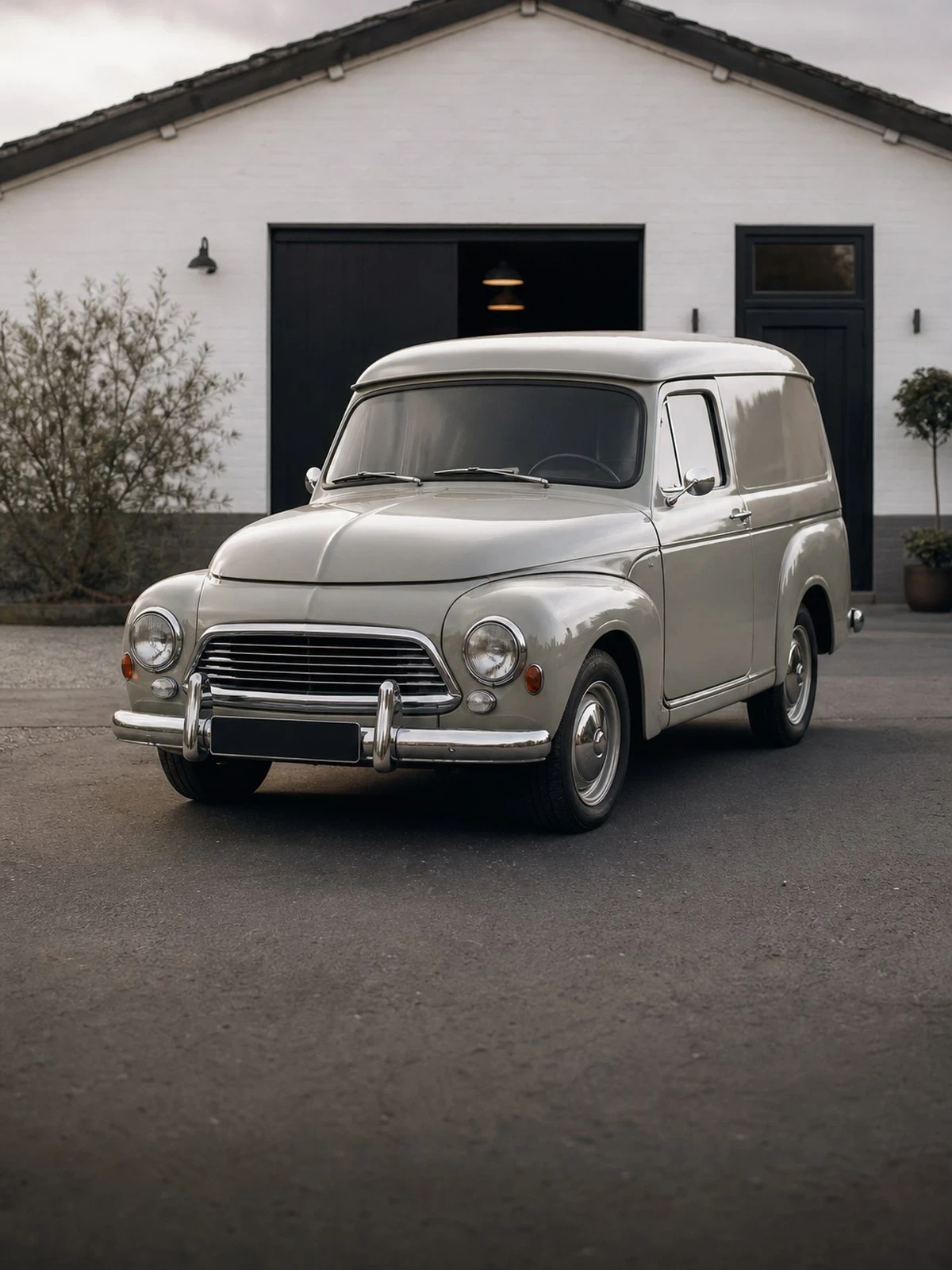 Classic car insurance
 Compare
 Get covered
Why arrange it through Finass Verzekert?
We look at the terms as well as the premium, and stay your point of contact when there is a claim.
Independent
We are not tied to one insurer and compare on the basis of an objective analysis of several companies.
One fixed adviser
You call or email someone who knows your file. No menu options, no changing call centres.
Switching without hassle
We cancel your old policy and align the start date, so you are never a day without cover.
Help with claims
We report the claim and monitor how it is handled. In urgent cases you can reach us on the emergency line.
What to look out for
Four provisions that decide the outcome of a claim on a classic van.
The valuation is the heart of the policy
Have the value established by a valuer who assesses classic vehicles, with photographs and a description of the condition. Keep the receipts for restoration work, because they support the value at the next valuation. Put the expiry date of the report in your diary: an expired valuation is the most common reason an owner receives less than expected after a loss.
Mileage, winter lay-up and business use
If you exceed the agreed mileage, drive during the winter months while the policy excludes it, or use the van for your business, you are acting outside the clause. That is not a formality: it is precisely what the premium is based on. If your use changes, report it in advance under Article 7:928 of the Dutch Civil Code and have the policy amended.
Storage and security
Almost every classic vehicle policy sets requirements for where the vehicle is kept: a locked garage, shed or yard, sometimes with an alarm or additional security. If the van is temporarily somewhere else, for example at a restorer or on an event site, check whether there is cover for that. After a theft the storage location is the first thing to be checked.
What falls outside the cover
As a rule the exclusions are wear, rust and corrosion and other gradually operating influences, damage arising during while working on, dismantling or restoring the vehicle, and taking part in competitions, speed or manoeuvring events. Carriage for payment and hire also fall outside the cover, and deliberately caused damage is excluded under Article 7:952 of the Dutch Civil Code.
What does your premium depend on?
- Agreed value: the basis for the own-damage part of the premium
- Age and condition: a restored vehicle is assessed differently from a project van
- Agreed annual mileage: fewer miles means a lower rate
- Storage location: a locked space is a requirement at most companies
- Type of cover chosen: liability only, or own-damage cover at an agreed value as well
- Age of the drivers: many policies set a minimum age
Insurers weigh these details differently. That is where your saving is.
What is covered
| Situation | Third-party liability | Comprehensive |
|---|---|---|
| You hit a lamp post with the classic van and the council sends the bill | Yes | Yes |
| A fire in the shed where the van stands for most of the year | No | Yes |
| Theft of the van while the valuation report expired two years ago | No | Provided that |
| You carry goods for an acquaintance for payment while the policy allows private use only | No | No |
| Rusted-through panels under the load floor that come to light during dismantling | No | No |
| A visitor runs into your van on the enclosed site of a classic vehicle show | No | Yes |
The agreed value sets the amount. The clause on use decides whether anything is paid at all.
Frequently asked questions
This is what people ask us most.
From when does my van count as a classic?
Insurers apply their own age threshold, and it does not coincide with the tax threshold for vehicle excise duty. If your vehicle is just below it, a youngtimer policy is often the intermediate form. Ask the company concerned what its threshold is before you apply, because the clauses on use and storage are tied to it as well.
Is rust or parts wearing through covered?
No. Wear, corrosion and other gradually operating influences are excluded on virtually every own-damage cover, because they are not a sudden and unforeseen event. If a patch of rust suddenly causes consequential damage, the cause is assessed case by case. Regular maintenance and a record of it help with that assessment.
May I do the occasional job with the classic van?
Not on a policy with a clause for recreational use. Business use and carriage for payment fall outside the cover, even if only occasional. If you want to use the vehicle for your business now and then, discuss a policy with a wider description of use. The premium is higher but you know where you stand.
What happens if the valuation has expired?
The value established no longer applies, and after a loss the market value at the time of the incident is taken as the basis. For a restored vehicle that is almost always a lower amount than the valuation showed. Have the report renewed in good time, particularly if you have had a great deal of work done on the vehicle in the meantime.
Every situation is different. For these situations we have a separate page.
- Compare classic car insuranceThe main page
- Insuring a classic car as a passenger carRepair, original parts, second car
- Insuring a classic mopedEstablishing the value, originality, storage
- Insuring a classic carValuation, fixed value, limited use
- Insuring a classic car in your company's nameRegistration in whose name, acceptance, business asset
- Insuring a classic vanCommercial registration, use, valuation
- When a business car belongs on a classic car policyClause on use, switching, daily driving
- Insuring a classic car
- Insuring a classic tractorWAM obligation, agreed value, shows and runs