

Fire and radiant heat
- Fire in a hall or installation
- Smoke and soot damage
- Business standstill as consequential loss
- Prevention requirements in the policy
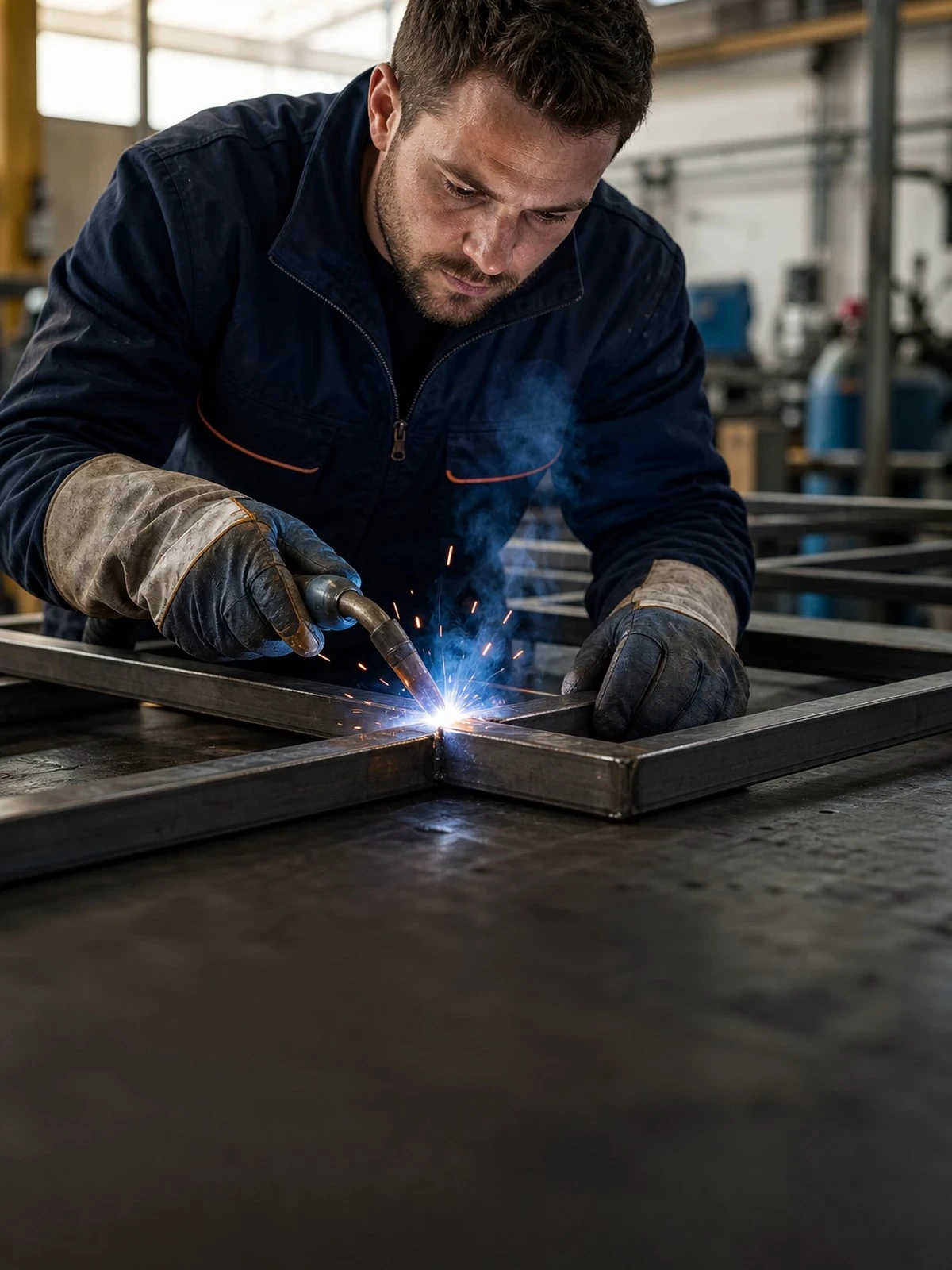
Welding means working with naked flames at other people's premises. The damage is rarely limited to the workpiece, and it is precisely that workpiece that is often not insured.
This page in another language: Nederlands · Deutsch
Work out for yourself what it would cost.
Enter your details; you will receive a proposal within one working day.
A premium indication, not personal advice. Prefer to talk it through? Call 072 - 509 24 56.
A welder's liability arises along two lines. The first is direct: through sparks, heat or arc welding a fire starts or the surroundings are damaged. The second is indirect: an unsound welded joint gives way later and causes leakage, breakdown or collapse. Both fall under Article 6:162 of the Dutch Civil Code once you have made a mistake, and both are insured by the public and employers' liability insurance (AVB) — but not in the same way.
The AVB covers property damage and personal injury to third parties and the consequential loss arising from it, such as business interruption after a fire in a production hall. What the AVB does not cover is the cost of your own work: rewelding a failing joint is a business risk. The damage that joint causes to other property may well be covered. In this trade, that distinction is the most important thing to take from the conditions.
For insurers, working with naked flames is an underwriting question, not a detail. Prevention requirements often apply: a work permit for fire-hazardous activities, extinguishers within reach, screening off the surroundings and a fire watch after hot work. If you do not meet them, the insurer may reduce the payment. See also the quotation for welders.
We compare your personal liability insurance (AVP) across dozens of insurers, explain where the real differences lie, and arrange the switch from start to finish — without you having to chase it yourself.
 Personal liability insurance (AVP)
 Compare
 Get covered
Three types of loss that most often lead to a claim in welding work.
Sparks, slag and heat that cause damage in the surrounding area.
A weld that gives way and causes consequential loss at the client.
The object you are working on and the equipment you have borrowed.
What is covered
| Situation | Basic AVB | With extension |
|---|---|---|
| Fire in the client's hall caused by sparks | Yes | Yes |
| Injury to an employee of the client | Yes | Yes |
| Water damage from a burst weld | Yes | Yes |
| Redoing your own welding work | No | No |
| Damage to the workpiece you had in hand | No | Provided that |
| A fine for breaching the work permit | No | No |
What is actually covered, including exclusions, the sum insured and the excess, is set out in the policy conditions and the insurance card (verzekeringskaart) you receive before you take out cover.
Insurers weigh these details differently. That is where your saving is.
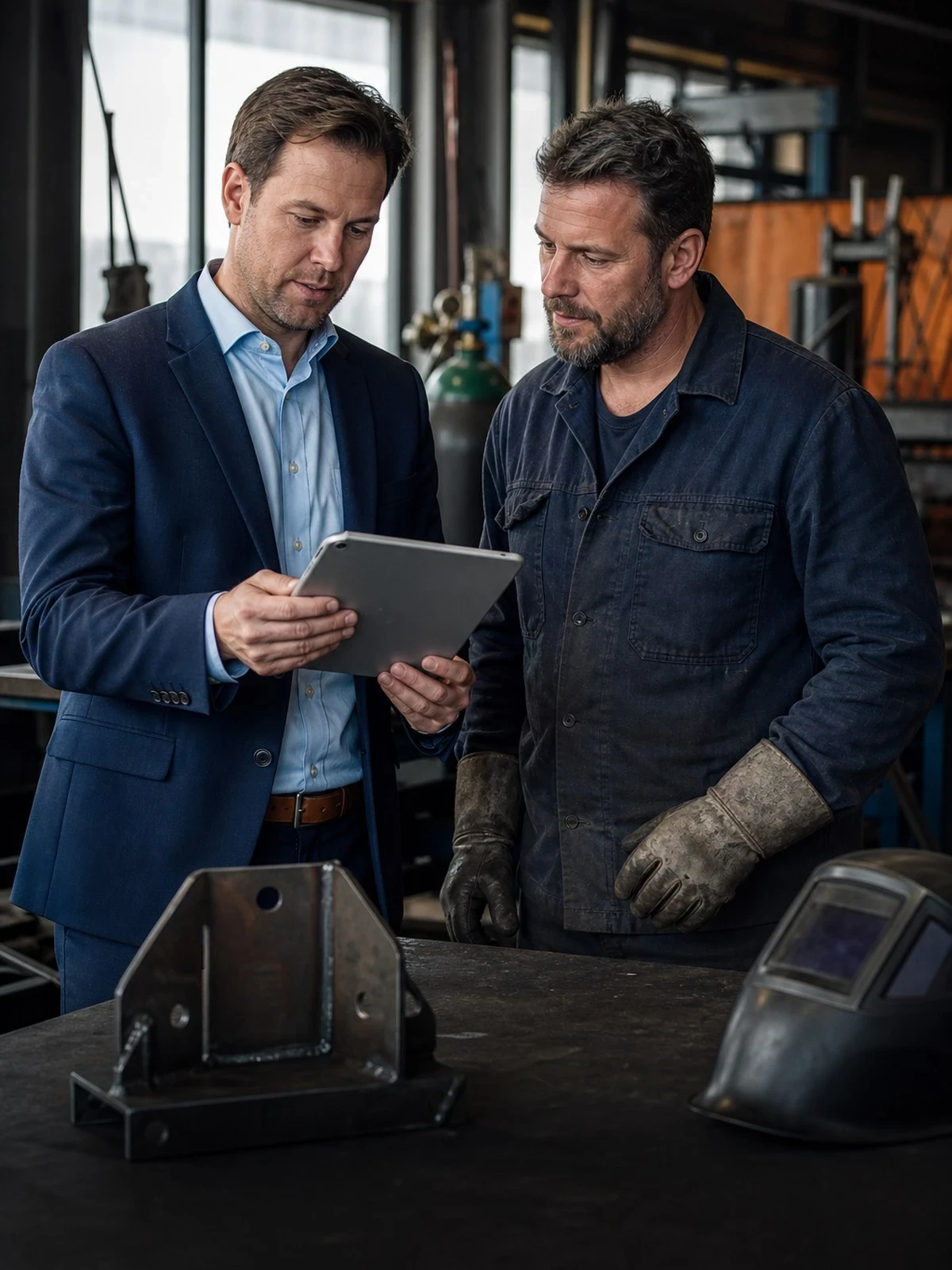
We look at the terms as well as the premium, and stay your point of contact when there is a claim.
We are not tied to one insurer and compare on the basis of an objective analysis of several companies.
You call or email someone who knows your file. No menu options, no changing call centres.
We cancel your old policy and align the start date, so you are never a day without cover.
We report the claim and monitor how it is handled. In urgent cases you can reach us on the emergency line.
Customers rate our service on four aspects: personal service, service delivery, availability and the outcome. The reviews are collected and published by NH1816 and come from customers who have actually taken out a policy with Finass Advies B.V. or reported a claim.
Four points that make the difference in welding work between a payment and a rejection.
Insurers almost always attach prevention clausesto welding, cutting and grinding. The usual ones are: a work permit for fire-hazardous work, removing or screening off flammable material in the surrounding area, extinguishers within reach and a fire watch after hot work for a period stated in the conditions. If you depart from that and a fire breaks out, the insurer may reduce or refuse the payment. Record that you have complied.
The AVB is not a guarantee policy. If your weld turns out to be unsound, you pay for the repair or replacement of that jointyourself. What the defective weld causes to other property — water damage, an installation going down, business interruption — may well be covered as consequential loss. If you work on large structures, consider whether product liability cover is needed for damage after completion.
Besides your own work, the following are structurally excluded: damage to property you had in your care (care, custody and control), pure financial loss such as delay costs without any damage, and intent and wilful recklessness under Article 7:952 of the Dutch Civil Code. Fines and penalty payments are uninsurable, while damage involving a motor vehicle or a forklift runs through that vehicle's own insurance, and on the road on the basis of Article 2 of the Dutch Motor Insurance Liability Act (WAM).
Underwriting is based on what you state about your activities and your work locations. Working in the petrochemical industry, on installations that are in operation, at height or on tanks and pipework with residual product is a different risk from work in your own workshop. State this in full. The duty of disclosure under Article 7:928 of the Dutch Civil Code applies when the policy is taken out, and a breach can reduce the payout or cause it to lapse (Article 7:930 of the Dutch Civil Code).
This is what people ask us most.
Yes, a fire you cause at a third party's premises by welding or cutting is the core of the AVB, including consequential loss such as business interruption. Prevention requirements for fire-hazardous activities almost always apply, though. If you have not complied with them, for example no fire watch afterwards or no screening, the insurer may reduce or refuse the payment.
No. The cost of repairing or redoing your own work is excluded. That is a business risk and not a liability loss. What the defective weld does to other property may well be covered. So if a pipe bursts, you pay for the weld yourself, while the water damage to the floor and the machinery may fall under the policy.
Care, custody and control concerns property you had in your care: borrowed, hired or being worked on. In welding, the workpiece is by definition being worked on, so damage to it falls outside the cover as standard. Some insurers offer care, custody and control cover with a sum insured and an excess of its own. If you work on valuable installations, ask for that extension to be quoted expressly.
If you supply structures or components that could cause damage after completion, that cover is worth considering. The ordinary AVB is aimed at damage during the work; product liability covers damage caused by goods supplied after the work has been handed over. With series welding work or components for third parties, that is a real risk.
As a self-employed professional you are not a subordinate and you can be held liable yourself for mistakes in your work. Almost every hirer also requires by contract a valid AVB with a minimum sum insured. Make sure the description of the activities on your policy matches what you actually do, including working with naked flames on site.
Every situation is different. For these situations we have a separate page.
Request a quotation without obligation. We compare prevention requirements, care, custody and control cover and the sum insured.
Prefer to call? 072 - 509 24 56, weekdays 09:00–17:00.
Claim on the road? Emergency line 06 - 55 20 40 72.
Finass Verzekert is a trading name of Finass Advies B.V. We advise on and arrange non-life insurance on the basis of an objective analysis of several insurers, and receive commission for this from the insurer, which is included in the premium. You pay no separate advice fee. Before you take out cover, we establish your wishes and needs.
You will find our licence, KvK and Kifid details and our complaints procedure at the foot of every page.
This page was compiled by Finass Verzekert (LinkedIn). Last updated on .
The information on this page is general in nature and is not personal advice.
Maandag- Vrijdag: 09:00- 17:00
We use cookies and similar technologies to improve your experience on our website.