

Liability
- Fire after hot work
- Injury to staff on site
- Damage to the building
You are hired to prevent fire. If a fire breaks out anyway, the first question is not who made the flame but whether the supervision was sound.
This page in another language: Nederlands
Work out for yourself what it would cost.
Enter your details; you will receive a proposal within one working day.
A premium indication, not personal advice. Prefer to talk it through? Call 072 - 509 24 56.
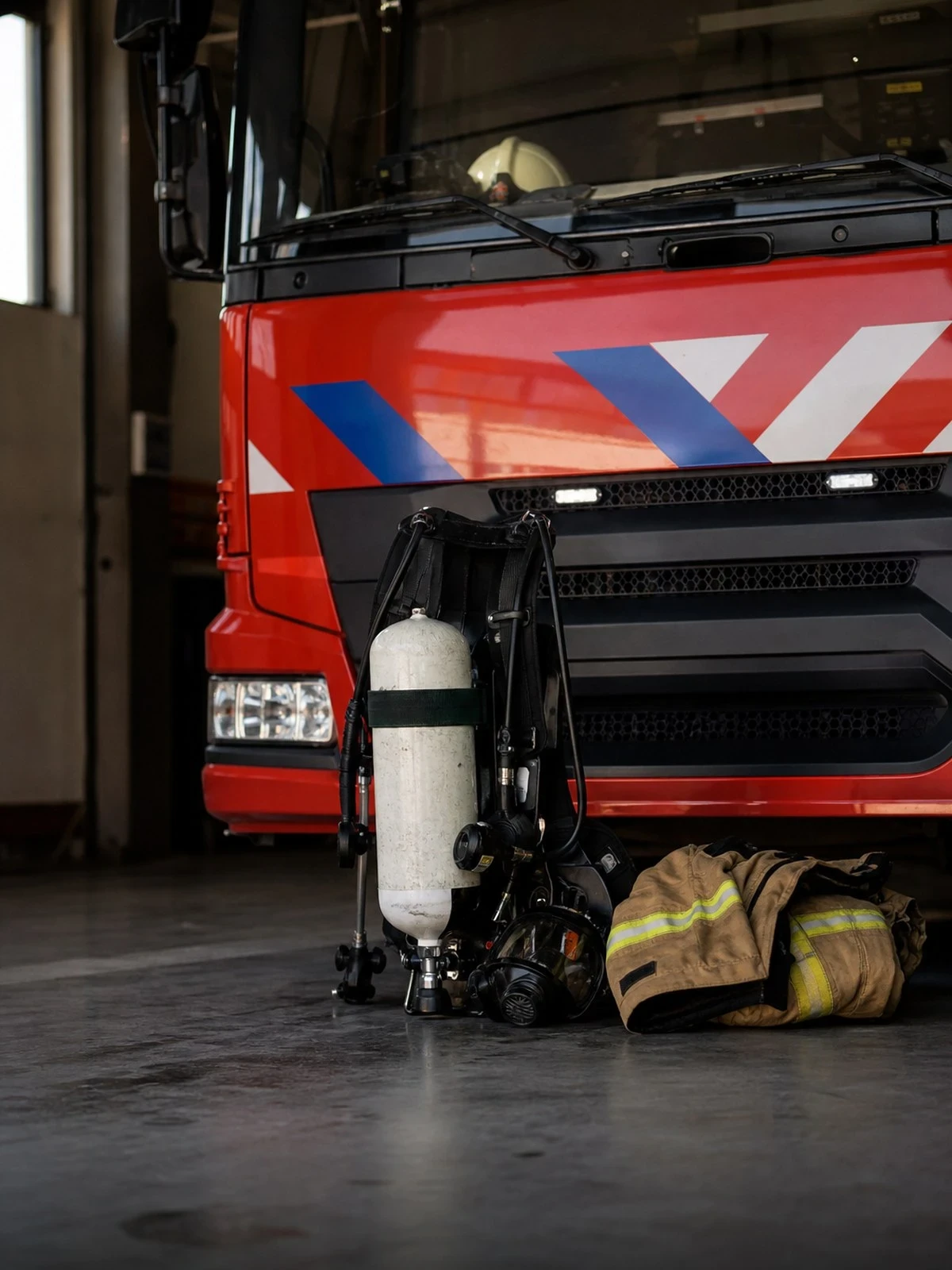
A fire watch supervises hot work, mans manhole watches and carries out follow-up checks after welding, grinding and burning. Your liability arises from your duty of care: you were appointed to control precisely this risk.
In an industrial environment, fire damage is rarely limited to the part that burns. Consequential loss and stoppage of production quickly run into millions, and clients therefore require high sums insured.
We compare your personal liability insurance (AVP) across dozens of insurers, explain where the real differences lie, and arrange the switch from start to finish — without you having to chase it yourself.
 Personal liability insurance (AVP)
 Compare
 Get covered
The structure of the cover in three parts, with an overview per situation below.
Damage and injury because the supervision fell short.
You were appointed to control precisely this risk.
What clients require by contract.
What is covered
| Situation | Covered |
|---|---|
| A fire starts during the watch | Yes |
| Damage to plant caused by that fire | Yes |
| Injury to bystanders | Yes |
| The client's production standstill | Sometimes |
| Leaving before the end of the follow-up watch period | No |
| Working without a valid work permit | No |
This overview is general in nature and is not personal advice. What is actually covered, including exclusions, limits and the excess, is set out in the policy conditions and the insurance card (verzekeringskaart) of the insurer; you receive both before you take out cover. Taking out cover without advice? Then read what execution only means for you.
Insurers weigh these details differently. That is where your saving is.
We look at the terms as well as the premium, and stay your point of contact when there is a claim.
We are not tied to one insurer and compare on the basis of an objective analysis of several companies.
You call or email someone who knows your file. No menu options, no changing call centres.
We cancel your old policy and align the start date, so you are never a day without cover.
We report the claim and monitor how it is handled. In urgent cases you can reach us on the emergency line.
Customers rate our service on four aspects: personal service, service delivery, availability and the outcome. The reviews are collected and published by NH1816 and come from customers who have actually taken out a policy with Finass Advies B.V. or reported a claim.
Four points that make the difference between a policy that pays out and one that does not.
Record the start, the follow-up watch period, the extinguishers used and the moment of release. Without a logbook, a discussion about supervision is lost before it starts.
Most fires start after the work has finished, during the follow-up watch period. Leaving before the end of it is the classic culpable mistake.
At refineries and production sites, clients require sums insured in the millions. Ask for the requirement before you tender.
VCA and a valid work permit are almost always a condition of acceptance and the first thing asked about when there is a loss.
This is what people ask us most.
You can be, if you fell short in your duty of care: leaving too early, insufficient extinguishers or no follow-up watch. Your logbook determines how that discussion goes.
On industrial and petrochemical work often several million per claim. The requirement is set out in the contract or the specification.
Property damage and injury fall under the AVB. A production standstill is pure financial loss and calls for separate arrangements.
VCA certification, training certificates and the work permits for each project.
That is set out in the contract or specification and varies widely by sector. In industry and petrochemicals it is often several million per claim. Ask for the requirement before you tender.
The AVB covers damage to property and injury to people. The BAV covers pure financial loss: financial disadvantage caused by an error, without anything being broken or anyone being injured. In downtime and delay claims, that is the difference that counts.
Every situation is different. For these situations we have a separate page.
Request a quote without obligation. We will look at which insurer best matches your activities and your risk.
Prefer to call? 072 - 509 24 56, weekdays 09:00–17:00.
Claim on the road? Emergency line 06 - 55 20 40 72.
Finass Verzekert is a trading name of Finass Advies B.V. We advise on and arrange non-life insurance on the basis of an objective analysis of several insurers, and receive commission for this from the insurer, which is included in the premium. You pay no separate advice fee. Before you take out cover, we establish your wishes and needs.
You will find our licence, KvK and Kifid details and our complaints procedure at the foot of every page.
This page was compiled by Finass Verzekert (LinkedIn). Last updated on .
The information on this page is general in nature and is not personal advice.
Maandag- Vrijdag: 09:00- 17:00
We use cookies and similar technologies to improve your experience on our website.