

Independent
- Several providers compared
- Advice follows your situation
- AFM licence 12016589
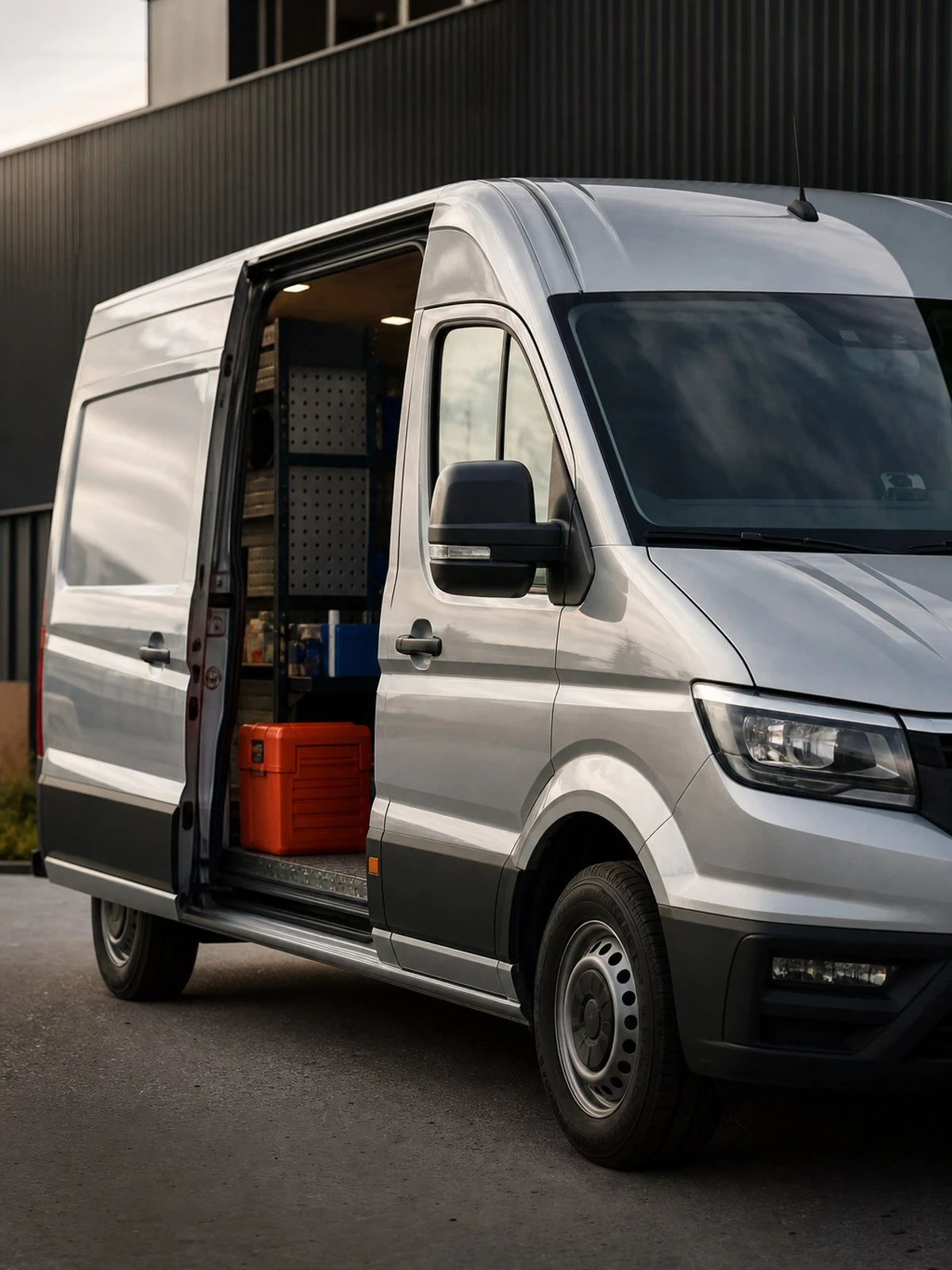
Own goods in transit insurance covers the things in your load space: your own tools, materials and machinery, which appear on no motor policy because they are not part of the vehicle.
This page in another language: Nederlands
Work out for yourself what it would cost.
Enter your details; you will receive a proposal within one working day.
A premium indication, not personal advice. Prefer to talk it through? Call 072 - 509 24 56.
This insurance is about your own property while it is being carried in your own vehicle. That is something other than carrying customers' goods for payment. For that there is carriers' liability insurance with AVC and CMR rules. No liability is needed here: the policy pays for your own loss, even where nobody is at fault.
Own-damage cover on the van insurance pays for the van, not for its contents. A business contents insurance pays for the contents of your premises, not for those of your van on the road or outside the door. The load space sits exactly between the two, and that gap is consistently overlooked.
The provision that decides everything is the storage clause: where the vehicle stands at night and whether it has to be empty then. We go through it with you and test the sum insured against what is actually inside, valued at the cost of buying it again.
We compare your goods-in-transit insurance across dozens of insurers, explain where the real differences lie, and arrange the switch from start to finish — without you having to chase it yourself.
 Goods-in-transit insurance
 Compare
 Get covered
The structure of the cover in three parts, with an overview per situation below.
We are not tied to any single company.
From assessment to policy.
What really matters.
What is covered
| What we look at | Explanation |
|---|---|
| Does the cover suit your activities | Yes |
| Sum insured and excess | Yes |
| Exclusions and clauses | Yes |
| Fit with your other policies | Yes |
| Premium in relation to the conditions | Yes |
| Comparing on premium alone | No |
This overview is general in nature and is not personal advice. What is actually covered, including exclusions, limits and the excess, is set out in the policy conditions and the insurance card (verzekeringskaart) of the insurer; you receive both before you take out cover. Taking out cover without advice? Then read what execution only means for you.
Insurers weigh these details differently. That is where your saving is.
We look at the terms as well as the premium, and stay your point of contact when there is a claim.
We are not tied to one insurer and compare on the basis of an objective analysis of several companies.
You call or email someone who knows your file. No menu options, no changing call centres.
We cancel your old policy and align the start date, so you are never a day without cover.
We report the claim and monitor how it is handled. In urgent cases you can reach us on the emergency line.
Customers rate our service on four aspects: personal service, service delivery, availability and the outcome. The reviews are collected and published by NH1816 and come from customers who have actually taken out a policy with Finass Advies B.V. or reported a claim.
Four points that make the difference between a policy that pays out and one that does not.
Virtually every policy requires the vehicle to stand in a a locked space between certain night-time hours, or the load space to be empty then. If your van stands in the street full of tools, a theft claim will be rejected, however good the lock was. Anyone without a garage or a fenced site therefore has to unload or find a policy that accepts heavier security. We find that combination for you.
The sum insured has to match what it costs to buy your complete kit again, not what is left of it for tax purposes. A set of cordless tools, measuring equipment, a core drill and the stock of materials adds up faster than business owners expect. In the event of underinsurance the claim is paid proportionately. So draw up a list with makes and serial numbers and photograph the fitted-out van. That also speeds up the handling.
Loss by no means only arises while driving. A pallet falling off the tail lift, materials left in a locked site hut, tools lying in the customer's meter cupboard during a job: whether that is included depends on how the area of cover and the cover while at restare described. Some policies cover only the items in the vehicle, others also short interim storage at the place of work.
Excluded are money, securities and valuables, damage caused by inadequate packing or improper loading, and normal wear and tear to the tools themselves. Goods belonging to others that you carry for payment also fall outside it, as does damage to the vehicle itself, which belongs on the motor policy. Theft from an unlocked or unattended load space during the day is likewise almost always refused.
This is what people ask us most.
No. Own-damage cover insures the vehicle and the parts built into it. Anything lying loose in the load space is not part of the vehicle and falls outside it, even under the widest comprehensive cover. If the van is broken into, the motor policy pays for the lock and the damage to the door. Only own goods in transit or tool insurance pays for the contents.
That policy is for businesses that carry other people's goods for payment. There, everything turns on liability under the AVC or CMR conditions and on the weight-based limits those rules work with. With own transport the goods are your own and there is no client holding you responsible: you simply insure your own property while it is being carried, without any argument about fault.
Yes, the clause is tied to the time and not to your home address. If you stay overnight on a multi-day project, the same requirements apply: a locked space or an empty load space. If that is not possible, tell us in advance; some insurers accept a temporary deviation or a guarded site. Reporting it afterwards no longer helps when you claim.
Hired equipment is not your property and does not automatically come under the cover for your own goods. Some policies have an extension for third-party property in your care, with its own limit. Without that extension, damage to hired tools falls back on the care, custody and control cover of your public and employers' liability insurance, provided that is included.
Every situation is different. For these situations we have a separate page.
Request a quote without obligation. We will look at which insurer best matches your activities and your risk.
Prefer to call? 072 - 509 24 56, weekdays 09:00–17:00.
Claim on the road? Emergency line 06 - 55 20 40 72.
Finass Verzekert is a trading name of Finass Advies B.V. We advise on and arrange non-life insurance on the basis of an objective analysis of several insurers, and receive commission for this from the insurer, which is included in the premium. You pay no separate advice fee. Before you take out cover, we establish your wishes and needs.
You will find our licence, KvK and Kifid details and our complaints procedure at the foot of every page.
This page was compiled by Finass Verzekert (LinkedIn). Last updated on .
The information on this page is general in nature and is not personal advice.
Maandag- Vrijdag: 09:00- 17:00
We use cookies and similar technologies to improve your experience on our website.