

Carriers' liability insurance through Allianz
Your liability as a carrier runs from the moment you accept the consignment to the moment you deliver it. The argument is almost always about exactly where those two moments lie.
- Several insurers compared objectively
- 9.5 customer rating for a new policy
- AFM licence 12016589
- Personal 072 - 509 24 56, weekdays 9–17
This page in another language: Nederlands
Work out for yourself what it would cost.
Enter your details; you will receive a proposal within one working day.
- We compare the offerings of several insurers
- An adviser checks whether the cover suits your activities
- We arrange the switch, including cancellation
A premium indication, not personal advice. Prefer to talk it through? Call 072 - 509 24 56.
- Independent advice
- Several insurers
- Switching arranged
- Help with claims
In brief
Finass acts as an intermediary for the business range of Allianz and is not tied to it. We compare several insurers objectively and the choice follows from what you need to cover. This company mainly comes into the picture for us with carriers who combine transport with other business covers on one contract. Carriers' liability itself is not cover on the goods, but on your obligation to deliver the consignment undamaged.
That obligation runs from taking receipt to delivery. In between you are the carrier and the regime of the AVC conditions (the Dutch general carriage conditions) applies, or, across the border, that of the CMR Convention. Before and after, you are something else: a bailee, a freight forwarder, or simply a business with goods on its premises. If a consignment stands overnight in the trailer or goes onto a cross-dock floor, that belongs on a transport and accommodation cover or on a cover for warehousing and storage.
Within that period, liability is strict. Article 17 CMR makes you liable for loss and damage, with a short list of grounds for exemption. One of them works against you: you cannot rely on a defect in the vehicle. A blowout, a burst refrigeration line or a failing tail lift therefore remains your risk, however good the maintenance was. What else can be arranged for this sector can be found under transport and logistics.
This page deals with one situation. The full overview is on a.s.r. – Carriers' liability insurance.
Independent, personal, sorted quickly
We compare your carriers' liability insurance across dozens of insurers, explain where the real differences lie, and arrange the switch from start to finish — without you having to chase it yourself.
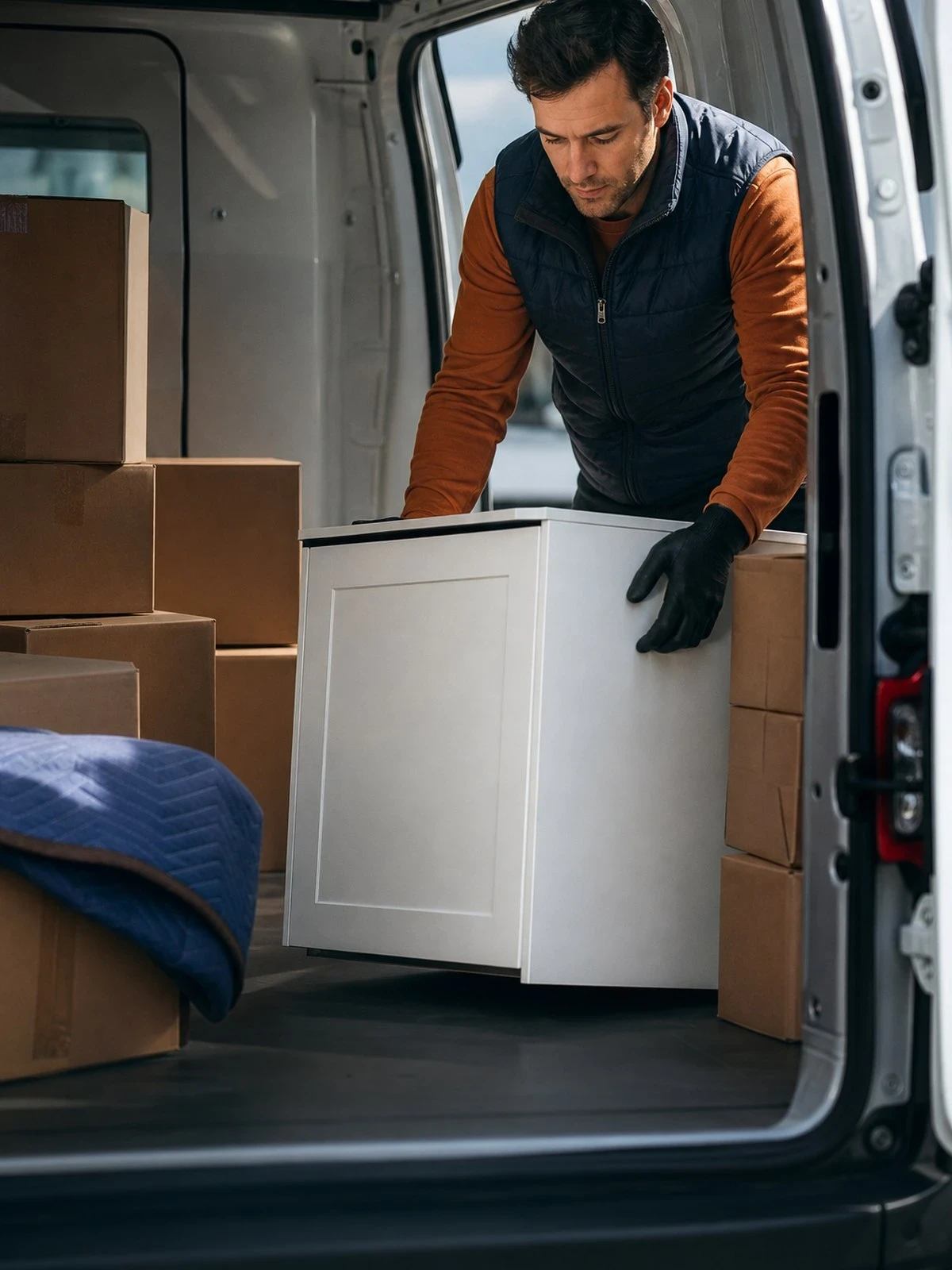 Carriers' liability insurance
 Compare
 Get covered
Why arrange it through Finass Verzekert?
We look at the terms as well as the premium, and stay your point of contact when there is a claim.
Independent
We are not tied to one insurer and compare on the basis of an objective analysis of several companies.
One fixed adviser
You call or email someone who knows your file. No menu options, no changing call centres.
Switching without hassle
We cancel your old policy and align the start date, so you are never a day without cover.
Help with claims
We report the claim and monitor how it is handled. In urgent cases you can reach us on the emergency line.
What to look out for
Four moments that cause the most argument among Dutch carriers.
A technical failure is not a ground for exemption
If the refrigeration unit fails and the load spoils, that is not force majeure under Article 17(3) CMR: a defect in the vehicle is at the carrier's expense. The same applies to a faulty tail lift or a leaking body. What you can do is record the temperature trace, so that it is established that the load was already outside specification when it was loaded.
Who loads, stows and secures
Damage caused by inadequate packing or loading by the sender is a ground for exemption, but only if you can show that you did not do it yourself and that you made a reservation in good time. Where there is doubt, have the driver note it on the consignment note and photograph the loading. Without that reservation, you are empty-handed against your customer.
Delivery to the right party
Handing over to someone who is not entitled to take receipt of the consignment counts as loss of the load and not as damage. Where unloading takes place on an empty site or outside office hours, there is often no one authorised to sign. Agree where and to whom delivery may be made, and keep the signed copy. That is your only proof of correct delivery.
The trailer and the container are not cargo
Damage to your own tractor unit, trailer, swap body or to a hired container falls outside this policy: that is damage to equipment, not liability for goods carried. For rolling stock, look at fleet insurance; and for a container you hold from someone else, the care, custody and control exclusion on the liability insurance also applies.
What does your premium depend on?
- Turnover carried per year: the basis on which the premium is calculated
- Composition of the fleet: refrigerated transport and tankers weigh differently from dry cargo
- Regular or changing customers: this determines how uniform the conditions are
- Journey times and overnight stops: more standing time en route means more theft risk
- Contractual obligations accepted: terms agreed with shippers that depart from the standard increase the risk
- Claims history: frequency counts for more here than a single large claim
Insurers weigh these details differently. That is where your saving is.
When the policy carries your liability
| Situation | Basic | Extended |
|---|---|---|
| A pallet falls over while driving because the driver had not secured the load properly | Yes | Yes |
| Theft of the complete trailer with its load from an unsupervised parking area | Provided that | Provided that |
| The consignee claims lost production because your load arrived a day late | No | Provided that |
| A customs charge because the transport documents with the consignment were not in order | No | No |
| Your trailer sinks in and damages the consignee's paved yard | No | No |
| Cargo damage with a subcontracted haulier to whom you gave the job | Provided that | Yes |
Damage to premises and injury to third parties belong on public and employers' liability insurance (AVB), not on the carriers' cover.
Frequently asked questions
This is what people ask us most.
The refrigeration failed and the load has been condemned. Am I liable?
In principle, yes. Article 17(3) CMR provides expressly that a defect in the vehicle gives no exemption, even if the unit was well maintained. The policy exists precisely for this situation, provided refrigerated transport is stated on the policy schedule and you have complied with the temperature clause. Without a record of the temperature trace, the claim is hard to substantiate.
Do I have to report damage straight away if the consignee says nothing?
Yes. Report every indication of damage to us at once; Article 7:941 of the Dutch Civil Code obliges you to do so as soon as you are reasonably aware of it. Short time limits also apply in your relationship with your customer: under Article 30 CMR, visible damage must be recorded on delivery and non-visible damage reported within a few days, otherwise you are presumed to have delivered correctly.
I have agreed wider liability with a customer. Is that covered?
Not automatically. Standard conditions cover the liability that arises from the law and from the usual carriage conditions. If you take on more than that, for example compensation at invoice value or a penalty for late delivery, that is contractually accepted liability. Have such clauses assessed in advance. Afterwards there is no scope left to amend the policy.
What if a consignment is only collected days later and stands with me until then?
Then you are not a carrier but a bailee, and the basis of your liability shifts. Many policies set a limited period for that situation or exclude it altogether. If this happens regularly, report it when you apply: circumstances that are not reported fall under Article 7:928 DCC and can lead to reduced payment under Article 7:930 DCC.
Read more
Within Compare goods in transit insurance
- Compare goods in transit insurancethe main page
- Asr zakelijk vervoerdersaansprakelijkheidsverzekering
- Nationale nederlanden zakelijk vervoerdersaansprakelijkheidsverzekering
- Chubb zakelijk vervoerdersaansprakelijkheidsverzekering
- Chubb zakelijk transportverzekering transport
- Nationale nederlanden zakelijk goederentransportverzekering