

Third-party liability
- Damage to property and injury to third parties
- No cover for your own vehicle
- Compulsory under Article 2 of the Dutch Motor Insurance Liability Act (WAM)
- Often chosen where the market value is low
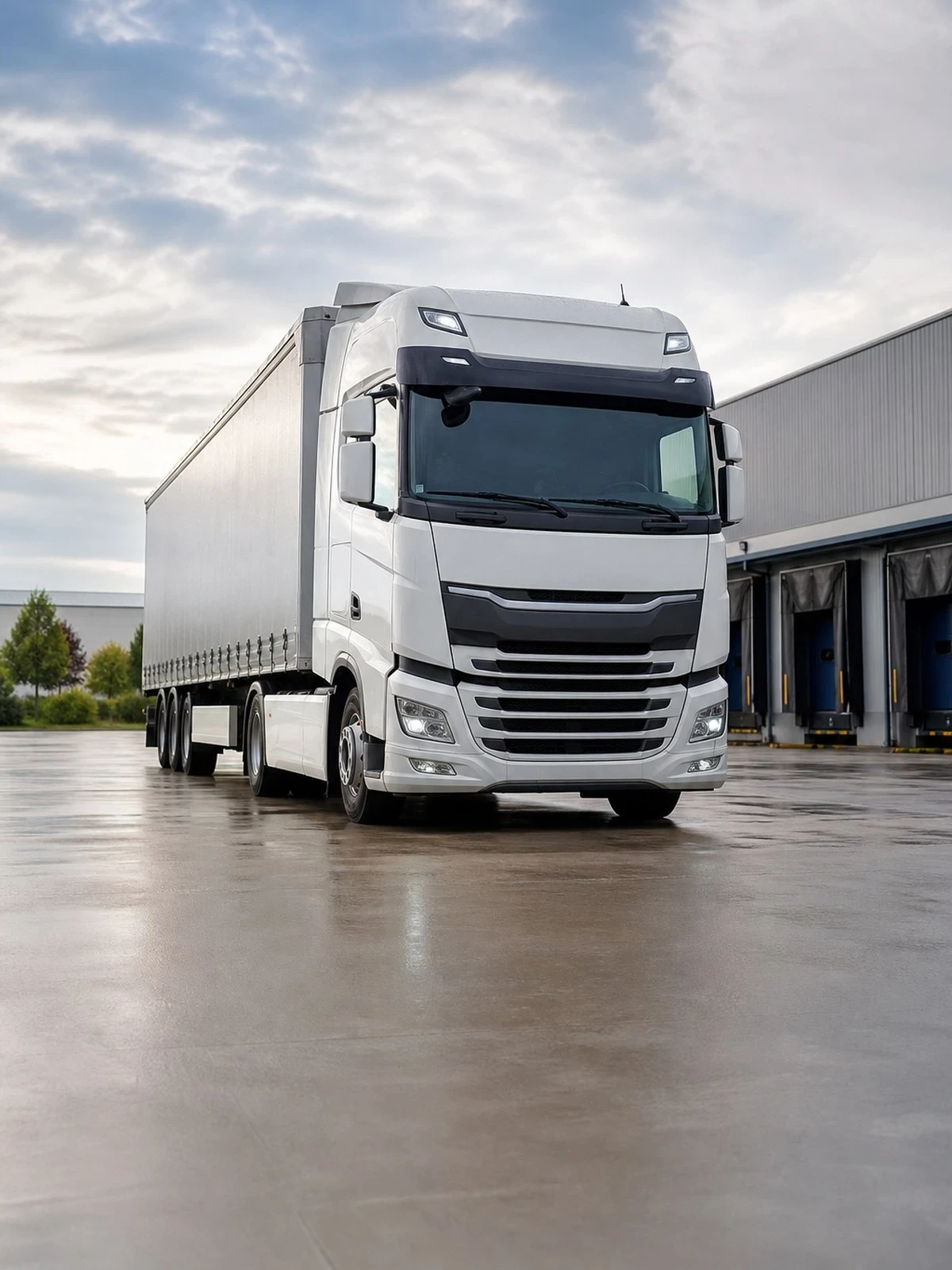
A truck registered to a private individual can be insured in various ways. Which form is suitable depends on the weight, value and use, and on whether the vehicle is registered as a motorhome.
This page in another language: Nederlands · Deutsch
Work out for yourself what it would cost.
Enter your details; you will receive a proposal within one working day.
A premium indication, not personal advice. Prefer to talk it through? Call 072 - 509 24 56.
Private individuals drive trucks more often than you might think: a converted rigid lorry used for horse transport, a former fire engine, a tractor unit without a semi-trailer for events, or an old tipper for use on their own land. For the insurer the first question is always the same: what is the vehicle used for? As soon as carriage for payment or carriage for a business is involved, a private policy is no longer the right place.
The Third-party liability cover is compulsory under Article 2 of the Dutch Motor Insurance Liability Act (WAM) as long as the registration is in your name and has not been suspended. Above that you choose between third-party, fire and theft cover and comprehensive cover. With older, heavy vehicles the trade-off is different from a car: the market value is often low, while the repair costs are high because of the size. So always ask on which basis of value the insurer pays out.
A separate route exists for vehicles converted into a motorhome and registered as such on the registration certificate. Those then fall under motorhome insurance and no longer under a truck policy. If the conversion is not on the registration, it remains a truck and you must declare the fit-out separately. What is in the living area is, moreover, not part of the own-damage cover.
We compare your truck insurance across dozens of insurers, explain where the real differences lie, and arrange the switch from start to finish — without you having to chase it yourself.
 Truck insurance
 Compare
 Get covered
Three forms of cover, with the situations that most often arise with private use set out beneath them.
The legally required cover for damage you cause to others with the lorry.
Alongside third-party liability, a fixed list of events, mainly aimed at risks while the vehicle is stationary.
Damage to your own vehicle as well, whether or not on a value agreed in advance.
What is covered
| Situation | Third-party liability + fire and theft | Comprehensive |
|---|---|---|
| Damage you cause to someone else with the lorry | Yes | Yes |
| Fire or theft of the vehicle | Yes | Yes |
| Damage to your own vehicle against a bollard or loading dock | No | Yes |
| Damage to belongings or a load in the load compartment | No | No |
| Damage to a fixed lorry-mounted crane or tail lift | Provided that | Provided that |
| A journey for a business or for payment | No | No |
What is actually covered, including exclusions, limits and the excess, is set out in the policy conditions and the insurance card (verzekeringskaart) that you receive before you take out cover.
Insurers weigh these details differently. That is where your saving is.
We look at the terms as well as the premium, and stay your point of contact when there is a claim.
We are not tied to one insurer and compare on the basis of an objective analysis of several companies.
You call or email someone who knows your file. No menu options, no changing call centres.
We cancel your old policy and align the start date, so you are never a day without cover.
We report the claim and monitor how it is handled. In urgent cases you can reach us on the emergency line.
Customers rate our service on four aspects: personal service, service delivery, availability and the outcome. The reviews are collected and published by NH1816 and come from customers who have actually taken out a policy with Finass Advies B.V. or reported a claim.
Four points that determine which option really works in your situation.
With an older truck the market value is often limited, while one damaged cab or a replaced front axle already costs a multiple of that. Comprehensive cover on a market value basis then quickly leads to a total loss where you cannot repair anything. With a well-maintained or restored vehicle a an agreed value under Article 7:960 of the Dutch Civil Code offers a solution: the value is fixed in advance and binds the insurer. Always ask which basis applies before you opt for comprehensive cover.
If you use the truck only in season, you can have the registration suspend the registration. The insurance requirement under Article 2 of the WAM then lapses, as does road tax, but the vehicle may not go on the public road. Note: fire, theft and storm damage remain a risk while it is in storage. Many insurers therefore offer storage cover or allow third-party, fire and theft cover to continue. Do not simply cancel the policy, because the vehicle would then stand uninsured in the shed.
The following, among others, are outside the cover: carriage for payment and carriage of trading goods; the load itself, because that does not fall under the vehicle's own-damage cover; wear, rust and mechanical defects without an external cause; and damage while the vehicle is hired out or lent to someone who is not named on the policy, where the policy has a restricted driver clause. Damage arising while the vehicle is used as a piece of equipment, for instance during lifting work with a lorry-mounted crane, is also often covered only with separate plant and machinery cover.
A converted load bed, a fitted crane, a generator, a living unit or a modified chassis changes the risk and the value. Report it with your application: the duty of disclosure under Article 7:928 of the Dutch Civil Code applies when the contract is entered into, and a breach of it can cause the payment to lapse under Article 7:930 of the Dutch Civil Code. If you make a significant change later, report it as a change of risk. Also make sure that the details on the registration certificate and on the policy match.
This is what people ask us most.
Yes, but not every insurer accepts it and the conditions vary widely. What matters is the use: hobby driving, occasional own-account transport or taking part in events are usually acceptable. As soon as you drive for payment or carry a business's goods, the insurer will refer you to a business policy. State your actual use in full with your application.
That depends on the basis of value. On a market value basis, comprehensive cover is often worth little on an old vehicle, because the payment is low and the vehicle is quickly declared a total loss. On a valued amount under Article 7:960 of the Dutch Civil Code the position is different, because the amount is fixed in advance. Ask the insurer explicitly which basis applies before you choose.
If the camper fit-out is on the registration certificate, the vehicle usually belongs on motorhome insurance and not on a truck policy. If the conversion is not on it, it remains a truck and you must declare the fit-out separately. In both cases the contents of the living area do not automatically fall under the own-damage cover; separate contents cover is needed for that.
That is only allowed if the policy permits it. Some private policies have a restricted driver clause or an age clause. If someone drives who is not covered by it, an own-damage claim may go unpaid and the insurer may seek recovery in the event of a third-party liability claim. On top of that the driver must have the required C1 or C licence. Without that licence the own-damage cover lapses.
As long as the registration has not been suspended, you must have third-party liability insurance under Article 2 of the WAM. For the risks that remain while it is stationary, such as fire, theft and storm damage, you need third-party, fire and theft cover. If you suspend the registration, the third-party liability requirement lapses, but let the own-damage cover continue so that the vehicle remains insured in storage.
Every situation is different. For these situations we have a separate page.
Request a quote without obligation. We compare both the premium and the conditions and look at the basis of value with you.
Prefer to call? 072 - 509 24 56, weekdays 09:00–17:00.
Claim on the road? Emergency line 06 - 55 20 40 72.
Finass Verzekert is a trading name of Finass Advies B.V. We advise on and arrange non-life insurance on the basis of an objective analysis of several insurers, and receive commission for this from the insurer, which is included in the premium. You pay no separate advice fee. Before you take out cover, we establish your wishes and needs.
You will find our licence, KvK and Kifid details and our complaints procedure at the foot of every page.
This page was compiled by Finass Verzekert (LinkedIn). Last updated on .
The information on this page is general in nature and is not personal advice.
Maandag- Vrijdag: 09:00- 17:00
We use cookies and similar technologies to improve your experience on our website.