

Third-party liability
- Damage to third parties and injury
- No cover for your own vehicle
- Compulsory under Article 2 of the Dutch Motor Insurance Liability Act (WAM)
- Also when parked on the public road
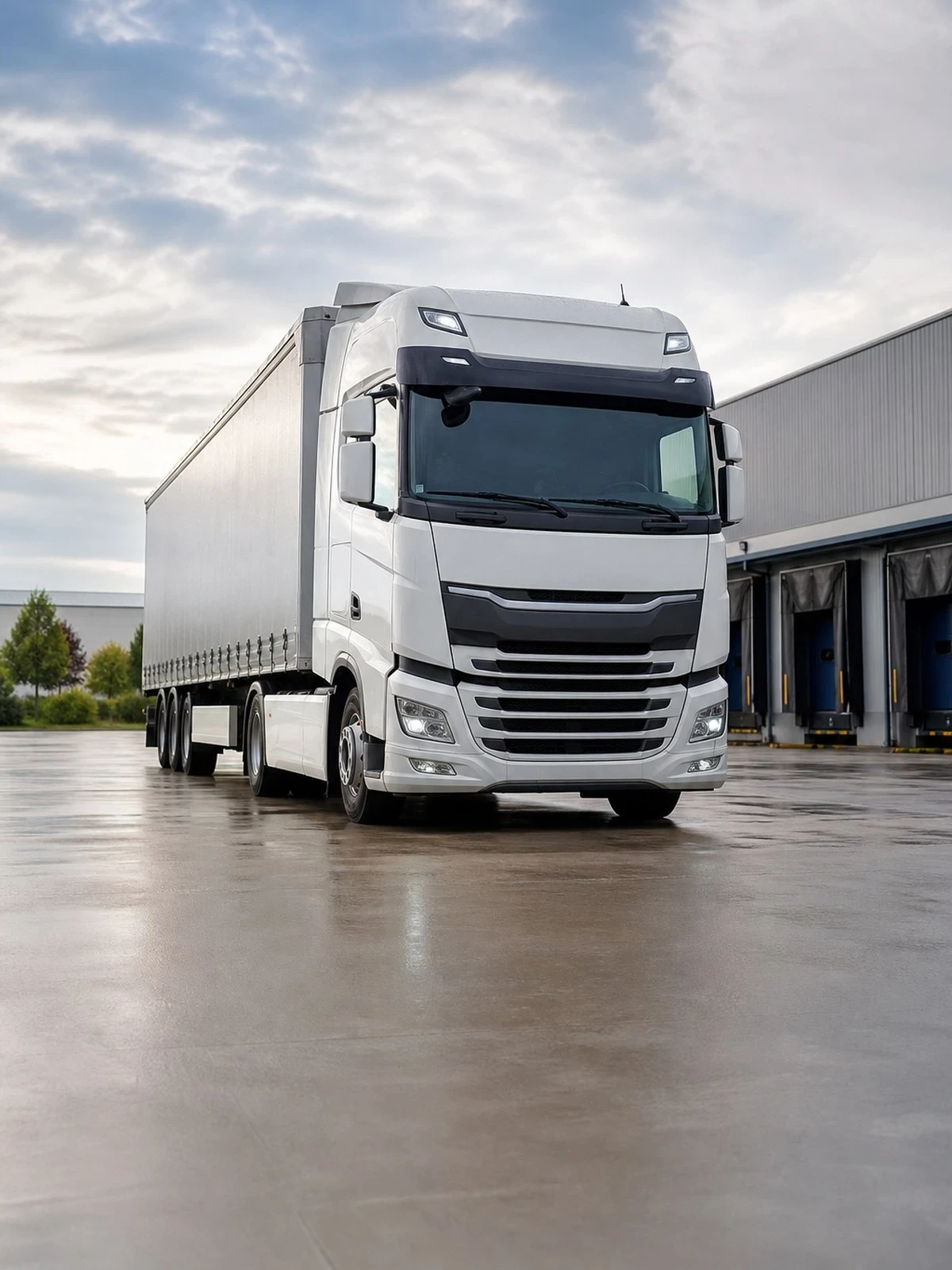
A restored lorry used for outings, fairs and events is not a business asset but a hobby vehicle. That distinction determines which policy you need, what premium you pay and where the cover ends.
This page in another language: Nederlands · Deutsch
Work out for yourself what it would cost.
Enter your details; you will receive a proposal within one working day.
A premium indication, not personal advice. Prefer to talk it through? Call 072 - 509 24 56.
A hobby lorry is insured on the basis of hobby use: driving for pleasure, taking part in events and journeys to fairs and museums. As soon as you carry a load for someone else or receive payment for it, it is commercial carriage of goods. Different rules then apply — a licence, professional competence and a business policy — and the hobby policy no longer provides own-damage cover. That distinction is at the heart of every discussion about these vehicles.
The Third-party liability cover is compulsory under Article 2 of the Dutch Motor Insurance Liability Act (WAM), including for a vehicle that stands idle for virtually the whole year. With a lorry, liability is also a real issue: mass and braking distance make the consequences of a collision greater than with a car. For damage to the vehicle itself, own-damage cover is needed, preferably on the basis of a agreed value.
That valuation matters more with this type of vehicle than with an ordinary car. A restored tractor unit or rigid lorry has no market value that follows from a table. The value lies in the restoration work, the originality and the completeness. If the valuation report is incorporated into the policy, that value is the starting point in the event of a claim under Article 7:960 of the Dutch Civil Code, instead of an estimate made afterwards. Include the body, the crane or the special fit-out in that as well: they are not automatically covered.
We compare your truck insurance across dozens of insurers, explain where the real differences lie, and arrange the switch from start to finish — without you having to chase it yourself.
 Truck insurance
 Compare
 Get covered
Three forms of cover, with the situations that most often lead to discussion with this use set out beneath them.
The legally required cover for damage you cause to others.
Alongside third-party liability, a fixed list of events such as fire, theft, storm and windscreen damage.
Full own-damage cover with a value agreed in advance, including the body.
What is covered
| Situation | Third-party liability | Own-damage cover on an agreed value |
|---|---|---|
| Damage you cause to someone else | Yes | Yes |
| Fire or theft while in storage | No | Yes |
| Your own damage after a collision on the road | No | Yes |
| Taking part in an event or parade | Yes | Provided that |
| Carriage of loads for third parties for payment | Provided that | No |
| Rust, wear or a mechanical defect | No | No |
What is actually covered, including exclusions, limits and the excess, is set out in the policy conditions and the insurance card (verzekeringskaart) that you receive before you take out cover.
Insurers weigh these details differently. That is where your saving is.
We look at the terms as well as the premium, and stay your point of contact when there is a claim.
We are not tied to one insurer and compare on the basis of an objective analysis of several companies.
You call or email someone who knows your file. No menu options, no changing call centres.
We cancel your old policy and align the start date, so you are never a day without cover.
We report the claim and monitor how it is handled. In urgent cases you can reach us on the emergency line.
Customers rate our service on four aspects: personal service, service delivery, availability and the outcome. The reviews are collected and published by NH1816 and come from customers who have actually taken out a policy with Finass Advies B.V. or reported a claim.
Four points that determine whether the policy actually pays out in the event of a claim.
A hobby policy assumes that you do not carry goods for someone else and do not receive payment for it. Even a favour — a house move for an acquaintance, a load for an association — can cross that line as soon as there is something in return. For commercial carriage of goods with vehicles over 3,500 kilograms, licensing requirements apply, and insurers exclude that use on a hobby policy. If it happens anyway, an own-damage claim can be refused; the compulsory third-party liability cover continues to apply towards the victim, but the insurer can recover the amount paid from you.
For a vehicle with a maximum authorised mass above 3,500 kilograms you need a category C driving licence, with CE if there is a trailer or semi-trailer. The code 95 certificate of professional competence is intended for commercial transport and is usually not required for hobby use; check this with the CBR before you take to the road. For vehicles of forty years and older there is a exemption from vehicle tax. Those are tax and licensing rules, not cover rules: if someone drives without the correct entitlement, that is an exclusion on virtually every policy.
The following, among others, are outside the cover: carriage of goods for third parties or for payment, including occasional journeys; damage to the load being carried itself, which never falls under the vehicle policy but under goods or carrier's liability cover; and rust, wear and mechanical defects without a collision, such as a defective compressor, clutch or air suspension. In addition, truck trials, speed and skill trials are excluded, as is damage caused by work with a fitted crane where it is not separately covered. Intent and recklessness fall outside the cover under Article 7:952 of the Dutch Civil Code.
The favourable premium is linked to limited use. Insurers set a maximum number of kilometres per year and impose requirements on the place of storage: a locked site or shed, sometimes with a burglar alarm. With a vehicle of this size, outdoor storage is often unavoidable. In that case have it expressly recorded what is permitted, because a departure from it affects precisely the theft and vandalism cover. When you take out the policy, the duty of disclosure under Article 7:928 of the Dutch Civil Code applies to use, storage, bodywork and drivers. An incorrect statement can cause the payment to lapse (Article 7:930 of the Dutch Civil Code). You report a claim as soon as reasonably possible (Article 7:941 of the Dutch Civil Code).
This is what people ask us most.
When you do not carry goods for someone else with it and there is no payment in return. It is about journeys for pleasure, to events, fairs and museums, and about trips for maintenance and inspection. As soon as third-party goods are carried or payment is made for the transport, the journey falls outside the hobby policy. Insurers test this after a claim against consignment notes, agreements and payments.
For non-commercial transport, the driving and rest time rules and the tachograph requirement usually do not apply, but the exemptions are narrowly defined and depend on mass and use. Check this with the Human Environment and Transport Inspectorate before you take the vehicle onto the road. For the insurance, what matters most is that the use matches what you stated in your application.
Not automatically. A lorry-mounted crane, refrigeration unit, tipper or special body must be named and valued separately, otherwise only the chassis and the cab are covered in the event of a claim. What is more, damage arising while working with a crane is a different risk from traffic damage; separate plant and machinery cover or liability cover is often needed for that. Have this expressly stated on the policy.
First check the driver clause. Many policies limit the group of drivers or set a minimum age and a number of years of licence holding. If someone drives who does not meet those requirements, an own-damage claim can be refused and a claim will also cost you your no-claims years. Only lend the vehicle to someone who is genuinely entitled to drive it and whom you have registered with the insurer in advance.
The third-party liability requirement continues as long as the registration is in your name and has not been suspended. Suspension through the RDW (the Dutch vehicle authority) is possible, but the vehicle may then not be parked on the public road and the own-damage cover lapses unless you take out separate storage cover. For a vehicle that stands in a shed all year, that combination of suspension and storage cover is often the cheapest route.
Every situation is different. For these situations we have a separate page.
Request a quote without obligation. We look at use, valuation, bodywork and storage.
Prefer to call? 072 - 509 24 56, weekdays 09:00–17:00.
Claim on the road? Emergency line 06 - 55 20 40 72.
Finass Verzekert is a trading name of Finass Advies B.V. We advise on and arrange non-life insurance on the basis of an objective analysis of several insurers, and receive commission for this from the insurer, which is included in the premium. You pay no separate advice fee. Before you take out cover, we establish your wishes and needs.
You will find our licence, KvK and Kifid details and our complaints procedure at the foot of every page.
This page was compiled by Finass Verzekert (LinkedIn). Last updated on .
The information on this page is general in nature and is not personal advice.
Maandag- Vrijdag: 09:00- 17:00
We use cookies and similar technologies to improve your experience on our website.