

Liability
- Covered while coupled
- Under the car's third-party liability cover
- Uncoupled: no longer covered
A touring caravan stands still for most of the year, and most damage occurs in exactly that period: storm on the campsite, hail on the roof and theft from storage.
This page in another language: Nederlands
Work out for yourself what it would cost.
Enter your details; you will receive a proposal within one working day.
A premium indication, not personal advice. Prefer to talk it through? Call 072 - 509 24 56.
A caravan is not a motor vehicle but a trailer. So no separate third-party liability insurance is needed as long as the caravan is coupled to the car: the WAM cover through the towing vehicle then continues to run. What you insure with NH1816 is therefore essentially own-damage cover on the caravan itself, possibly extended with contents and the awning.
The risk profile is determined by downtime. A caravan that stands on a fixed pitch from April to October and spends the rest of the year in storage runs hardly any traffic risk, but does run storm, hail, damp and theft risk. Insurers attach conditions to this that have nothing to do with driving: the storage address, the hitch lock and the state of the roof.
If you mainly travel abroad and your risk lies in the journey itself, also look at how the caravan insurance through Turien & Co. If the caravan stands in one place all year, a static caravan insurance the right form.
We compare your caravan insurance across dozens of insurers, explain where the real differences lie, and arrange the switch from start to finish — without you having to chase it yourself.
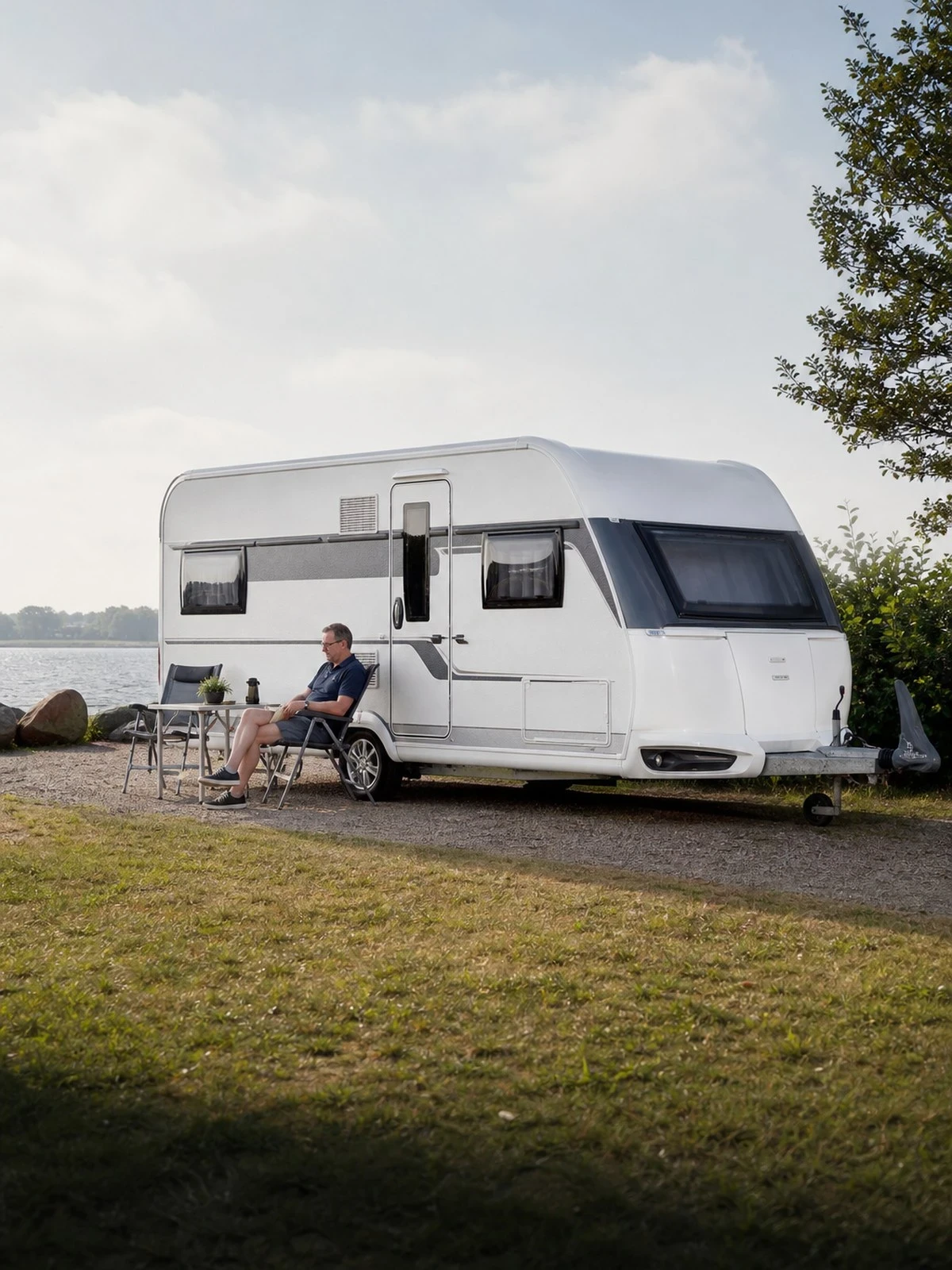 Caravan insurance
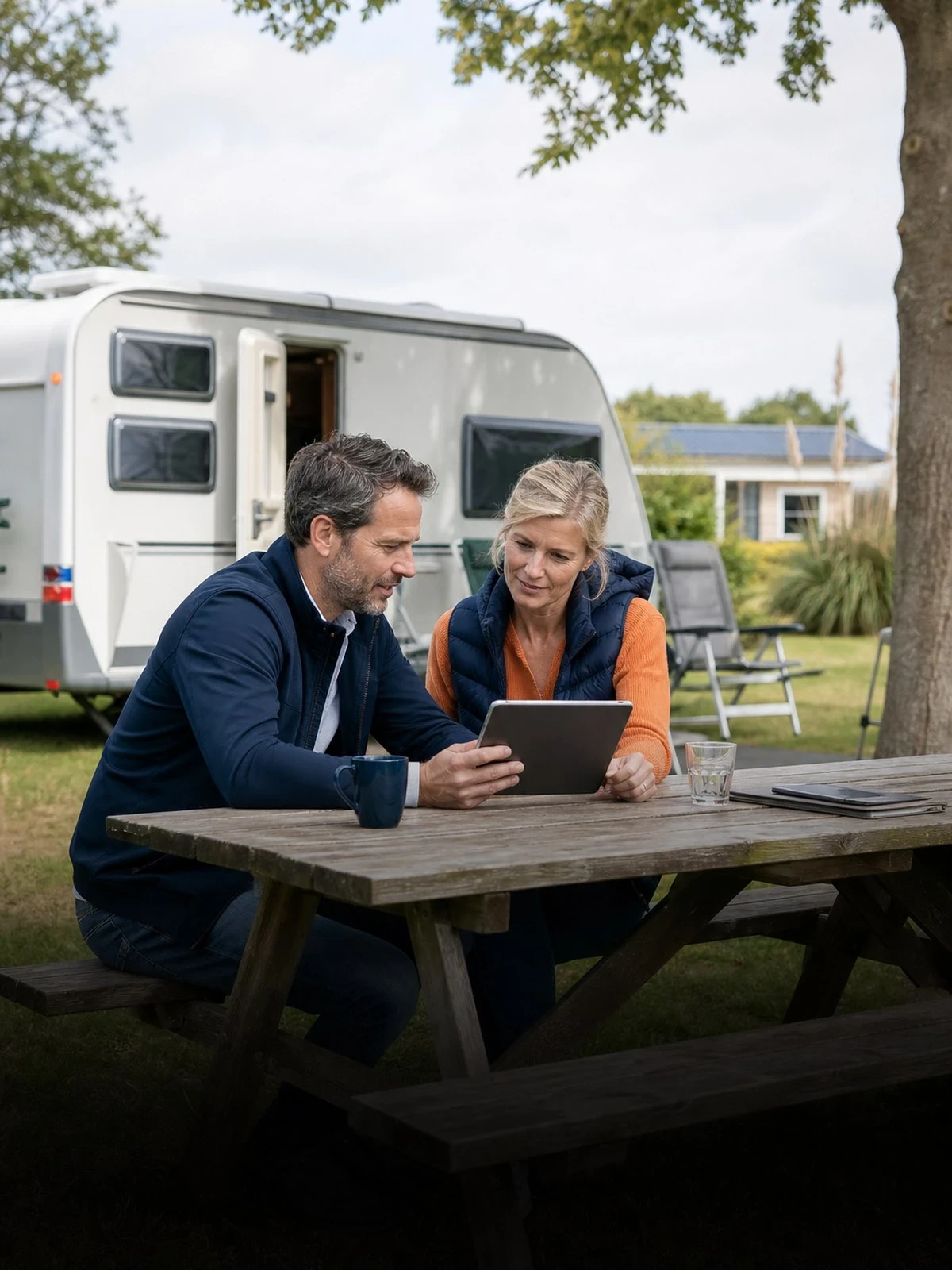 Compare
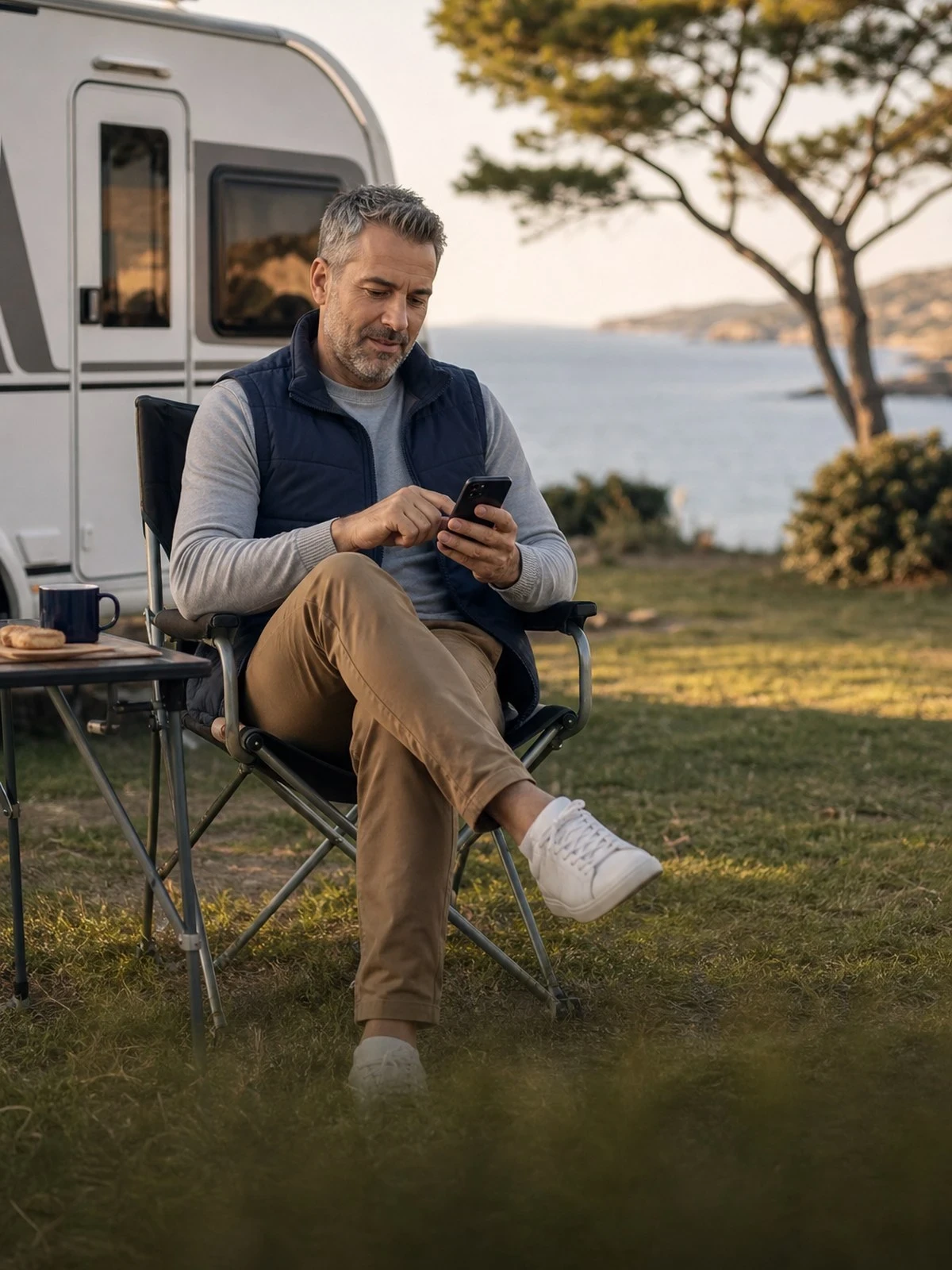 Get covered
The structure of the cover in three parts, with an overview per situation below.
Damage you cause to others with the trailer.
External causes beyond your control.
Including damage you cause yourself.
What is covered
| Situation | Third-party, fire and theft | Comprehensive |
|---|---|---|
| Theft after forced entry, with the prescribed lock | Yes | Yes |
| Fire and storm damage on the pitch | Yes | Yes |
| Hail damage to roof and walls | Provided that | Yes |
| Collision damage while manoeuvring | No | Yes |
| Contents in the caravan or trailer | Provided that | Provided that |
| Damp, wear and deferred maintenance | No | No |
A trailer or caravan is not an independent motor vehicle and therefore has no insurance requirement of its own. Damage you cause to others with it falls under the third-party liability cover of the towing vehicle, as long as the combination is coupled (Article 2 WAM). Once the trailer is uncoupled and has come to a standstill, that cover no longer applies.
This overview is general in nature and is not personal advice. What is actually covered, including exclusions, limits and the excess, is set out in the policy conditions and the insurance card (verzekeringskaart) of the insurer; you receive both before you take out cover. Taking out cover without advice? Then read what execution only means for you.
Insurers weigh these details differently. That is where your saving is.
We look at the terms as well as the premium, and stay your point of contact when there is a claim.
We are not tied to one insurer and compare on the basis of an objective analysis of several companies.
You call or email someone who knows your file. No menu options, no changing call centres.
We cancel your old policy and align the start date, so you are never a day without cover.
We report the claim and monitor how it is handled. In urgent cases you can reach us on the emergency line.
Customers rate our service on four aspects: personal service, service delivery, availability and the outcome. The reviews are collected and published by NH1816 and come from customers who have actually taken out a policy with Finass Advies B.V. or reported a claim.
Four points that make the difference between a policy that pays out and one that does not.
The biggest source of loss for a stationary caravan is the weather. Hail dents the thin roof panel, wind lifts an open roof vent off its hinge and a fallen tree pushes in the wall. Storm cover usually applies only from a certain wind force, and damage caused by an open vent or window is often not paid. Close the caravan up when you leave the pitch, even for a day.
What you declare as winter storage on the application is not an administrative detail. If the caravan moves to cheaper storage or to a relative's driveway, the actual situation differs from what is insured. In the event of theft, that can lead to reliance on Article 7:928 of the Dutch Civil Code on the duty of disclosure and on the change of risk. So always report a change of storage.
Water that gradually works its way in through a seam, a window seal or the roof vent falls outside the cover, as does the wood rot that follows. Only sudden and unforeseen damage is insured. An annual damp reading during servicing provides the evidence that the problem had not existed for years, and on older caravans it is the difference between payment and rejection.
The awning does not automatically belong to the caravan. It falls under a separate section with its own limit and usually with the condition that it is taken down when a storm is forecast. Contents inside have their own sum insured and the requirement that the caravan was locked. Bicycles, gas bottles and a loose awning groundsheet outside the caravan generally fall outside both sections.
Replacement transport after a claim Stay mobile with replacement transport.
This is what people ask us most.
Not while the caravan is coupled to the car. The third-party liability cover of the towing vehicle then continues under the Dutch Motor Insurance Liability Act (WAM). If the caravan is uncoupled and then causes damage, the question shifts to your liability as its owner and your personal liability insurance (AVP) may come into play.
Under third-party, fire and theft and comprehensive cover, hail is in principle an insured event. The discussion is usually about something else: whether the damage is new or from an earlier storm, and whether the thin roof panel can still be repaired or has to be replaced. So have damage photographed and reported straight away, even if you will not use the caravan again until next season.
Lending within your private circle is usually allowed, hiring it out for payment is not. In the case of hire, including through an online platform, there is no cover during that period unless it has been arranged in advance. When lending, make sure the driver has a licence that matches the weight of the combination; otherwise a cover problem arises after all.
Yes, because it is precisely during the storage period that theft, fire and storm damage occur. Some insurers apply a lower premium for the months the caravan is in storage, but the cover continues. Cancelling for the winter and taking out a new policy in spring leaves an uninsured period at exactly the moment the risk is greatest.
Every situation is different. For these situations we have a separate page.
Request a quote without obligation. We will look at which insurer best matches your activities and your risk.
Prefer to call? 072 - 509 24 56, weekdays 09:00–17:00.
Claim on the road? Emergency line 06 - 55 20 40 72.
Finass Verzekert is a trading name of Finass Advies B.V. We advise on and arrange non-life insurance on the basis of an objective analysis of several insurers, and receive commission for this from the insurer, which is included in the premium. You pay no separate advice fee. Before you take out cover, we establish your wishes and needs.
You will find our licence, KvK and Kifid details and our complaints procedure at the foot of every page.
This page was compiled by Finass Verzekert (LinkedIn). Last updated on .
The information on this page is general in nature and is not personal advice.
Maandag- Vrijdag: 09:00- 17:00
We use cookies and similar technologies to improve your experience on our website.