

Car insurance through MS Amlin
MS Amlin is one of the companies Finass works with. What you have in a car policy only shows after a claim: in the value then paid and in the way the repair runs.
- Several insurers compared objectively
- 9.5 customer rating for a new policy
- AFM licence 12016589
- Personal 072 - 509 24 56, weekdays 9–17
This page in another language: Nederlands
Work out for yourself what it would cost.
Enter your details; you will receive a proposal within one working day.
- We compare the offerings of several insurers
- An adviser checks whether the cover suits your situation
- We arrange the switch, including cancellation
A premium indication, not personal advice. Prefer to talk it through? Call 072 - 509 24 56.
- Independent advice
- Several insurers
- Switching arranged
- Help with claims
In brief
Finass acts as broker and adviser. The policy itself comes from the company. We set the range of more than thirty insurers side by side and MS Amlin is one of them. The order in our advice is always the same: first establish what cover your situation calls for, then look for the company that provides that cover on the best conditions. The general explanation of the types of cover is set out on the hub page compare car insurance.
The element on which car policies differ most is the valuation. As standard, own-damage cover pays the market value: what the car was worth immediately before the accident, not what you paid for it. Many sets of conditions also have a purchase value or replacement value as new arrangement, but that only applies within an age limit for the car named in the conditions and often only for the first owner. If that arrangement is not on your policy schedule, you fall back on market value. Exactly what has been agreed is set out in the policy conditions and on the insurance card (verzekeringskaart).
The second difference lies in the handling. Insurers work with a network of repairers. If you choose a repairer outside it, many sets of conditions apply a higher excess. Glass damage is treated differently from bodywork: repair usually carries no excess or a low one, replacement does not. How such a process runs, from report to payment, is described at the claims process for car damage.
This page deals with one situation. The full overview is on Compare car insurance.
Independent, personal, sorted quickly
We compare your car insurance across dozens of insurers, explain where the real differences lie, and arrange the switch from start to finish — without you having to chase it yourself.
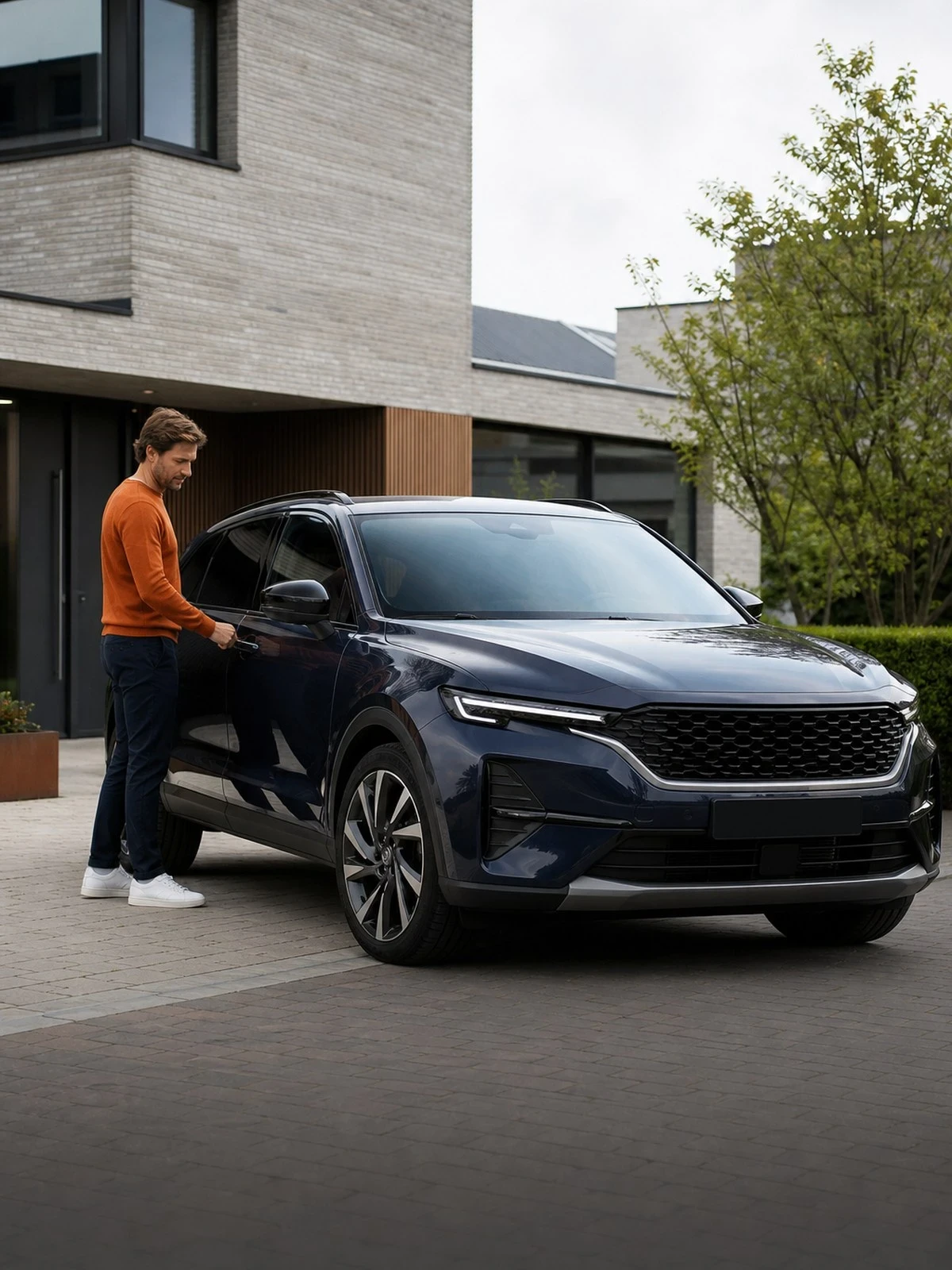 Car insurance
 Compare
 Get covered
Why arrange it through Finass Verzekert?
We look at the terms as well as the premium, and stay your point of contact when there is a claim.
Independent
We are not tied to one insurer and compare on the basis of an objective analysis of several companies.
One fixed adviser
You call or email someone who knows your file. No menu options, no changing call centres.
Switching without hassle
We cancel your old policy and align the start date, so you are never a day without cover.
Help with claims
We report the claim and monitor how it is handled. In urgent cases you can reach us on the emergency line.
What to look out for
Four provisions that influence the amount paid more strongly than the difference in premium between two providers.
Market value, purchase value or replacement value as new
When you get a quotation, ask expressly which arrangement applies and up to what age of the car. A purchase value arrangement ends on the day the car passes the limit named; market value applies after that, even if the premium stays the same. On an imported or self-built car a agreed value valuation is often the only way to avoid argument afterwards.
A total loss and what comes off the amount
If the repair costs exceed the market value, the car is an economic write-off. You receive the market value less the residual value of the wreck if you keep the wreck, and less the excess. With serious damage an entry follows in the vehicle register, meaning the vehicle first has to be inspected before it may go back on the road.
Repairs, glass and loss of value
Repairs are in principle carried out at an approved firm. If you depart from that, it usually increases your excess. Also note that loss of value after a proper repair is excluded in virtually all conditions: the car has been repaired, and the lower amount you get for it later is not an insured loss.
What never falls under the cover
Excluded are, among others driving without a valid licence, driving under the influence or refusing a breath test, and intent or recklessness under Article 7:952 of the Dutch Civil Code. Also wear, mechanical defects and design faults are not own damage, and use for hire, paid passenger transport, driving lessons or speed events is not covered without a declaration.
What does your premium depend on?
- Type of cover chosen: third-party liability, third-party, fire and theft, or comprehensive cover
- Value and year of manufacture of the car: determine the repair costs and the valuation arrangement
- No-claims years: your step on the bonus-malus ladder
- Excess: a higher amount per event brings the premium down
- Region and where the vehicle is kept: the chance of theft and collision differs per postcode
- Use and annual mileage: commuting, business use and the number of kilometres
Insurers weigh these details differently. That is where your saving is.
What is covered
| Situation | Third-party liability | Comprehensive |
|---|---|---|
| You open your door and a cyclist passing by comes off as a result | Yes | Yes |
| Your car rolls into a wall on a sloping parking deck because the handbrake was not applied | No | Yes |
| A fence blows over against the side of your car during a storm | No | Yes |
| In a break-in to the car the luggage disappears from the boot as well | No | Provided that |
| In a burglary at your home the car keys are taken and the car disappears from the drive | No | Provided that |
| You put petrol in a diesel car and the engine seizes | No | No |
Where fault is shared, the loss is divided. Your own-damage cover then pays the part you cannot recover from the other party.
Frequently asked questions
This is what people ask us most.
What exactly is market value?
The market value is the amount your car was worth immediately before the incident on the second-hand market, having regard to the year of manufacture, odometer reading, version and condition. So it is not the price you once paid and not the replacement price at a dealer. A valuer establishes the amount. A purchase value arrangement differs from this, but only applies as long as the car falls within the age named in the conditions.
My car has been declared a total loss. What happens now?
The insurer establishes the market value and compares it with the repair costs. If repair costs more, the market value is paid. If you keep the wreck yourself, the residual value is deducted. If you have it removed, it is sold through the insurer. The excess remains at your expense in both cases and the cover ends as soon as the vehicle is deregistered.
May I choose my own repairer?
You almost always may, but it costs money. Many sets of conditions apply an increased excess if you go outside the repair network, and sometimes the guarantee on the repair through the insurer lapses. With glass damage the distinction is sharper still: repairing a chip usually carries a more favourable excess than replacing the glass completely.
Who handles the claim: MS Amlin or Finass?
The assessment of cover and the payment lie with the insurer, because that is who you contract with. Finass reports the claim, monitors progress and takes up the conversation on your behalf if the payment differs from what the conditions promise. What we do and do not do in that process, and how you make a complaint, is set out in the service guide.
Every situation is different. For these situations we have a separate page.
- Compare car insuranceThe main page
- Is comprehensive cover worth it?Market value, excess, no-claims years
- Car insurance through a.s.r.Accessories, total loss, modifications
- Car insurance for the Audi A6Mid-size, ADAS, glass damage
- Car insurance for the BMW 4 SeriesTotal loss, status marker ·. The wreck and the certificate of indemnity
- Car insurance for the Toyota Yaris CrossPurchase-price scheme, loss of value, claims history
- Car insurance for the Nissan LeafValuation, total loss, choice of cover