

Third-party liability
- Compulsory from registration onwards
- Damage to other vehicles
- Injury to third parties
With Kawasaki it is not the make but the declared power output that determines what you pay and whether you are covered, and that is exactly where things go wrong with A2 versions and modified machines.
This page in another language: Nederlands
Work out for yourself what it would cost.
Enter your details; you will receive a proposal within one working day.
A premium indication, not personal advice. Prefer to talk it through? Call 072 - 509 24 56.
Kawasaki supplies many models in two guises: a full version and a restricted variant that fits within the A2 licence category. For insurance purposes those are two different vehicles. The power output shown on the policy determines the class, the premium and, when a claim is made, whether the risk was insured as it actually was.
Under Article 7:928 of the Dutch Civil Code you answer the underwriting questions fully and correctly. If the declared power output is wrong, the insurer can fall back on Article 7:930 of the Dutch Civil Code when a claim is made and reduce the payment proportionately, or refuse it altogether if it would not have accepted the risk on that basis.
Insurers also set additional security requirements on the more sought-after models. Those appear as a clause on the policy and are not advice but a condition. So compare not only on premium but also on the clauses attached to it.
We compare your motorcycle insurance across dozens of insurers, explain where the real differences lie, and arrange the switch from start to finish — without you having to chase it yourself.
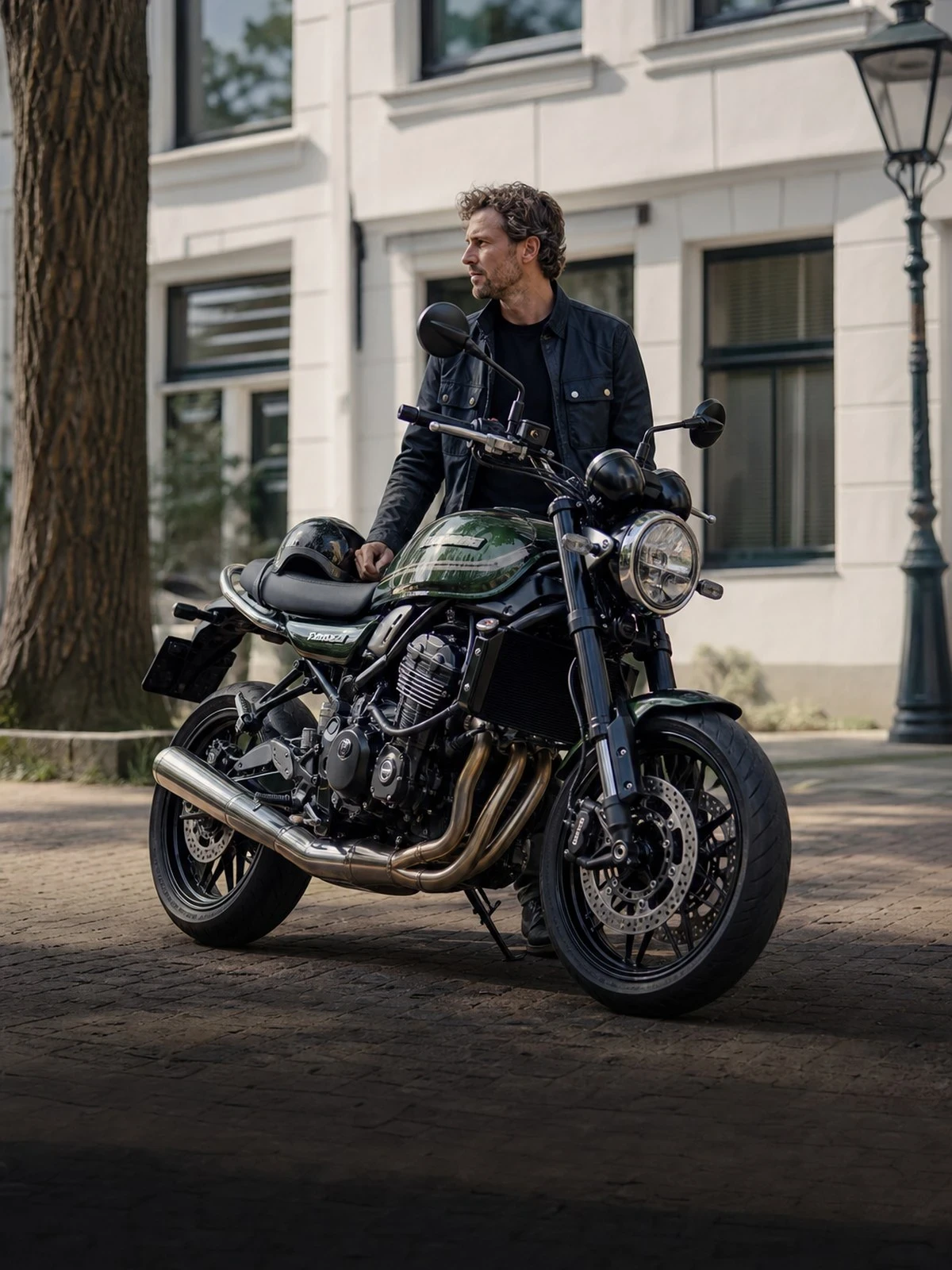 Motorcycle insurance
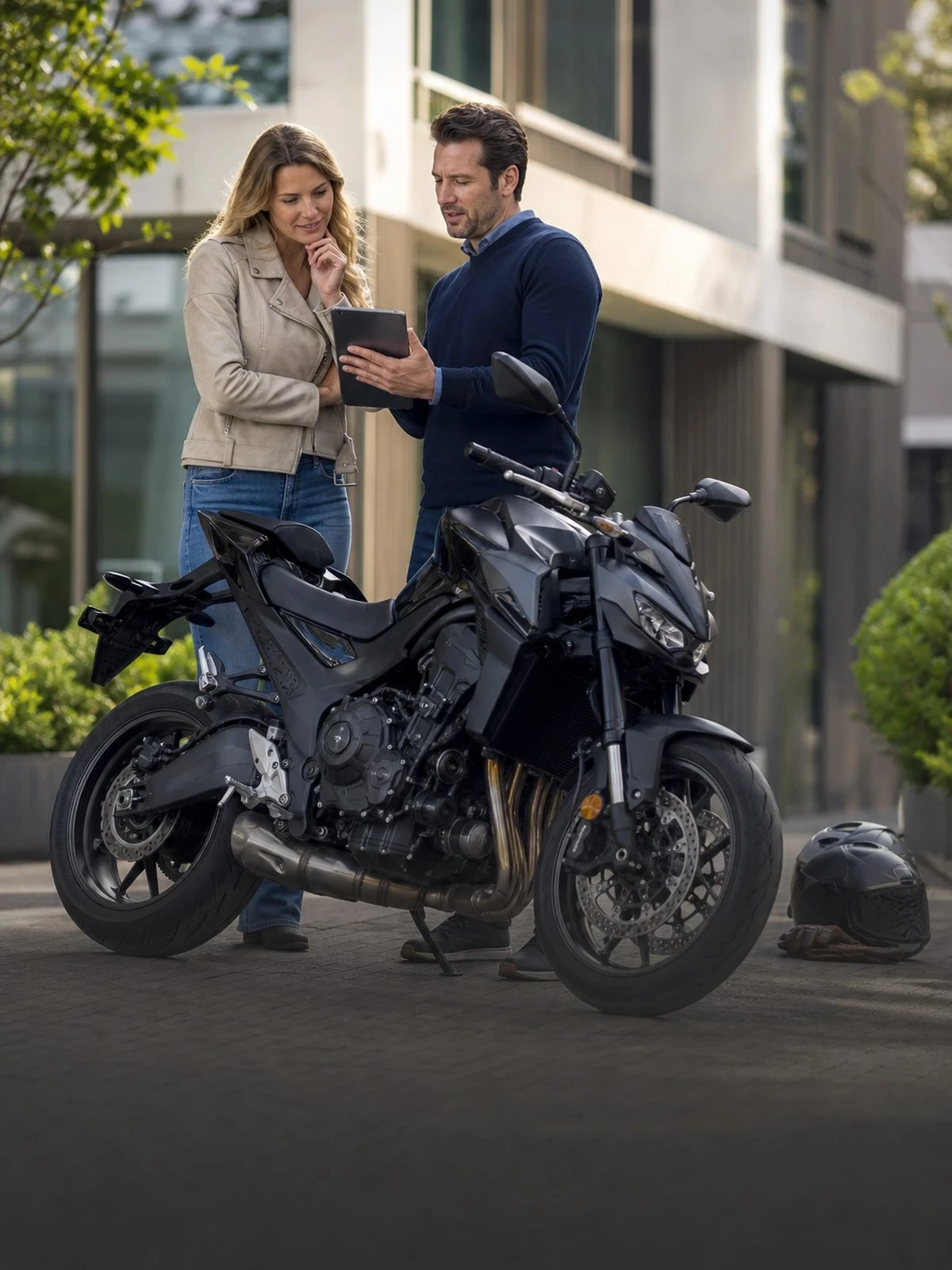 Compare
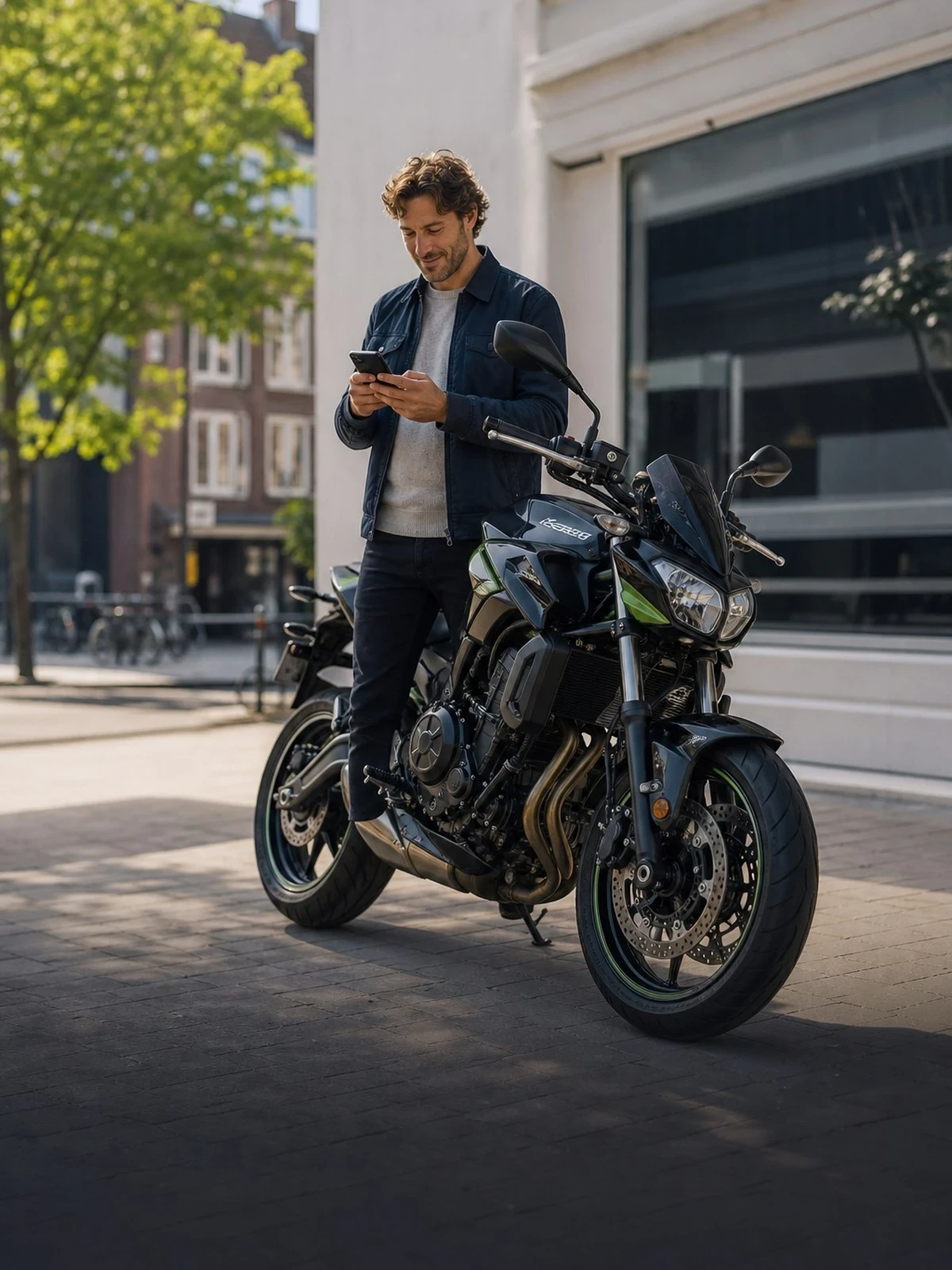 Get covered
The structure of the cover in three parts, with an overview per situation below.
Damage you cause to others with your motorcycle.
Theft, fire, storm and glass damage.
Including your own fault and a single-vehicle fall.
What is covered
| Situation | Third-party liability | Third-party, fire and theft | Comprehensive |
|---|---|---|---|
| Damage to another road user | Yes | Yes | Yes |
| Theft with an approved lock | No | Yes | Yes |
| Fire or storm in storage | No | Yes | Yes |
| A single-vehicle fall with no other party | No | No | Yes |
| Motorcycle clothing and helmet | No | No | Sometimes |
| Track use and speed competitions | No | No | No |
This overview is general in nature and is not personal advice. What is actually covered, including exclusions, limits and the excess, is set out in the policy conditions and the insurance card (verzekeringskaart) of the insurer; you receive both before you take out cover. Taking out cover without advice? Then read what execution only means for you.
Insurers weigh these details differently. That is where your saving is.
We look at the terms as well as the premium, and stay your point of contact when there is a claim.
We are not tied to one insurer and compare on the basis of an objective analysis of several companies.
You call or email someone who knows your file. No menu options, no changing call centres.
We cancel your old policy and align the start date, so you are never a day without cover.
We report the claim and monitor how it is handled. In urgent cases you can reach us on the emergency line.
Customers rate our service on four aspects: personal service, service delivery, availability and the outcome. The reviews are collected and published by NH1816 and come from customers who have actually taken out a policy with Finass Advies B.V. or reported a claim.
Four points that make the difference between a policy that pays out and one that does not.
If you ride a restricted version, have it recorded which variant it is and keep the evidence of the restriction. If the restriction is removed later because you gain the full licence category, that is a change of risk which you report. If you do not, the machine is, when a claim is made, a different vehicle from the one on the policy and the insurer can reduce the payment on the basis of the duty of disclosure.
A machine that has been tuned up, or whose restriction has been removed without notification, no longer meets the type-approval requirements. Own damage is then not paid for. On liability, the third-party liability insurer does pay the victim, because that cover protects third parties, but it can recover the amount paid from you. Fines, seizure and the cost of returning the machine to standard are for your own account in any event.
For the better-known sports and naked models, insurers often require more than an approved lock: a second lock, an anchor point, locked storage or a tracking system with a subscription. Those requirements appear as a clause on the policy and are the first thing checked after a theft. An expired tracker subscription, or a machine left on the street while the policy requires a garage, costs you the settlement.
In this class, insurers work with age clauses and sometimes with an increased excess for young riders. If you lend the machine to someone without the correct licence category, or to a rider excluded on the policy, own-damage cover lapses. Third-party liability cover remains in place towards the victim, but the insurer can then turn to you.
Almost every insurer requires an ART-approved lock, often category 4 or higher, and for more expensive motorcycles a tracker or locked storage. Keep the purchase receipt for the lock and both keys. These are the first things asked for in a claim.
Motorcycle clothing does not fall under the own-damage cover for the motorcycle. Some insurers offer an extension, sometimes only in combination with an accident in which the motorcycle was also damaged. For a full suit plus helmet, the amount quickly exceeds a thousand euros.
This is what people ask us most.
Yes. The version determines the class the machine falls into and therefore the premium. Have the restricted variant stated in so many words on the policy and keep the evidence of the restriction with your papers. Without that record you may pay too much, or argument arises when a claim is made about which vehicle was actually insured.
The risk then changes and you have to report it, even if you now hold the full licence category. If you do not report it and a loss occurs, the insurer can reduce or refuse payment because it would have assessed the risk differently. On a machine tuned up beyond type approval, own-damage cover lapses and the third-party liability insurer can seek recovery from you.
Besides an approved lock, the more sought-after models often carry additional requirements: a second lock, a ground anchor, locked storage or a tracking system with a current subscription. Those requirements appear as a clause on the policy. After a theft they are the first thing looked at, including proof of purchase and the handing in of all the keys.
Only if that rider holds the correct licence category and is not excluded on the policy. If your policy has an age clause, that applies to a borrowed ride as well. If someone rides without a valid licence, own-damage cover lapses. The victim is still paid through the third-party liability cover, but that amount can be recovered from you.
Every situation is different. For these situations we have a separate page.
Request a quote without obligation. We will look at which insurer best matches your activities and your risk.
Prefer to call? 072 - 509 24 56, weekdays 09:00–17:00.
Claim on the road? Emergency line 06 - 55 20 40 72.
Finass Verzekert is a trading name of Finass Advies B.V. We advise on and arrange non-life insurance on the basis of an objective analysis of several insurers, and receive commission for this from the insurer, which is included in the premium. You pay no separate advice fee. Before you take out cover, we establish your wishes and needs.
You will find our licence, KvK and Kifid details and our complaints procedure at the foot of every page.
This page was compiled by Finass Verzekert (LinkedIn). Last updated on .
The information on this page is general in nature and is not personal advice.
Maandag- Vrijdag: 09:00- 17:00
We use cookies and similar technologies to improve your experience on our website.