

Third-party liability
- Required by law
- As long as the registration is in your name
- Suspend the registration when not in use
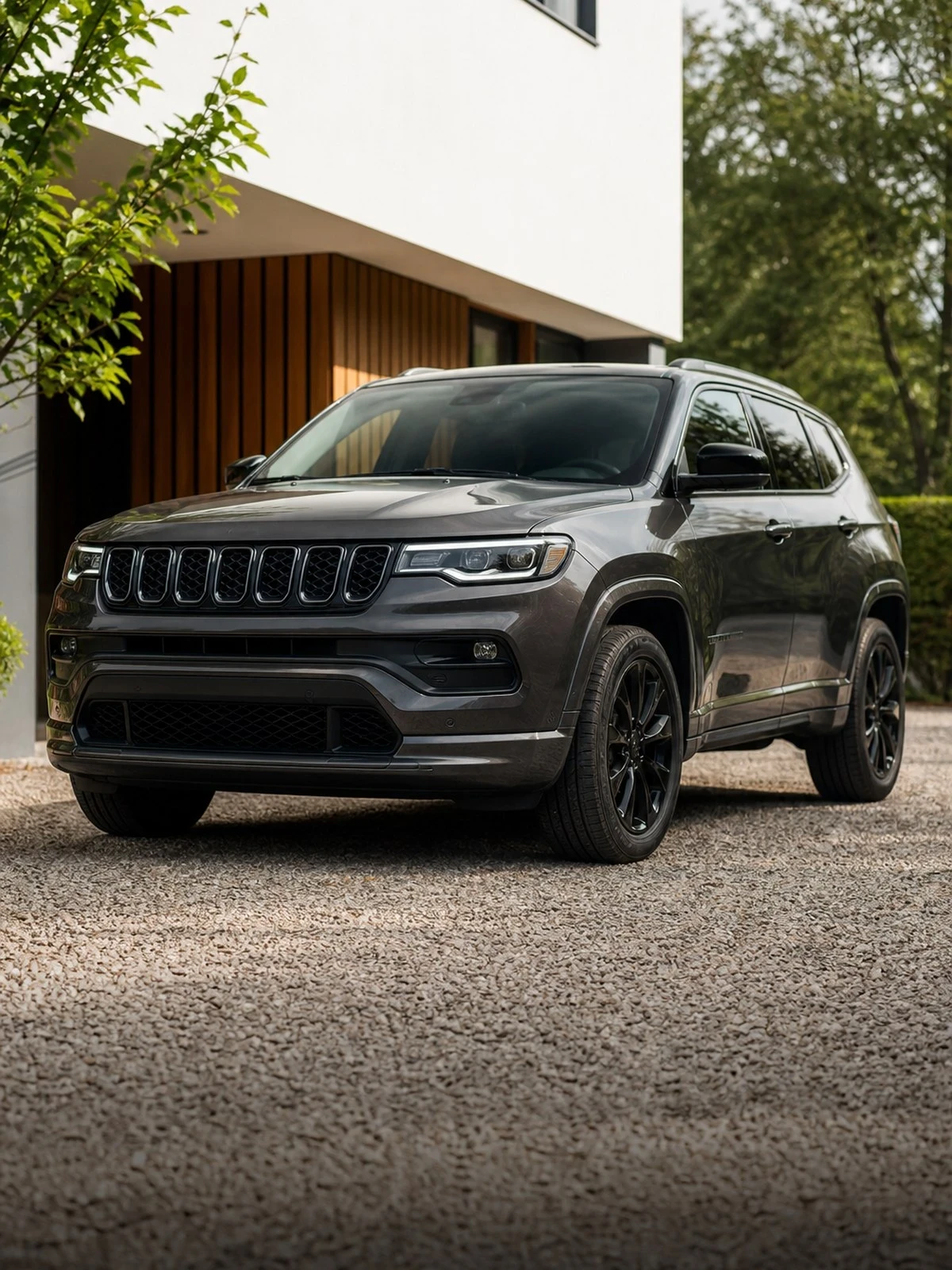
With Jeep the insurance question lies not in the model but in use away from the made road: off-road driving, wading, towing and modifications to the suspension.
This page in another language: Nederlands
Work out for yourself what it would cost.
Enter your details; you will receive a proposal within one working day.
A premium indication, not personal advice. Prefer to talk it through? Call 072 - 509 24 56.
The statutory insurance requirement in Article 2 of the Dutch Motor Insurance Liability Act (WAM) applies to taking part in traffic on the road. If you take a Jeep onto rough ground, into a forest track or across the beach, you are not automatically outside the cover, but many own-damage policies do exclude damage arising while driving off the made road. That distinction is in the conditions and not in the law.
The second characteristic is how easily it can be modified. Raised suspension, coarser tyres, a winch, extra lighting or a snow plough change both the handling and the value of the vehicle. Modifications of that kind must be declared; if you do not, it affects the duty of disclosure and the cover for those very parts.
If the car is hired out or shared, an ordinary private policy is not enough; for that see car insurance where the car is hired out. For older examples used as enthusiasts' cars a classic car insurance be more suitable.
We compare your car insurance across dozens of insurers, explain where the real differences lie, and arrange the switch from start to finish — without you having to chase it yourself.
 Car insurance
 Compare
 Get covered
The structure of the cover in three parts, with an overview per situation below.
Damage you cause to others.
Causes beyond your control.
Including damage you cause yourself.
What is covered
| Situation | Third-party liability | Third-party, fire and theft | Comprehensive |
|---|---|---|---|
| Damage to the other party | Yes | Yes | Yes |
| Theft | No | Yes | Yes |
| Fire and storm | No | Yes | Yes |
| Damage you cause yourself | No | No | Yes |
| Wear and mechanical defects | No | No | No |
| Driving without a valid licence | No | No | No |
This overview is general in nature and is not personal advice. What is actually covered, including exclusions, limits and the excess, is set out in the policy conditions and the insurance card (verzekeringskaart) of the insurer; you receive both before you take out cover. Taking out cover without advice? Then read what execution only means for you.
Insurers weigh these details differently. That is where your saving is.
We look at the terms as well as the premium, and stay your point of contact when there is a claim.
We are not tied to one insurer and compare on the basis of an objective analysis of several companies.
You call or email someone who knows your file. No menu options, no changing call centres.
We cancel your old policy and align the start date, so you are never a day without cover.
We report the claim and monitor how it is handled. In urgent cases you can reach us on the emergency line.
Customers rate our service on four aspects: personal service, service delivery, availability and the outcome. The reviews are collected and published by NH1816 and come from customers who have actually taken out a policy with Finass Advies B.V. or reported a claim.
Four points that make the difference between a policy that pays out and one that does not.
Damage arising on an off-road site, a forest track, a building site or the beach falls outside own-damage cover under many policies. Think of a punctured floor pan, a damaged differential or a broken underside after contact with a rock or a tree stump. If you really want to use rough ground, have it confirmed in writing in advance whether and on what conditions your insurer covers that.
Driving through flooded roads or a ford is a classic cause of claims. If the engine draws in water, it is called hydrolock. That damage is practically always refused because it results from a deliberate act by the driver and not from a sudden external event. Where there are clear warning signs, the insurer can also invoke Article 7:952 of the Dutch Civil Code.
As long as a trailer or caravan is on the towbar, damage it causes to others falls under the car's third-party cover. Damage to the trailer or the load itself does not; separate trailer or caravan insurance is needed for that. If the trailer comes loose and then causes damage, you are liable as its keeper under Article 6:162 of the Dutch Civil Code.
A lift kit, coarser tyres, a winch or extra lighting on the roll bar must be recorded in the vehicle register and declared to the insurer. Undeclared modifications can, under Article 7:928 of the Dutch Civil Code, lead to reduction or refusal of the payout. Even without any argument about cover, loose accessories are often only insured up to a limited amount.
This is what people ask us most.
That depends on your conditions. Third-party cover follows the statutory insurance requirement and reaches no further than that requirement does; own-damage cover is limited by many insurers to damage on the made road. If you regularly drive off-road, have it confirmed in writing in advance whether that is insured, rather than discovering it after a claim.
Only if you have declared them and the insurer has accepted them. For accessories not fitted at the factory, most policies apply a separate limit. If you conceal the modifications, the insurer may adjust the payout under Article 7:928 of the Dutch Civil Code, even where the damage had nothing to do with that modification.
The car's third-party cover pays for damage you cause to others with the caravan coupled. Damage to the caravan itself, to its contents or to the load falls outside it. For that you take out separate caravan or trailer insurance. Also make sure the permitted towing weight is respected, because exceeding it leads to argument.
Hydrolock after driving through a flooded road or a water crossing is practically always refused. Insurers see that not as a sudden external event but as the foreseeable consequence of a driver's choice. If you drove into a closed or clearly marked stretch, wilful recklessness plays a part as well.
Every situation is different. For these situations we have a separate page.
Request a quote without obligation. We will look at which insurer best matches your activities and your risk.
Prefer to call? 072 - 509 24 56, weekdays 09:00–17:00.
Claim on the road? Emergency line 06 - 55 20 40 72.
Finass Verzekert is a trading name of Finass Advies B.V. We advise on and arrange non-life insurance on the basis of an objective analysis of several insurers, and receive commission for this from the insurer, which is included in the premium. You pay no separate advice fee. Before you take out cover, we establish your wishes and needs.
You will find our licence, KvK and Kifid details and our complaints procedure at the foot of every page.
This page was compiled by Finass Verzekert (LinkedIn). Last updated on .
The information on this page is general in nature and is not personal advice.
Maandag- Vrijdag: 09:00- 17:00
We use cookies and similar technologies to improve your experience on our website.