

Insuring a classic car as a passenger car
With a classic car, the argument after a loss is rarely about the cover and almost always about the repair: who may work on it, with which parts, and what is left in the way of diminished value.
- Several insurers compared objectively
- 9.5 customer rating for a new policy
- AFM licence 12016589
- Personal 072 - 509 24 56, weekdays 9–17
This page in another language: Nederlands
The calculator and the quote form below are in Dutch. Prefer to do this in English? Email info@finassverzekert.nl or call 072 - 509 24 56 and we will take it from there.
Work out for yourself what it would cost.
Enter your details; you will receive a proposal within one working day.
- We compare the offerings of several insurers
- An adviser checks whether the cover suits your situation
- We arrange the switch, including cancellation
A premium indication, not personal advice. Prefer to talk it through? Call 072 - 509 24 56.
- Independent advice
- Several insurers
- Switching arranged
- Help with claims
In brief
An ordinary motor policy works with market value and sends you to an affiliated bodyshop. With a classic car that does not work. The value is stated on the policy through a valuation report from an expert, and the repair belongs with a specialist who works with original or equivalent parts. Check in the conditions, therefore, whether you have a free choice of repairer and whether the insurer contributes towards parts that are only available second-hand or made to order. If nothing is said about it, the insurer decides how the repair is carried out.
The second feature is that the car may not be your everyday transport. Almost every classic car policy makes it a condition that there is a second car in the household and that a minimum age applies to the driver. There are also clauses on a maximum mileage, on driving in the winter months and on storage in a locked space. Anyone who does use the classic car every day does not belong on this product. The differences between the versions are set out under classic car insurance and the youngtimer insurance.
Watch what happens off the public road as well. Runs with a club, taking part in a tour, a valuation day or taking the car to a show are not covered as a matter of course. If the car is carried on a trailer, damage during that transport falls under the policy for the trailer or the towing vehicle, not under the own-damage cover on the classic car itself. Ask about this in advance if you move the car regularly. For a classic motorcycle, see the classic motorcycle.
This page deals with one situation. The full overview is on Compare classic car insurance.
Independent, personal, sorted quickly
We compare your classic car insurance across dozens of insurers, explain where the real differences lie, and arrange the switch from start to finish — without you having to chase it yourself.
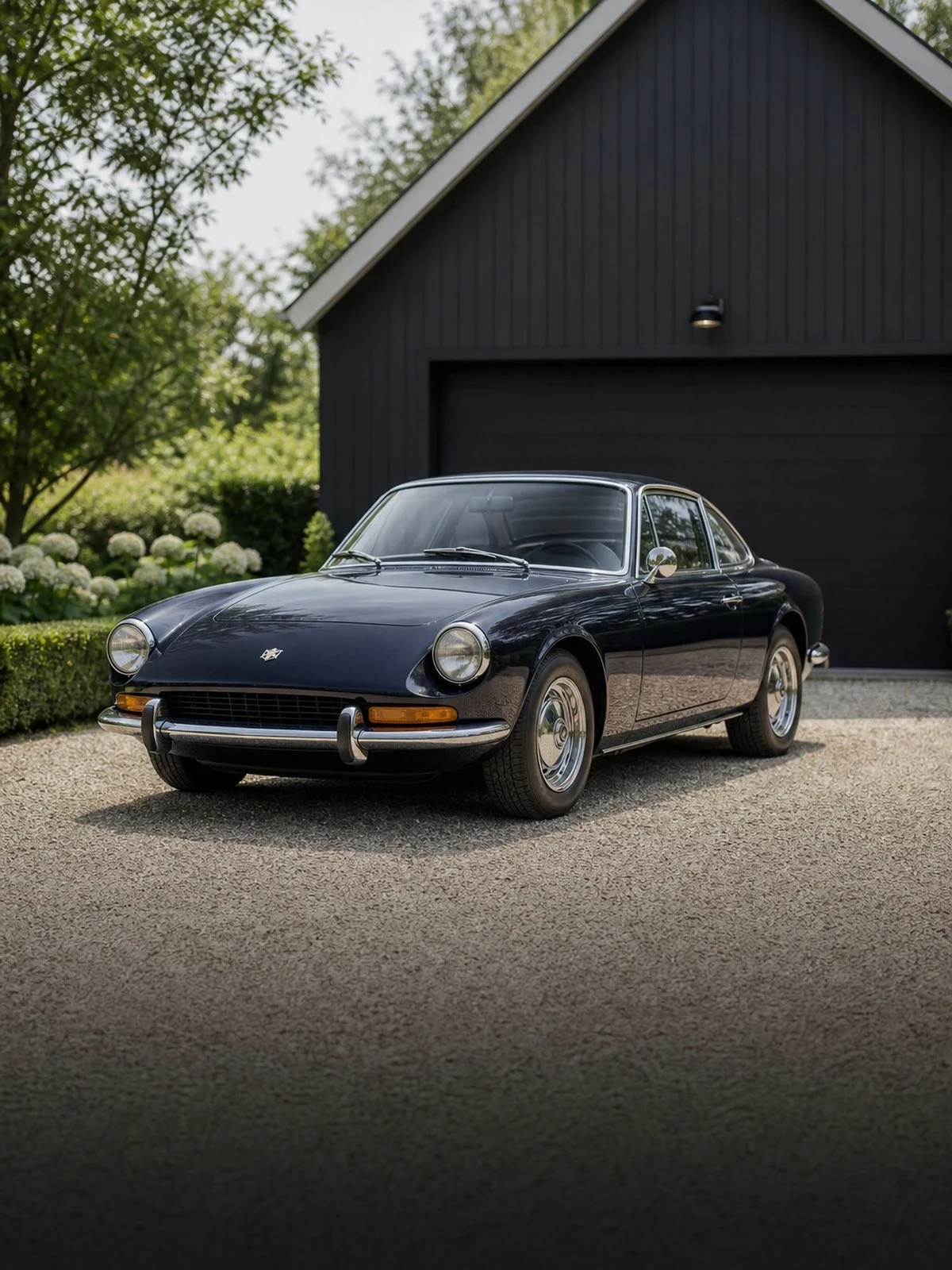 Classic car insurance
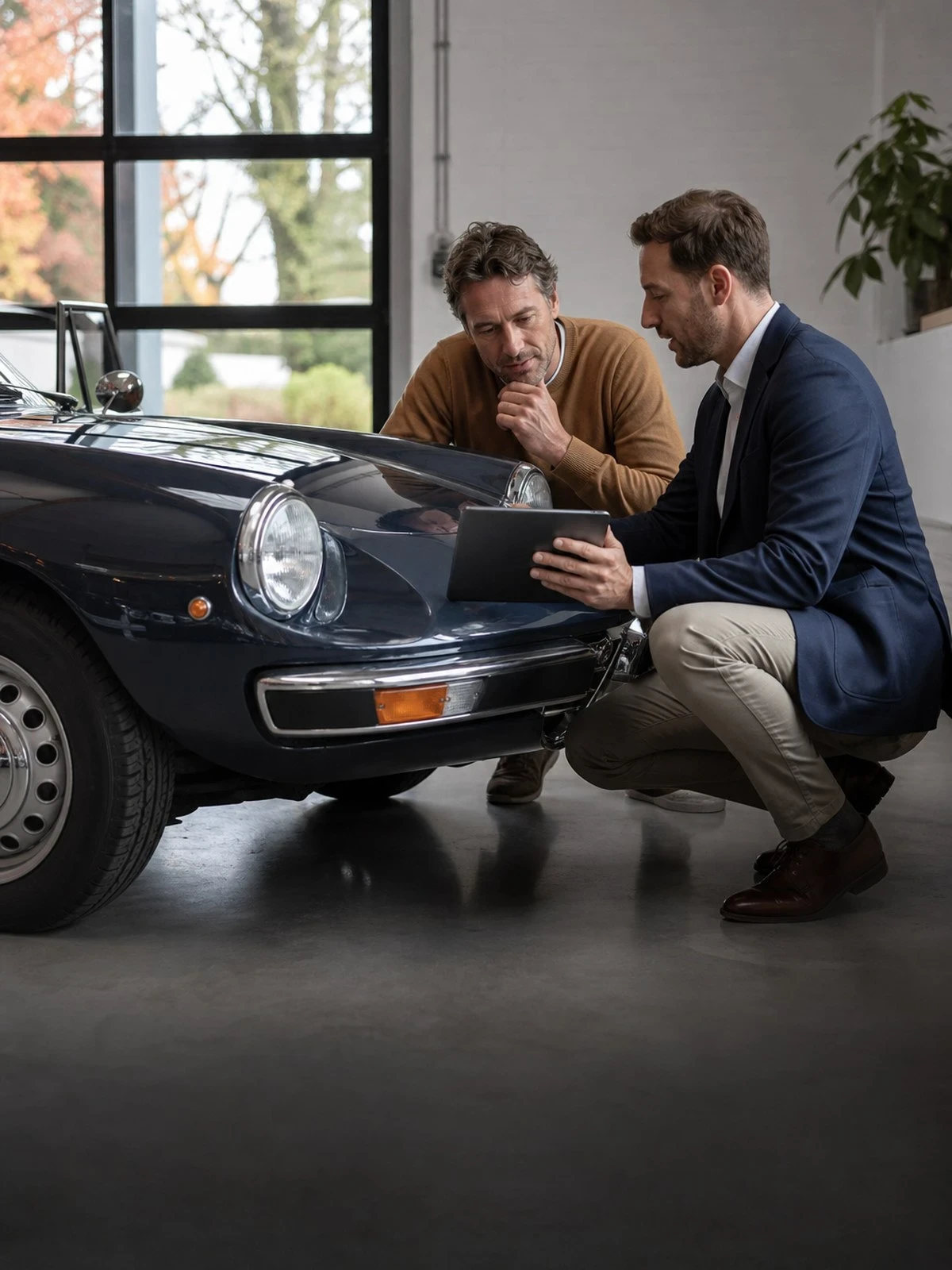 Compare
 Get covered
Why arrange it through Finass Verzekert?
We look at the terms as well as the premium, and stay your point of contact when there is a claim.
Independent
We are not tied to one insurer and compare on the basis of an objective analysis of several companies.
One fixed adviser
You call or email someone who knows your file. No menu options, no changing call centres.
Switching without hassle
We cancel your old policy and align the start date, so you are never a day without cover.
Help with claims
We report the claim and monitor how it is handled. In urgent cases you can reach us on the emergency line.
What to look out for
Four provisions that decide the outcome of a claim on a classic car.
Repair with original parts
For many models new parts are no longer available. An insurer working from a standard repair calculation then arrives at an amount for which nothing can actually be made. Set out when you take out the policy that repair at a classic car specialist is allowed and that used or reproduction parts may be fitted. Without that agreement the car is written off as beyond repair sooner than you would wish.
Diminished value after a loss
A repaired classic car is worth less than a car with an unblemished history, even where the work has been done well. Only some policies pay for that loss of value, and then usually only for damage caused by someone else. Keep the valuation from before the incident, photographs and the invoices for earlier maintenance. With those you can evidence the difference.
The second car and the mileage clause
The low premium of a classic car policy is based on limited use. If you exceed the agreed mileage, or the second car in the household goes, the risk changes. Report it in writing. If the insurer discovers on a claim that the car had become the everyday transport, that is a different situation from the one declared on the application, with the consequences set out in Article 7:930 of the Dutch Civil Code.
What is not included
Excluded are corrosion, wear and other gradually operating influences, damage that arises while working on, dismantling or restoring the vehicle, and taking part in speed and manoeuvring events or track days. Mechanical failure such as a snapped cambelt or a defective gearbox is not an insured event either. For damage you cause deliberately or through recklessness, the insurer can rely on Article 7:952 of the Dutch Civil Code and refuse to pay.
What does your premium depend on?
- Agreed value: the starting point for the own-damage premium
- Year of manufacture and model: the age threshold differs by company
- Agreed mileage: driving less means a lower rate
- Storage location: a locked garage is a requirement on most policies
- Age of the driver: many classic car policies set a minimum age
- Repair arrangement: a free choice of specialist costs more than a tied network
Insurers weigh these details differently. That is where your saving is.
What is covered
| Situation | Third-party liability | Comprehensive |
|---|---|---|
| You hit a cyclist on the way to the garage | Yes | Yes |
| A branch falls on the car during a storm while it stands outside the house | No | Yes |
| The car falls off the ramp during maintenance at a specialist | No | Provided that |
| A visitor damages the paintwork while the car is on display at a club day | No | Provided that |
| An original grille turns out to be unobtainable new after the collision | No | Provided that |
| Corrosion under the wings that developed in the years the car stood idle | No | No |
A classic car policy works from limited use; as soon as the car becomes the everyday transport, the whole row moves with it.
Frequently asked questions
This is what people ask us most.
From which year of manufacture does my car count as a classic?
That differs by insurer and does not coincide with the tax threshold for vehicle excise duty. Some companies start at twenty-five years, others only at thirty or forty. If your car is just below it, a youngtimer policy is often the intermediate form. Ask what the threshold is before you apply, because the clauses on use and storage are tied to it as well.
May I drive the classic car in winter?
Only if the policy allows it. Some classic car policies include a winter lay-up or exclude driving on salted roads, because corrosion is a classic car's chief enemy. If such a clause appears on your policy schedule and you drive anyway, the own-damage claim can go unpaid. Ask for a policy without a winter restriction if you want to drive all year round.
Is the car insured during a restoration?
Not without a separate arrangement. Damage arising during work on the vehicle is excluded as standard, and a car in pieces has no usable agreed value in any case. For a long project there is storage or restoration cover that deals with fire, theft and water damage in the workshop. Have the valuation carried out again once the work is finished.
Do I have to stay insured if the car stands idle all winter?
As long as the registration has not been suspended, yes: Article 2 of the Dutch Motor Insurance Liability Act (WAM) ties the insurance obligation to the registration and not to use. You can suspend the registration with the RDW (the Dutch vehicle authority), but with the insurance obligation the cover for fire, theft and storm while the car stands indoors disappears as well. In that case agree separate storage cover so the car remains insured in the garage.
Every situation is different. For these situations we have a separate page.
- Compare classic car insuranceThe main page
- Insuring a classic vanAgreed value, clause on use, storage
- When a business car belongs on a classic car policyClause on use, switching, daily driving
- Compare classic car insuranceFrom 10 years, limited mileage, enthusiast's car
- Insuring a classic carValuation, fixed value, limited use
- Business classic car insurance through a.s.r.Circle of drivers, valuation, storage