

Insuring a self-employed professional's van, by make
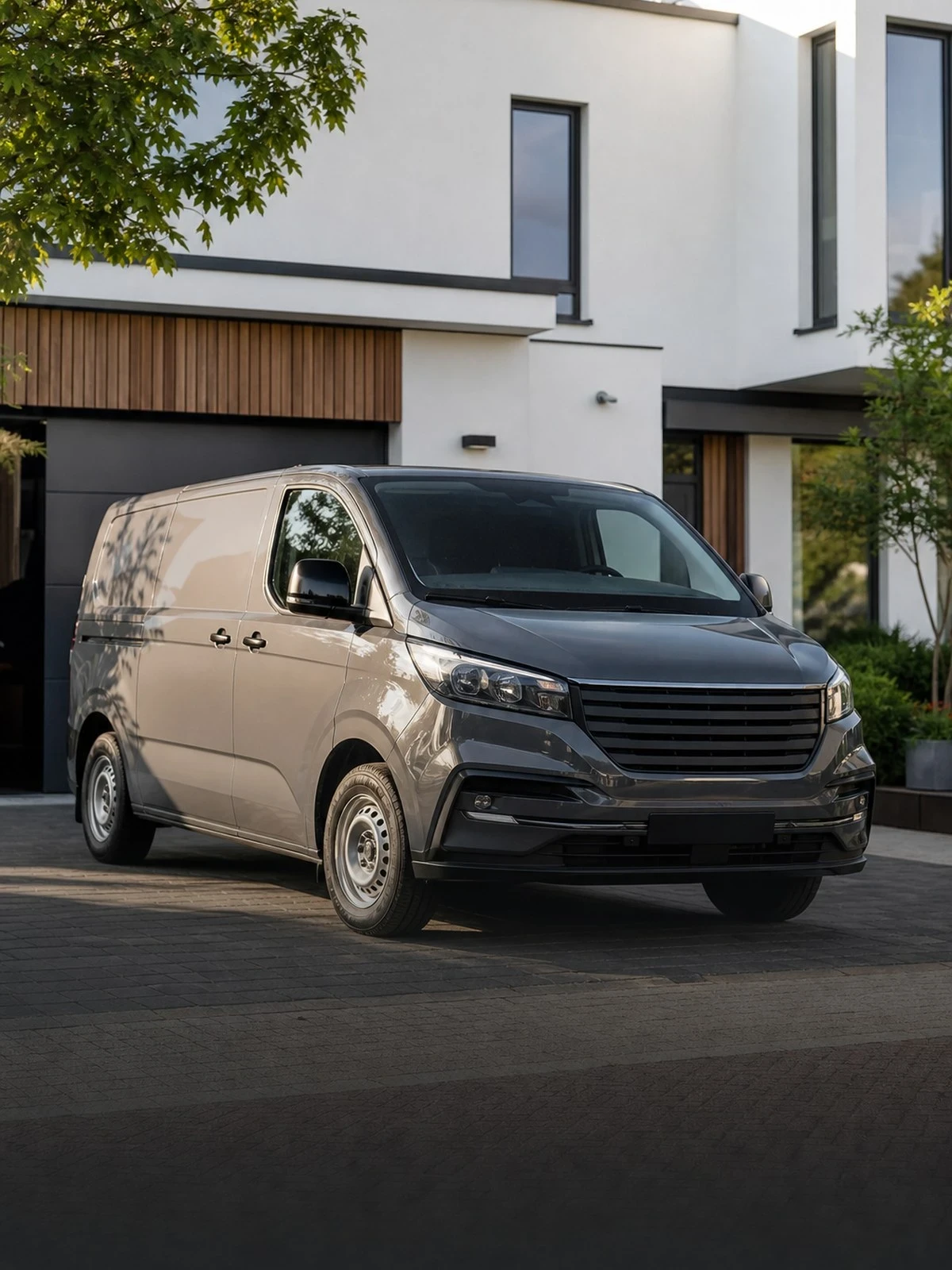
Every application starts with make, model and specification. What really steers the premium after that is the weight of the van, the equipment fitted in it and the use you make of it.
- Several insurers compared objectively
- 9.5 customer rating for a new policy
- AFM licence 12016589
- Personal 072 - 509 24 56, weekdays 9–17
This page in another language: Nederlands
Work out for yourself what it would cost.
Enter your details; you will receive a proposal within one working day.
- We compare the offerings of several insurers
- An adviser checks whether the cover suits your activities
- We arrange the switch, including cancellation
A premium indication, not personal advice. Prefer to talk it through? Call 072 - 509 24 56.
- Independent advice
- Several insurers
- Switching arranged
- Help with claims
In brief
Insurers do not calculate with a brand name but with the registration number. Behind that lies the specification: list price, weight, payload, engine power and the year of manufacture. Two vans of the same make can therefore fall into a different class. Parts prices, repair times and theft figures per type do the rest. How the types of cover are built up is set out on the page van insurance; the overviews by make for self-employed people can be found under van by make and with car makes.
The insurance obligation stands apart from the make. Article 2 of the Dutch Motor Insurance Liability Act (WAM) requires liability cover for as long as the registration is in your name and has not been suspended, even if the van stands idle for weeks. Above that compulsory cover you choose third-party fire and theft or comprehensive cover. With a young or financed van, comprehensive cover is almost always the logical choice. With an older van the trade-off between premium and market value becomes sharper. Ask about the valuation arrangement: how long the purchase price or replacement value as new applies, and when it shifts to market value.
The third subject is what has been changed on the van after delivery. Shelving, a fitted workbench, an inverter, a towbar, roof carriers, refrigeration or lettering are accessories and fitted equipment that are not included in the list price. Anything you do not declare does not count in an own-damage claim. With an electric van the battery pack, the charging cable and any charging point are added. The last of these usually does not belong on the motor policy at all.
This page deals with one situation. The full overview is on Compare van insurance.
Independent, personal, sorted quickly
We compare your van insurance across dozens of insurers, explain where the real differences lie, and arrange the switch from start to finish — without you having to chase it yourself.
 Van insurance
 Compare
 Get covered
Why arrange it through Finass Verzekert?
We look at the terms as well as the premium, and stay your point of contact when there is a claim.
Independent
We are not tied to one insurer and compare on the basis of an objective analysis of several companies.
One fixed adviser
You call or email someone who knows your file. No menu options, no changing call centres.
Switching without hassle
We cancel your old policy and align the start date, so you are never a day without cover.
Help with claims
We report the claim and monitor how it is handled. In urgent cases you can reach us on the emergency line.
What to look out for
Four points on which a self-employed person's van is assessed differently from a car.
Specification and weight weigh more heavily than the make
Within a single model range the variant determines the class: a short closed van, a long high version and a pick-up with an open bed are all assessed differently. So always give the exact specification and the maximum permitted weight. If you go above the limit of a category B licence, not only the premium changes but also the question of who may drive.
Declare fitted equipment, vehicle graphics and accessories separately
Own-damage cover pays for the vehicle as it left the production line. A permanent fit-out, an inverter, navigation fitted afterwards or advertising lettering must be stated on the policy schedule as equipment insured, with an amount. Keep the invoice from the fitter. Without evidence, a total loss leads to an argument you will not win.
What is in the van is not motor damage
If the van is stolen or something is stolen from it, own-damage insurance covers the vehicle, not the contents. Tools belong on a tools insurance, materials and customers' property on a own goods in transit insurance. Note the usual condition that the van is kept in a locked space overnight.
Use that falls outside the cover
Excluded as standard are delivery and courier services for payment, hiring the van out to third parties, driving lessons and taking part in speed trials. Cover also lapses if you drive without a valid licence or under the influence, and Article 7:952 of the Dutch Civil Code applies to damage caused intentionally or recklessly. If someone else regularly drives the van, report that regular driver.
What does your premium depend on?
- Make, model and specification: determines the list price, the price of parts and the claims class
- Weight and payload: a heavy van causes more damage in a collision
- Age and choice of own-damage cover: third-party, third-party fire and theft or comprehensive with a valuation arrangement
- Mileage and area of operation: regional work weighs differently from driving across Europe every day
- No-claims years and excess: years built up for business use do not always count privately
- Security and storage: alarm class, locks on the sliding door and where the van is parked overnight
Insurers weigh these details differently. That is where your saving is.
What is covered on your company vehicle
| Situation | Third-party liability | Comprehensive |
|---|---|---|
| The signwriting with your company name is damaged in a collision | No | Provided that |
| The racking and workbench in your van are destroyed in a collision | No | Provided that |
| You hit the barrier of a car park with the van | Yes | Yes |
| Your new company vehicle is stolen in the first year | No | Yes |
| The vehicle belonging to your client that you are allowed to drive for work is damaged | No | No |
| The infotainment system fails because of a software fault | No | No |
Signwriting and fitted equipment only count if you declared them when you took out the policy.
Frequently asked questions
This is what people ask us most.
Does the premium really differ by make?
Yes, but not because the make itself is assessed. Insurers look at claims figures, repair costs and susceptibility to theft per type. A model that is often stolen or whose parts are expensive comes out higher. Within the same make, the difference between two specifications can be greater than the difference between two makes.
I also use the van privately. Do I have to report that?
Yes. Private use of a business van is allowed by most insurers, but only if it has been declared. It affects the description of use on the policy schedule and therefore the premium. If you conceal it, you end up with the duty of disclosure under Article 7:928 of the Dutch Civil Code and its consequences under Article 7:930 DCC.
My van has been converted into a workshop on wheels. Can that be insured?
It can, but not tacitly. The conversion is put on the policy as equipment, with an amount you can support with invoices. With a heavy fit-out the insurer sometimes asks for photographs. The tools you keep in it fall outside that and are insured separately; otherwise, after a theft, you are left with only the vehicle.
I now have three vehicles. Does insuring them separately still make sense?
From a small number of vehicles onwards, a fleet insurance can work out better, because a single claims burden is then used instead of bonus-malus steps per vehicle. Below that threshold, separate policies are usually better value. We calculate both options before you switch.
Every situation is different. For these situations we have a separate page.
- Compare van insuranceThe main page
- Van insurance for the self-employed: what difference the make makesMake, specification, fitted equipment
- Van insurance by make and versionList price, theft figures, parts
- Business van insurance by make and modelTheft figures, parts, specification
- Insuring a van as a self-employed professionalWAM obligation, break-ins, market value
- Saving on your van insuranceType of cover, excess, security
- Insuring a van or company vehicle as a self-employed professionalThird-party liability obligation, own-damage cover, tools
- Insuring a van for business useUse, load, drivers
- Insuring by make