

Liability
- Covered while coupled
- Under the car's third-party liability cover
- Uncoupled: no longer covered
A trailer is the only vehicle you regularly leave behind: uncoupled on a driveway, behind the warehouse or at the roadside: and that is exactly where most damage and theft occurs.
This page in another language: Nederlands
Work out for yourself what it would cost.
Enter your details; you will receive a proposal within one working day.
A premium indication, not personal advice. Prefer to talk it through? Call 072 - 509 24 56.
As long as the trailer is behind the car, third-party liability runs on the policy of the towing motor vehicle, as Article 2 of the Dutch Motor Insurance Liability Act (WAM) requires. If the trailer comes loose and hits something, the question of who is answerable is suddenly far less obvious and the liability of the keeper under Article 6:162 of the Dutch Civil Code into view.
The second point is that the trailer and the load are two different things. Own-damage cover on the trailer pays for damage to the body, the chassis, the drawbar and the tyres. What is on or in it (garden waste, a quad bike, building materials, a boat) is not included. For that you need a separate cargo or goods solution.
We compare the Nationale-Nederlanden trailer product with the rest of the market, looking above all at cover while uncoupled, the theft conditions and the requirements for the coupling lock. If you have a camping trailer, see our page on the touring caravan insurance.
We compare your trailer insurance across dozens of insurers, explain where the real differences lie, and arrange the switch from start to finish — without you having to chase it yourself.
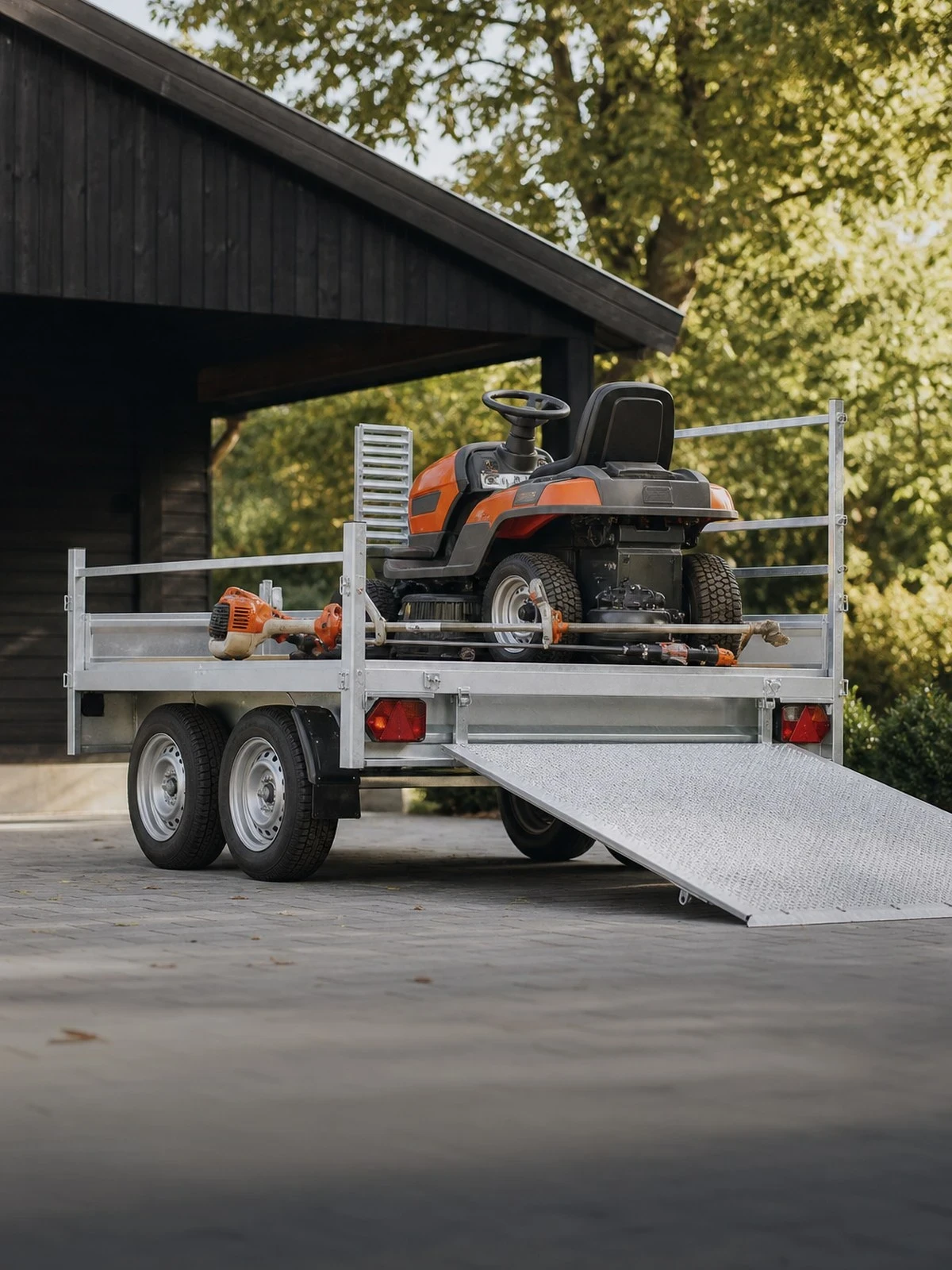 Trailer insurance
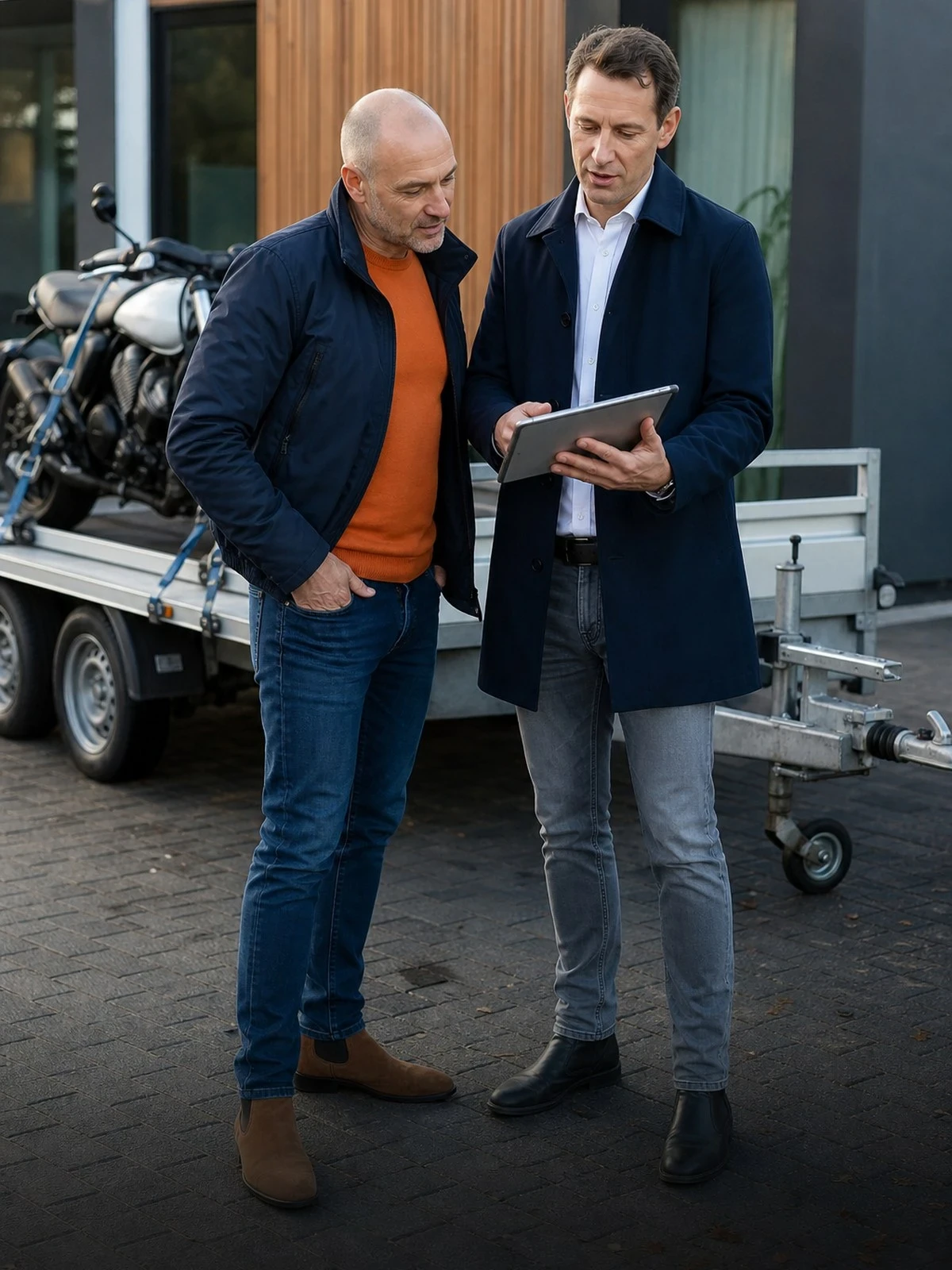 Compare
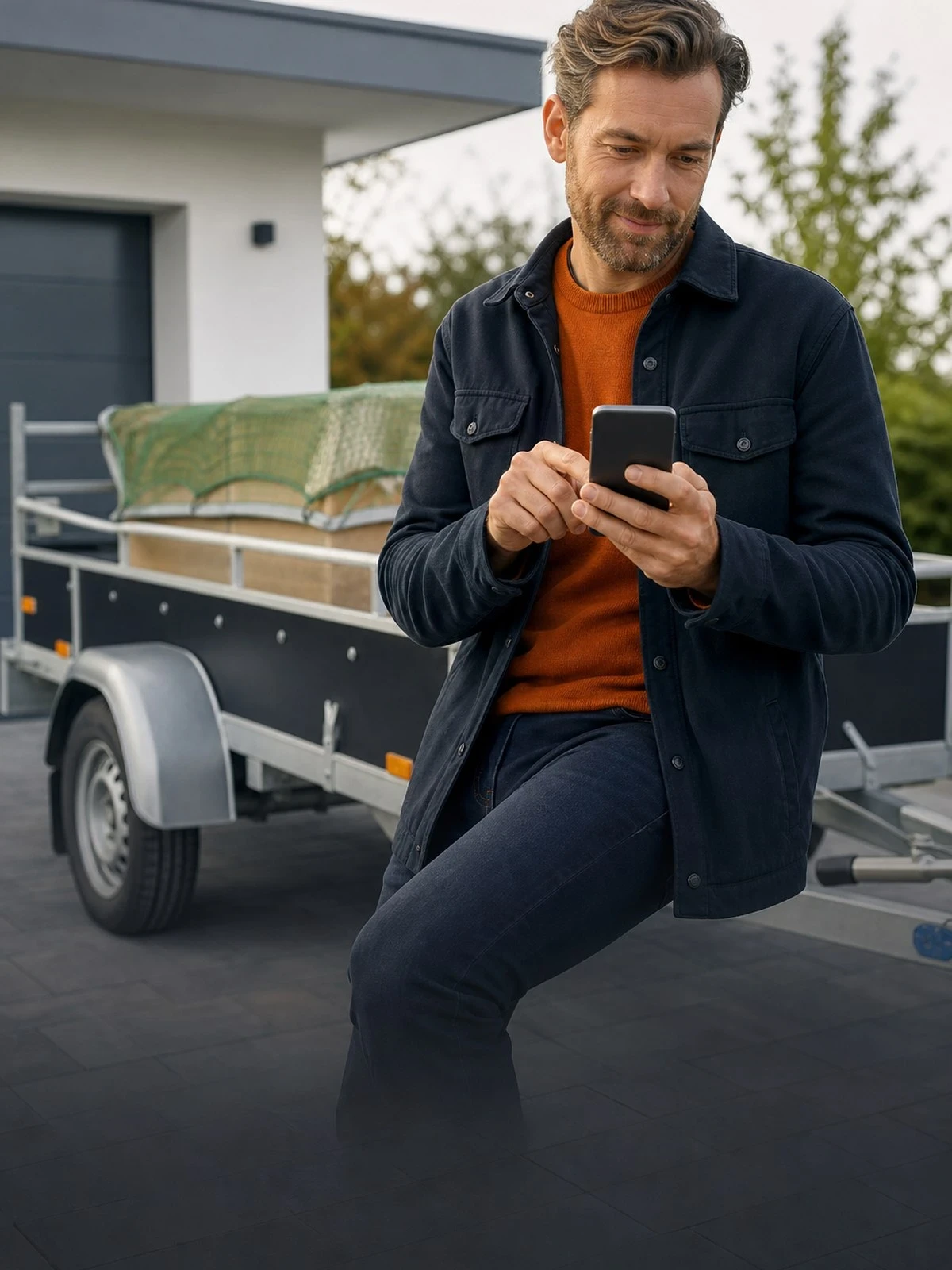 Get covered
The structure of the cover in three parts, with an overview per situation below.
Damage you cause to others with the trailer.
External causes beyond your control.
Including damage you cause yourself.
What is covered
| Situation | Third-party, fire and theft | Comprehensive |
|---|---|---|
| Theft after forced entry, with the prescribed lock | Yes | Yes |
| Fire and storm damage on the pitch | Yes | Yes |
| Hail damage to roof and walls | Provided that | Yes |
| Collision damage while manoeuvring | No | Yes |
| Contents in the caravan or trailer | Provided that | Provided that |
| Damp, wear and deferred maintenance | No | No |
A trailer or caravan is not an independent motor vehicle and therefore has no insurance requirement of its own. Damage you cause to others with it falls under the third-party liability cover of the towing vehicle, as long as the combination is coupled (Article 2 WAM). Once the trailer is uncoupled and has come to a standstill, that cover no longer applies.
This overview is general in nature and is not personal advice. What is actually covered, including exclusions, limits and the excess, is set out in the policy conditions and the insurance card (verzekeringskaart) of the insurer; you receive both before you take out cover. Taking out cover without advice? Then read what execution only means for you.
Insurers weigh these details differently. That is where your saving is.
We look at the terms as well as the premium, and stay your point of contact when there is a claim.
We are not tied to one insurer and compare on the basis of an objective analysis of several companies.
You call or email someone who knows your file. No menu options, no changing call centres.
We cancel your old policy and align the start date, so you are never a day without cover.
We report the claim and monitor how it is handled. In urgent cases you can reach us on the emergency line.
Customers rate our service on four aspects: personal service, service delivery, availability and the outcome. The reviews are collected and published by NH1816 and come from customers who have actually taken out a policy with Finass Advies B.V. or reported a claim.
Four points that make the difference between a policy that pays out and one that does not.
A trailer that rolls off the driveway or is blown against a car by the wind is no longer taking part in traffic. The liability cover of the towing car usually does not extend that far. The damage then ends up with your personal liability insurance (AVP) or with your business liability cover. Check whether those policies do not in fact exclude damage caused by a motor vehicle or trailer.
If you lose part of your load on the way and it causes damage, that is a liability matter and not an own-damage claim. If the load itself is damaged, for example because a machine shifts under braking, the own-damage cover on the trailer does not pay for it. If you regularly carry valuable items or tools, have it assessed separately whether goods or business contents cover is needed.
Unbraked trailers are light and quick to take. Insurers therefore set requirements: an approved coupling lock, sometimes a wheel clamp or a registered chassis number. If the trailer is stolen without that requirement having been met, rejection follows. Also excluded is theft of loose parts such as the spare wheel, loading ramps and lashing straps where these have not been declared separately.
Above a certain total weight the combination requires a trailer licence and must be registered. If you drive without the correct entitlement, the insurer can recover the loss from you. Also excluded is damage caused by overloading, by a defective coupling or braking response, and damage arising during hire to third parties where hire has not been noted on the policy.
Replacement transport after a claim Stay mobile with replacement transport.
This is what people ask us most.
Not for towing it. A coupled trailer falls under the third-party liability cover of the towing vehicle. You take out a separate policy for damage to the trailer itself and for theft. If the trailer stands uncoupled in the street or on a site for a long period, check expressly whether liability cover still exists in that situation.
No. Own-damage cover applies to the trailer itself: body, chassis, drawbar, lights and tyres. What you carry falls outside it, including where it is damaged while you are driving or falls off the trailer. If you regularly carry tools, machines or other people's goods, have a separate business contents or goods in transit solution assessed.
Theft falls under third-party, fire and theft or comprehensive cover, provided the security requirements have been met. If the prescribed coupling lock was missing, or the trailer was left unattended on the public road contrary to the policy, the insurer may reject the claim. Make a note of the chassis number, take photographs and keep the purchase invoice; without identification, reporting the theft and obtaining payment are difficult.
Occasional lending to someone you know is usually not a problem, provided that person has the correct driving entitlement. Regular hire is another matter and falls outside the cover unless it is noted on the policy. If damage occurs during hire that has not been declared, the insurer can rely on a change of use compared with the application.
Every situation is different. For these situations we have a separate page.
Request a quote without obligation. We will look at which insurer best matches your activities and your risk.
Prefer to call? 072 - 509 24 56, weekdays 09:00–17:00.
Claim on the road? Emergency line 06 - 55 20 40 72.
Finass Verzekert is a trading name of Finass Advies B.V. We advise on and arrange non-life insurance on the basis of an objective analysis of several insurers, and receive commission for this from the insurer, which is included in the premium. You pay no separate advice fee. Before you take out cover, we establish your wishes and needs.
You will find our licence, KvK and Kifid details and our complaints procedure at the foot of every page.
This page was compiled by Finass Verzekert (LinkedIn). Last updated on .
The information on this page is general in nature and is not personal advice.
Maandag- Vrijdag: 09:00- 17:00
We use cookies and similar technologies to improve your experience on our website.