

Liability
- Covered while coupled
- Under the car's third-party liability cover
- Uncoupled: no longer covered
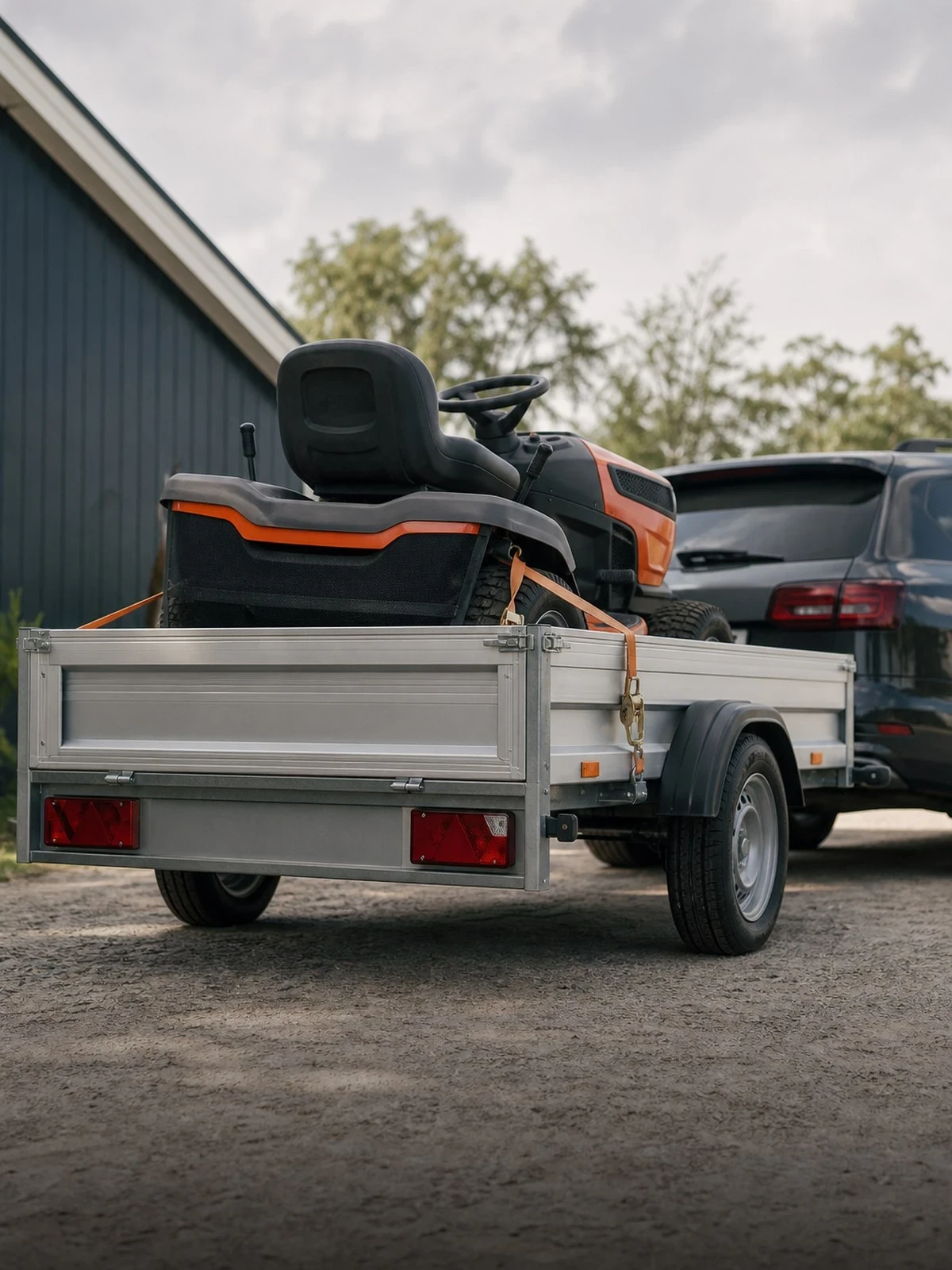
A trailer that works in your business stands at a different address every week, is coupled by changing hands and is a business asset that costs you money when it stands still.
This page in another language: Nederlands
Work out for yourself what it would cost.
Enter your details; you will receive a proposal within one working day.
A premium indication, not personal advice. Prefer to talk it through? Call 072 - 509 24 56.
Business use changes three things at once. The trailer does not stand on a fixed driveway but on changing building sites and industrial estates, it is not always coupled by you, and it is a business asset: if it stands still, the work stands still. Insurers tie theft cover as standard to a single storage address; have changing locations expressly included.
Liability also shifts from you to the business. You are liable for damage an employee causes to third parties with the trailer under Article 6:170 of the Dutch Civil Code. If that employee is injured while loading, unloading or when a load tips, the duty of care under Article 7:658 of the Dutch Civil Code is central and the matter belongs on the public and employers' liability insurance (AVB), not on the trailer policy.
Excluded: your tools and materials, overloading and improper securing, damage caused by a driver without the correct entitlement, and wear to tyres, brakes and the drawbar. If you use the trailer purely privately, look at the private trailer insurance.
We compare your trailer insurance across dozens of insurers, explain where the real differences lie, and arrange the switch from start to finish — without you having to chase it yourself.
 Trailer insurance
 Compare
 Get covered
The structure of the cover in three parts, with an overview per situation below.
Damage you cause to others with the trailer.
External causes beyond your control.
Including damage you cause yourself.
What is covered
| Situation | Third-party, fire and theft | Comprehensive |
|---|---|---|
| Theft after forced entry, with the prescribed lock | Yes | Yes |
| Fire and storm damage on the pitch | Yes | Yes |
| Hail damage to roof and walls | Provided that | Yes |
| Collision damage while manoeuvring | No | Yes |
| Contents in the caravan or trailer | Provided that | Provided that |
| Damp, wear and deferred maintenance | No | No |
A trailer or caravan is not an independent motor vehicle and therefore has no insurance requirement of its own. Damage you cause to others with it falls under the third-party liability cover of the towing vehicle, as long as the combination is coupled (Article 2 WAM). Once the trailer is uncoupled and has come to a standstill, that cover no longer applies.
This overview is general in nature and is not personal advice. What is actually covered, including exclusions, limits and the excess, is set out in the policy conditions and the insurance card (verzekeringskaart) of the insurer; you receive both before you take out cover. Taking out cover without advice? Then read what execution only means for you.
Insurers weigh these details differently. That is where your saving is.
We look at the terms as well as the premium, and stay your point of contact when there is a claim.
We are not tied to one insurer and compare on the basis of an objective analysis of several companies.
You call or email someone who knows your file. No menu options, no changing call centres.
We cancel your old policy and align the start date, so you are never a day without cover.
We report the claim and monitor how it is handled. In urgent cases you can reach us on the emergency line.
Customers rate our service on four aspects: personal service, service delivery, availability and the outcome. The reviews are collected and published by NH1816 and come from customers who have actually taken out a policy with Finass Advies B.V. or reported a claim.
Four points that make the difference between a policy that pays out and one that does not.
A work trailer stays on site overnight in the middle of a job, behind site fencing that is not yours. The standard policy ties theft cover to a fixed storage address, and in your case that is only correct for part of the week. Have it put in writing that changing work locations are covered and what security then applies: a coupling lock, a wheel clamp, and a tracker for higher values.
If your employee couples the trailer incorrectly and it hits a parked car, the business is liable under Article 6:170 of the Dutch Civil Code. Recovering from the employee is almost impossible, because Article 7:661 DCC requires intent or deliberate recklessness. If he is injured himself when a load tips, it is Article 7:658 DCC that counts and the public and employers' liability insurance (AVB) pays, not the trailer policy.
What is on or in the trailer is never covered by the vehicle policy, not even under a cover or in a locked body. For that there is own goods in transit insurance, with a night clause requiring you to empty the trailer after working hours. If you carry a client's machines or materials, the care, custody and control exclusion on your public and employers' liability insurance (AVB) comes into play; it specifically excludes goods in your care.
If you are registered for VAT, the value is usually insured excluding VAT. If you declare the amount including VAT, you pay premium on money you will not receive. Replacement equipment is not included as standard, while downtime costs you turnover immediately. And a hired or borrowed trailer is not on your policy; arrange separate cover for it before you take it away.
What you carry (tools, materials, a machine) is not covered on the trailer policy, not even under a cover. For that you need separate own-transport insurance, with requirements of its own for overnight storage.
From 750 kilos maximum permitted mass the trailer must be registered, and the combination of vehicle and trailer may exceed the limit of a category B licence. Driving without the correct entitlement is grounds for exclusion, including for the third-party damage the insurer pays to the other party and then recovers from you.
This is what people ask us most.
No, not even under a cover or in a locked tool box. The trailer policy covers the chassis and the declared fixed bodywork. What you carry falls outside it. For that you need separate own-transport insurance, usually with a night-time clause requiring you to empty the trailer after working hours or put it inside. Without that emptying, the cover falls away.
The business, under Article 6:170 of the Dutch Civil Code for damage caused by subordinates. The third-party liability cover of the towing vehicle deals with the damage to third parties as long as the trailer was coupled. Recovery from the employee is virtually excluded: Article 7:661 DCC only allows it in cases of intent or deliberate recklessness, and that threshold is rarely met.
Declare that when you apply. As standard, theft cover is tied to a single declared storage address, and that does not fit project work. Have it included that changing work locations are covered and what security then applies. Without that arrangement, the insurer can point to the different storage address after a theft from a building site and limit the payment.
If you are registered for VAT, you normally insure excluding VAT, because you reclaim the VAT on a replacement trailer anyway. If you declare the amount including VAT, you pay premium on an amount that will not be paid out. If you are not registered for VAT, or fall under an exemption, the value belongs on the policy including VAT.
Every situation is different. For these situations we have a separate page.
Request a quote without obligation. We will look at which insurer best matches your activities and your risk.
Prefer to call? 072 - 509 24 56, weekdays 09:00–17:00.
Claim on the road? Emergency line 06 - 55 20 40 72.
Finass Verzekert is a trading name of Finass Advies B.V. We advise on and arrange non-life insurance on the basis of an objective analysis of several insurers, and receive commission for this from the insurer, which is included in the premium. You pay no separate advice fee. Before you take out cover, we establish your wishes and needs.
You will find our licence, KvK and Kifid details and our complaints procedure at the foot of every page.
This page was compiled by Finass Verzekert (LinkedIn). Last updated on .
The information on this page is general in nature and is not personal advice.
Maandag- Vrijdag: 09:00- 17:00
We use cookies and similar technologies to improve your experience on our website.