

Business van insurance through Klaverblad
With a company vehicle it is not the vehicle that is the variable, but the driver. Most refusals concern who was behind the wheel and whether that was allowed.
- Several insurers compared objectively
- 9.5 customer rating for a new policy
- AFM licence 12016589
- Personal 072 - 509 24 56, weekdays 9–17
This page in another language: Nederlands
Work out for yourself what it would cost.
Enter your details; you will receive a proposal within one working day.
- We compare the offerings of several insurers
- An adviser checks whether the cover suits your activities
- We arrange the switch, including cancellation
A premium indication, not personal advice. Prefer to talk it through? Call 072 - 509 24 56.
- Independent advice
- Several insurers
- Switching arranged
- Help with claims
In brief
Company vehicle insurance is not a different product from ordinary motor insurance, but acceptance works differently. Finass Advies acts as an independent intermediary and compares more than thirty insurers, including Klaverblad; we place each vehicle where the provisions fit the way you work. You will find the general set-up on the hub page on van insurance.
The first subject is the group of drivers. Some policies cover any driver with the policyholder's permission; others contain a clause limiting cover to named individuals or to drivers above a certain age. If the owner's son drives the van on a Sunday and is not named on the policy, the own damage is not covered. The injured third party is always paid under Article 2 of the Dutch Motor Insurance Liability Act (WAM), but the insurer can recover that payment.
The second subject is the no-claims years. These are personal and do not automatically transfer when you move from private ownership to a BV; conversely, a vehicle registered to the company often builds up years that you cannot later use privately. Ask about this before you switch. If you drive on a a commercial registration, declare honestly how many private kilometres are involved: the duty of disclosure in Article 7:928 of the Dutch Civil Code applies to the use of the vehicle as well.
This page deals with one situation. The full overview is on Compare van insurance.
Independent, personal, sorted quickly
We compare your van insurance across dozens of insurers, explain where the real differences lie, and arrange the switch from start to finish — without you having to chase it yourself.
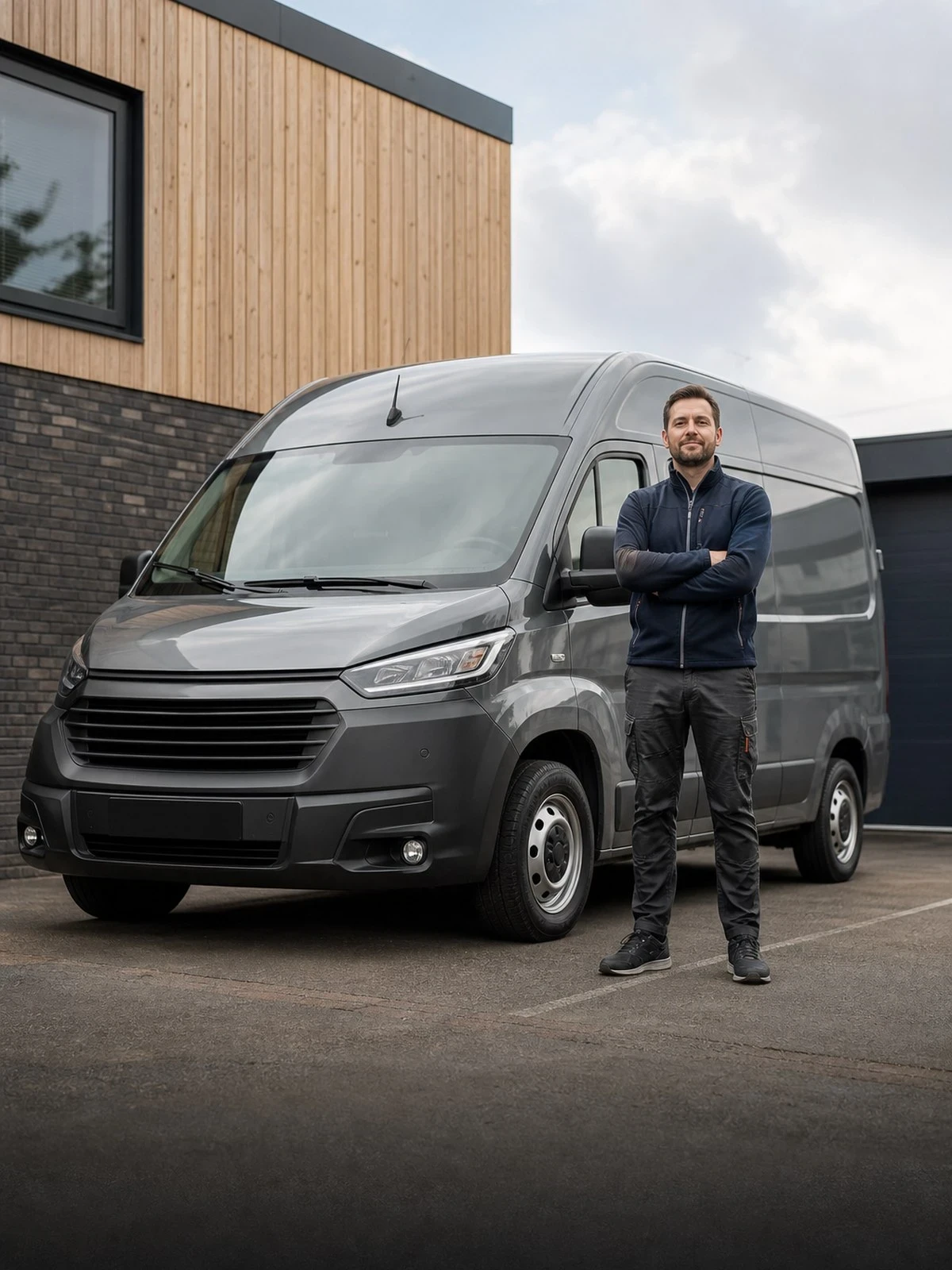 Van insurance
 Compare
 Get covered
Why arrange it through Finass Verzekert?
We look at the terms as well as the premium, and stay your point of contact when there is a claim.
Independent
We are not tied to one insurer and compare on the basis of an objective analysis of several companies.
One fixed adviser
You call or email someone who knows your file. No menu options, no changing call centres.
Switching without hassle
We cancel your old policy and align the start date, so you are never a day without cover.
Help with claims
We report the claim and monitor how it is handled. In urgent cases you can reach us on the emergency line.
What to look out for
Four provisions on the clause schedule that you want to know before the first claim.
Age clause for drivers
A clause excluding cover for drivers under a certain age, or sharply increasing the excess for them, is common in this segment. In a company with young engineers or holiday staff that is a real risk. Have the age limit stated explicitly and check whether interns and agency workers fall within it.
Hire, driving lessons and courier services
Lending out a company vehicle for payment, use as a driving school vehicle and driving paid delivery runs for platforms are forms of use that are excluded as standard. Anyone hiring out some of his vehicles needs a hirer's cover. For delivery work, see a van for a courier service.
What is in the vehicle
Load, tools, laptops and phones do not fall under motor cover. If you carry your own goods, that belongs on the own goods in transit insurance. If you damage a customer's property during work, that is liability and the claim belongs on the liability insurance.
From separate policies to one contract
Above a certain number of vehicles, insuring per vehicle becomes impractical and the bonus-malus ladder gives way to your own claims burden. Where that threshold lies differs by insurer. We calculate both options. The set-up is explained on fleet insurance.
What does your premium depend on?
- Circle of drivers: one regular driver or changing staff
- The company's claims history: weighs more heavily than the owner's no-claims years
- Type of vehicle: car, van or closed service vehicle
- Ratio of business to private use: a question for acceptance particularly with a commercial registration
- Region and where the vehicle is kept: theft figures differ widely by area
- Type of cover and excess chosen: to be weighed up afresh for each registration
Insurers weigh these details differently. That is where your saving is.
What is covered
| Situation | Third-party liability | Comprehensive cover |
|---|---|---|
| The owner's son drives the van on a Sunday and is not named on the policy | Yes | No |
| A nineteen-year-old engineer puts the van in a ditch while an age clause applies | Yes | No |
| The van is stolen overnight from the public road outside an employee's home | No | Yes |
| An employee hits a parked car with too much alcohol in his blood | Yes | No |
| The tools in the back are damaged in that same collision | No | No |
| At weekends you drive paid delivery runs for a meal delivery platform | No | No |
The injured third party is always paid under the WAM, but the insurer can recover that payment from the driver.
Frequently asked questions
This is what people ask us most.
May my staff use the company vehicle privately?
They may, provided the policy allows private use and you declared it in your application. Insurers rate private kilometres differently from business kilometres, and with a commercial registration the tax side comes into play as well. If you do not set the terms of use out in a user agreement, you have nothing to fall back on after an incident outside working hours, either towards the insurer or towards the employee.
Do my no-claims years transfer to the business?
Usually not automatically. No-claims years are registered against the policyholder, and on a move to a BV that becomes a different party. Some insurers accept a declaration allowing the years of the managing director and majority shareholder to transfer to the first company vehicle. Ask about this in writing beforehand, because correcting it afterwards rarely works.
What if an employee causes damage while under the influence?
The own damage to your vehicle is then not covered and the insurer can recover the amount paid to the other party from the driver. Whether you can in turn recover it from your employee is a question of employment law: Article 7:661 of the Dutch Civil Code protects the employee, unless there is intent or wilful recklessness.
Is the driver himself insured if injured?
Not under the liability cover, because that is intended for injured third parties. The driver at fault receives nothing from it. There are additional covers for your own injuries, and for staff who take to the road for work there is a separate employer's cover. You can read about the difference under WEGAS and WEGAM.
Every situation is different. For these situations we have a separate page.
- Compare van insuranceThe main page
- Business van insurance by make and modelTheft figures, parts, specification
- Insuring a self-employed professional's van, by makeMake and specification, conversions, choice of own-damage cover
- Insuring a business vanIn the company name, several drivers, fleet
- Insuring a van or company vehicle as a self-employed professionalThird-party liability obligation, own-damage cover, tools