

Carriers' liability insurance through a.s.r.
As a carrier you are not liable for the value of the load, but for what the carriage conditions attribute to you. The policy follows those conditions. It does not replace them.
- Several insurers compared objectively
- 9.5 customer rating for a new policy
- AFM licence 12016589
- Personal 072 - 509 24 56, weekdays 9–17
This page in another language: Nederlands
Work out for yourself what it would cost.
Enter your details; you will receive a proposal within one working day.
- We compare the offerings of several insurers
- An adviser checks whether the cover suits your activities
- We arrange the switch, including cancellation
A premium indication, not personal advice. Prefer to talk it through? Call 072 - 509 24 56.
- Independent advice
- Several insurers
- Switching arranged
- Help with claims
In brief
Finass acts as an intermediary for the business range of a.s.r. and is not tied to this company. We compare several insurers objectively; which quotation stands up follows from your journeys and your conditions, not from the name on the policy schedule. Carriers' liability insurance covers your liability for loss of or damage to goods you carry on behalf of someone else. That is not the same as insurance on the load itself. The latter is the goods in transit insurance.
What that liability arises from depends on the journey. Domestic road transport is governed by Book 8 of the Dutch Civil Code and, in practice, by the AVC conditions; cross-border road transport falls mandatorily under the CMR Convention. In both cases your duty to compensate is capped by the weight of the damaged consignment, not by its commercial value: Article 8:1095 of the Dutch Civil Code for domestic transport, Article 23 CMR beyond it. If you carry light, valuable goods, a gap remains for your customer that you cannot close with this policy.
The other side is that the limit can fall away. In the event of intent or fault equivalent to it, you lose the right to limitation, in international transport under Article 29 CMR. Think of a driver who leaves a loaded trailer unattended in a place where that is forbidden. Insurers exclude intent itself — Article 7:952 of the Dutch Civil Code: so you then face an unlimited claim without cover. What else your business needs can be found under transport and logistics.
This page deals with one situation. The full overview is on Compare goods in transit insurance.
Independent, personal, sorted quickly
We compare your carriers' liability insurance across dozens of insurers, explain where the real differences lie, and arrange the switch from start to finish — without you having to chase it yourself.
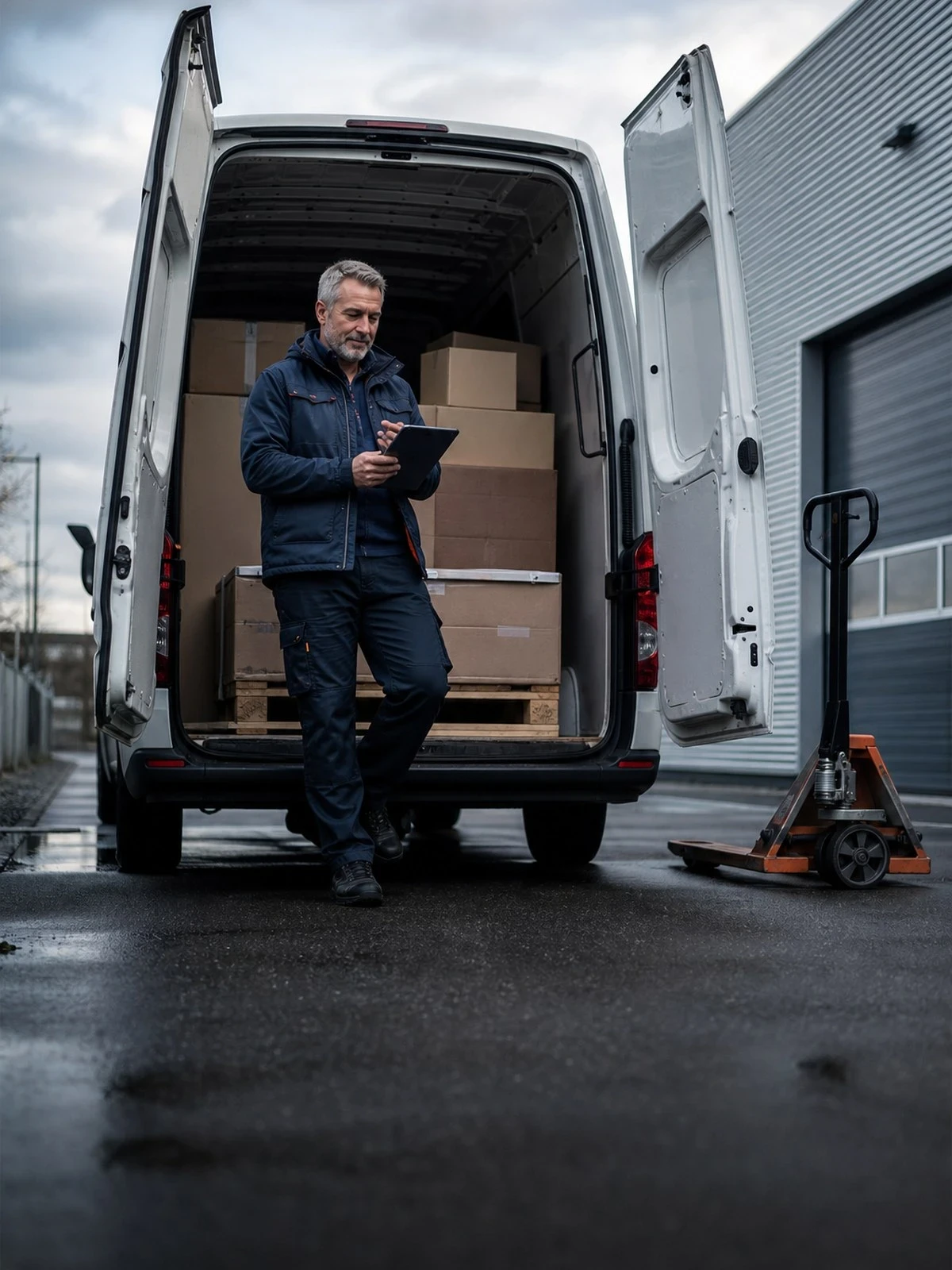 Carriers' liability insurance
 Compare
 Get covered
Why arrange it through Finass Verzekert?
We look at the terms as well as the premium, and stay your point of contact when there is a claim.
Independent
We are not tied to one insurer and compare on the basis of an objective analysis of several companies.
One fixed adviser
You call or email someone who knows your file. No menu options, no changing call centres.
Switching without hassle
We cancel your old policy and align the start date, so you are never a day without cover.
Help with claims
We report the claim and monitor how it is handled. In urgent cases you can reach us on the emergency line.
What to look out for
Four points that decide a claim on carriers' liability more often than the chosen sum insured.
The condition on your consignment note is the starting point
If the order states AVC, the domestic regime applies. If you cross the border, CMR is mandatory and you cannot depart from it. If you include wider liability in your own terms, or accept your customer's terms, the policy does not automatically cover that extra liability. Have contractually accepted liability assessed in advance.
Subcontracted hauliers and charters
If you subcontract a journey, you remain liable to your customer. Whether your policy follows that situation is a separate question: some conditions cover only carriage with your own equipment and your own staff. Establish that subcontractors are insured themselves and keep their policy details. Without recourse against the subcontractor you carry the loss yourself.
Theft-prone cargo and parking clauses
Electronics, tobacco and alcohol, pharmaceuticals and branded clothing are named separately on almost every policy, sometimes excluded and sometimes covered only on conditions. On top of that, there are parking and standing clauses: a guarded site, a ban on stopping within a certain number of kilometres after loading, or a compulsory tracking system. Build those requirements into the journey instructions.
Delay, costs and penalties
For late delivery, your liability under CMR is limited to no more than the carriage charge. So you do not carry the consequential loss of a production line at a standstill, although it will be claimed. Customs charges, fines and penalty payments are excluded on the policy. Destruction and clearance of spoiled or dangerous cargo calls for a separate provision.
What does your premium depend on?
- Turnover of goods carried: the usual basis, with an adjustment afterwards
- Number and type of vehicles: tractor and trailer combinations count differently from rigid vehicles
- Area of operation: the Netherlands, western Europe, or eastern and southern Europe as well
- Nature of the load: theft-prone or temperature-sensitive goods weigh heavily
- Use of subcontracted hauliers: the extent of subcontracted transport and the recourse against it
- Prevention and security: tracking systems, locks and arrangements for parking places
Insurers weigh these details differently. That is where your saving is.
What is covered
| Situation | Basic | Extended |
|---|---|---|
| A consignment of cardboard gets soaked en route because the tarpaulin has torn | Yes | Yes |
| Roll cages shift in an emergency stop and the contents are damaged | Yes | Yes |
| The load is stolen while the vehicle stands beside the motorway overnight | No | Provided that |
| A consignment disappears from your own warehouse, in the night between two journeys | No | Provided that |
| A subcontracted haulier you gave the job to delivers the goods damaged | No | Provided that |
| Your customer claims the cost of a production line at a standstill after late delivery | No | No |
Even where there is cover, the payment to your customer remains capped by the weight limit under AVC or CMR.
Frequently asked questions
This is what people ask us most.
Why does my insurer pay less than the invoice value of the load?
Because the policy follows your liability, and that liability is limited by operation of law to the weight of the damaged consignment. Article 8:1095 DCC does that domestically, Article 23 CMR internationally. A pallet of light, expensive goods therefore produces a low limit. If your customer wants the full value paid, that calls for insurance on the goods themselves.
Is my own cargo covered as well?
No. If you carry goods that are your own property, you are not a carrier towards a third party and there is no liability to insure. That situation belongs on a own goods in transit insurance, which covers the goods themselves. If you mix the two, you need both covers, and it is important to record for each journey in what capacity you are acting.
How long can a customer still bring a claim against me?
Under Article 32 CMR, a claim arising from international road transport is time-barred in principle after one year, and after three years in the event of intent or fault equivalent to it. For domestic transport, separate periods apply under Book 8 of the Dutch Civil Code and the conditions used. So report a claim to us at once; Article 7:941 DCC obliges you to report it as soon as you are reasonably aware of it.
Does this policy also cover damage I cause outside the vehicle while loading?
No. If you drive a forklift into a customer's racking or dock door, that does not concern the goods carried but damage to someone else's property. That falls under public and employers' liability insurance, with Article 6:162 DCC as its basis. Both policies are needed in the transport sector; they complement one another.
Every situation is different. For these situations we have a separate page.