

Goods in transit insurance through Nationale-Nederlanden
For an SME a transit claim is rarely about a collision at sea. It is about a van broken into on an industrial estate and about the question whether the vehicle was allowed to stand there.
- Several insurers compared objectively
- 9.5 customer rating for a new policy
- AFM licence 12016589
- Personal 072 - 509 24 56, weekdays 9–17
This page in another language: Nederlands
Work out for yourself what it would cost.
Enter your details; you will receive a proposal within one working day.
- We compare the offerings of several insurers
- An adviser checks whether the cover suits your activities
- We arrange the switch, including cancellation
A premium indication, not personal advice. Prefer to talk it through? Call 072 - 509 24 56.
- Independent advice
- Several insurers
- Switching arranged
- Help with claims
In brief
Finass brokers Nationale-Nederlanden's business offering. We are not tied to this company and compare several insurers objectively. The choice follows from what you carry and how. We often use this insurer for medium-sized businesses that want to place transit cover alongside their other business policies, such as the business interruption insurance and the business contents insurance.
Before cover can be discussed, one question has to be answered: do you carry your own property or someone else's. If you drive with your own trading stock, machinery or materials, that is own transport and you insure the goods themselves. If you carry for clients for payment, you are a carrier and your liability under the AVC or CMR conditions is limited to an amount per kilogram of cargo weight. With light, high-value cargo that limit covers only a fraction of the actual loss.
In practice most SME claims land in two places: theft from a parked vehicle and damage during loading and unloading. For the first, policies carry strict conditions about where and when a loaded vehicle may stand still. For the second, damage you cause to someone else's property is not damage to goods but a liability matter, which belongs on public and employers' liability insurance.
This page deals with one situation. The full overview is on Compare goods in transit insurance.
Independent, personal, sorted quickly
We compare your goods-in-transit insurance across dozens of insurers, explain where the real differences lie, and arrange the switch from start to finish — without you having to chase it yourself.
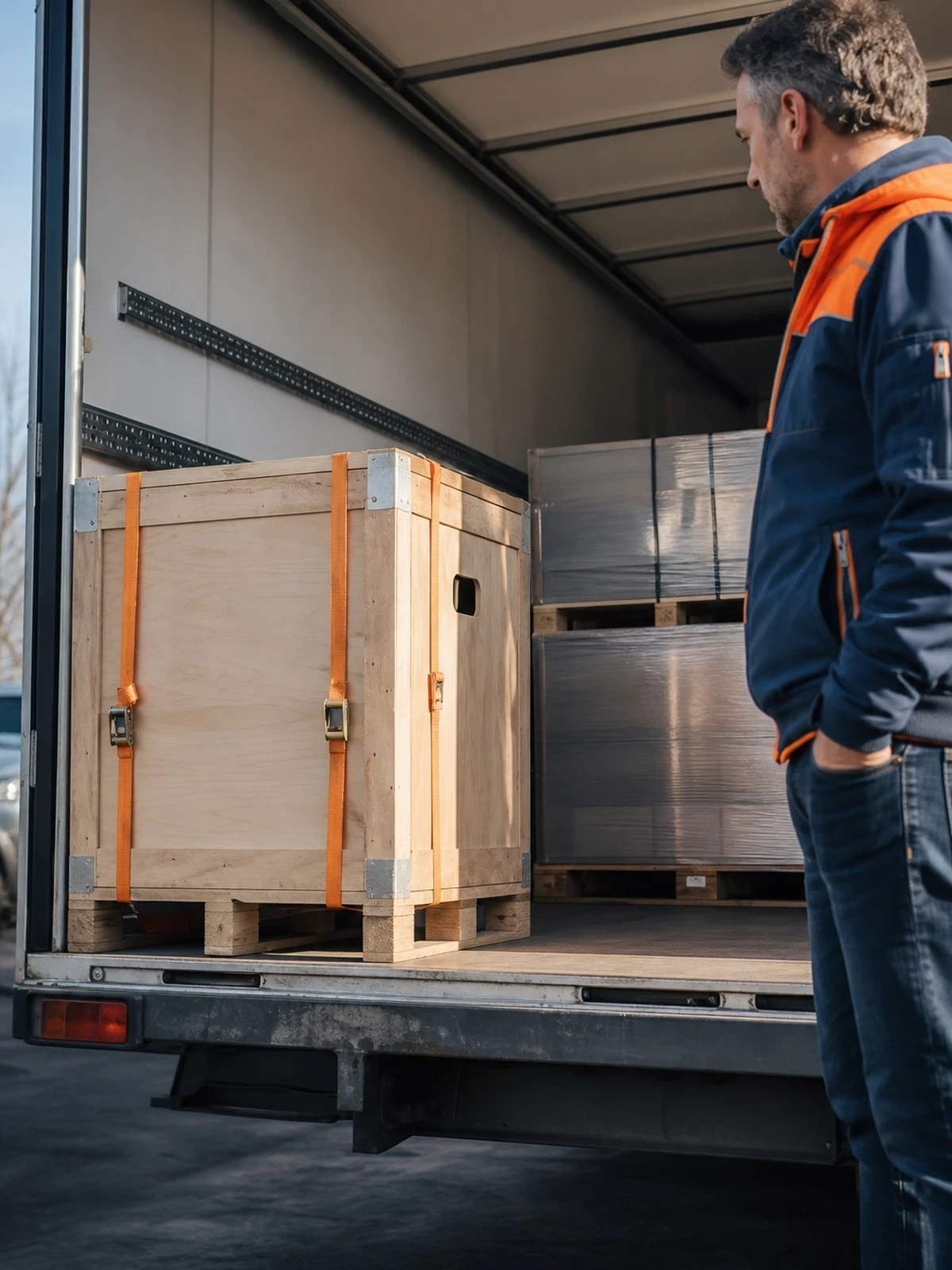 Goods-in-transit insurance
 Compare
 Get covered
Why arrange it through Finass Verzekert?
We look at the terms as well as the premium, and stay your point of contact when there is a claim.
Independent
We are not tied to one insurer and compare on the basis of an objective analysis of several companies.
One fixed adviser
You call or email someone who knows your file. No menu options, no changing call centres.
Switching without hassle
We cancel your old policy and align the start date, so you are never a day without cover.
Help with claims
We report the claim and monitor how it is handled. In urgent cases you can reach us on the emergency line.
What to look out for
Four points that are decisive time after time in an SME transit claim.
The night and parking clause
Almost every policy excludes theft from a vehicle left unattended outside the situations described: only on a locked site, in a guarded garage or within a stated time window. If the van stands in the street overnight with a load in it, there is no cover, even where the lock was forced. Check this clause before you plan a route with an overnight stop on the way.
Securing and stowing the load
Damage because the load shifted, toppled or fell is assessed as a consequence of unsound loading and is excluded. That is not only an insurance matter: in a roadside check, insufficient securing also leads to a penalty, and fines are never insured. Record how you secure loads and with what equipment, and instruct drivers in writing.
What does not count as 'goods'
Generally outside the cover are money and negotiable instruments, for which a money insurance exists, tools and business equipment that travels with you and is not delivered, and the driver's personal belongings. Livestock and household removals also call for a separate description on the policy.
Declare the flow of goods as it really is
If your range changes, you start driving abroad or you occasionally take freight for third parties, the risk changes. Article 7:928 of the Dutch Civil Code obliges you to give that information correctly and in full and Article 7:930 of the Dutch Civil Code determines what happens if it is not right: a proportionately lower payment, or no payment where the risk would not have been accepted.
What does your premium depend on?
- Type of goods: electronics and branded goods are prone to theft
- Value carried per journey: determines the maximum loss per event
- Area of cover: the Netherlands, the Benelux or the whole of Europe
- Security of the vehicle: alarm class, deadlock and where the vehicle is kept
- Number of vehicles and journeys: more mileage means more exposure
- Claims history: previous thefts weigh heavily
Insurers weigh these details differently. That is where your saving is.
What is covered
| Situation | Extended | Comprehensive |
|---|---|---|
| Your van is in a collision and the trading stock it carries is damaged | Yes | Yes |
| Fire in the vehicle in which the whole consignment is lost | Yes | Yes |
| A pallet falls off the tail lift onto the pavement while being unloaded | Provided that | Yes |
| Cargo is taken from the van during the day with no signs of forced entry | No | No |
| Frost damages a consignment during a journey in winter | No | Provided that |
| A machine arrives scratched without any identifiable event having occurred | No | Yes |
The extended form names the perils covered; all risks pays out for any unforeseen event that is not excluded.
Frequently asked questions
This is what people ask us most.
My carrier has damaged the cargo. Who pays?
You can hold him liable, but his liability is limited by convention to an amount per kilo and he can invoke force majeure. With goods insurance you report the loss to your own insurer, which pays and then seeks recovery. Do keep that recovery possible: sign the consignment note with a note and make a written reservation in good time.
Is the cargo insured if the van is stolen?
The goods are, provided you have complied with the policy's theft conditions. The vehicle itself is not: that comes under the own-damage cover of the van insurance or lorry insurance. Always report it to the police immediately and keep the report, because without a police report a theft claim is generally not taken up.
How quickly do I have to report damage in transit?
As soon as you reasonably become aware of it. That follows from Article 7:941 of the Dutch Civil Code. With visible damage that means: at delivery. With non-visible damage, short periods from the carriage contract apply within which you have to complain. Photograph the consignment, the packaging and the load space before anything is unpacked or moved.
What if I occasionally take something along for a customer?
Then your role shifts from sender to carrier and different rules apply. An own goods in transit policy usually does not cover third-party property. Declare this in advance, so that the capacity on the policy schedule is correct and carriers' liability cover is placed alongside it. See also own goods in transit insurance.
Every situation is different. For these situations we have a separate page.
- Compare goods in transit insuranceThe main page
- Transit insurance for self-employed professionalsYour own property or freight, the van as storage, capacity
- Own goods in transit insurance through a.s.r.Your own property, overnight clause, loading and unloading
- Transport insurance for self-employed professionalsConsignments, passing of risk, packing
- Insurance for the transport of goodsOwn transport, carriers' liability, door to door