

Car insurance through Turien & Co
Turien & Co operates as an authorised agent. That does not change what you insure, but it does change who assesses the application and who handles your claim.
- Several insurers compared objectively
- 9.5 customer rating for a new policy
- AFM licence 12016589
- Personal 072 - 509 24 56, weekdays 9–17
This page in another language: Nederlands
The calculator and the quote form below are in Dutch. Prefer to do this in English? Email info@finassverzekert.nl or call 072 - 509 24 56 and we will take it from there.
Work out for yourself what it would cost.
Enter your details; you will receive a proposal within one working day.
- We compare the offerings of several insurers
- An adviser checks whether the cover suits your situation
- We arrange the switch, including cancellation
A premium indication, not personal advice. Prefer to talk it through? Call 072 - 509 24 56.
- Independent advice
- Several insurers
- Switching arranged
- Help with claims
In brief
A authorised agent is an intermediary that has been given authority by one or more insurers to accept risks, issue policies and settle claims independently. Turien & Co is such a party. In reality it means that the application and the handling of claims sit in one place and that turnaround times in unusual situations are often shorter. The insurer behind the authority carries the risk; which company that is appears on your policy schedule.
For you as the insured, the legal position does not change. The policy conditions determine the cover, and the statutory rules in Book 7 of the Dutch Civil Code apply in full: the duty of disclosure when you apply (Article 7:928 of the Dutch Civil Code), the consequences of an incorrect declaration (7:930 DCC) and the duty to notify a claim (7:941 DCC). It is worth knowing, though, that an authorised agent may apply its own conditions that differ from the standard conditions of the insurer behind it. So compare at the level of conditions, not by name.
Finass objectively compares what several insurers and authorised agents offer. Which party is most suitable follows from your situation: the value and power of the car, your claims history, the cover you want and whether there are particular features such as an imported vehicle or a second driver. The general explanation of the forms of cover is on the hub page compare car insurance.
This page deals with one situation. The full overview is on Compare car insurance.
Independent, personal, sorted quickly
We compare your car insurance across dozens of insurers, explain where the real differences lie, and arrange the switch from start to finish — without you having to chase it yourself.
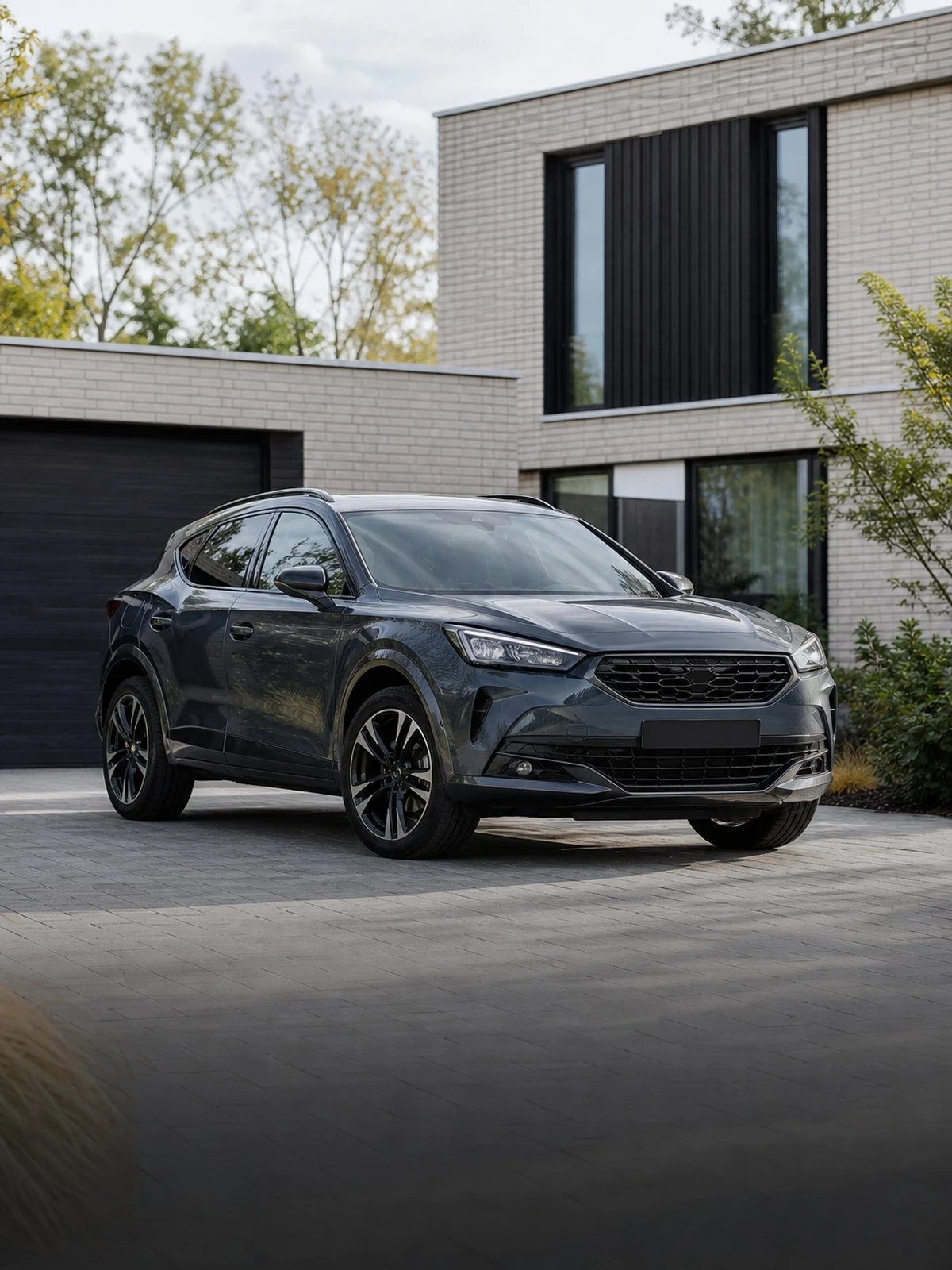 Car insurance
 Compare
 Get covered
Why arrange it through Finass Verzekert?
We look at the terms as well as the premium, and stay your point of contact when there is a claim.
Independent
We are not tied to one insurer and compare on the basis of an objective analysis of several companies.
One fixed adviser
You call or email someone who knows your file. No menu options, no changing call centres.
Switching without hassle
We cancel your old policy and align the start date, so you are never a day without cover.
Help with claims
We report the claim and monitor how it is handled. In urgent cases you can reach us on the emergency line.
What to look out for
Four points that arise specifically where your policy runs through an authorised agent.
Read the agent's conditions, not the insurer's
The policy schedule names the risk carrier, but the cover is set out in the conditions belonging to the agent's policy. On some points those can be wider or narrower than the insurer's own conditions. Look in particular at the depreciation scheme, the treatment of glass damage and the description of replacement transport.
Claims are handled by the authorised agent
Report claims to us or to the agent, not to the insurer behind them. Your policy is not known there. Do so in good time, because Article 7:941 of the Dutch Civil Code requires you to notify a claim as soon as you are reasonably aware of it. In a collision you complete the European Accident Statement and do not admit liability.
What is not covered under any variant
Excluded are, among others hire and paid passenger transport, taking part in races and speed trials, and driving without a valid licence or while disqualified. Also, intent falls outside the cover under Article 7:952 of the Dutch Civil Code. Damage to the load carried is likewise excluded under a passenger car policy.
Reporting changes
A move, a different regular driver, more mileage or a modification to the car are all details on which the premium and acceptance are based. Pass them on as soon as they occur. A change you fail to report can lead to a reduced payment when you claim, even where that change has nothing to do with the cause of the loss.
What does your premium depend on?
- List price and year of manufacture: determine the rating group and whether own-damage cover makes sense
- No-claims years: taken from the central register
- Age of the regular driver: young drivers fall into a higher rate
- Type of cover: third-party liability, third-party liability plus fire and theft, or comprehensive
- Excess: raising it voluntarily lowers the own-damage premium
- Region of residence: theft figures by postcode area are taken into account
Insurers weigh these details differently. That is where your saving is.
What is covered
| Situation | Third-party liability | Comprehensive |
|---|---|---|
| You dent another car's bumper while parking | Yes | Yes |
| You scrape your own wing mirror along the wall while driving out of the garage | No | Yes |
| A deer crossing a provincial road runs into your car | No | Yes |
| Your car is scratched in a car park by someone you cannot trace | No | Yes |
| You put petrol in a diesel car and the engine seizes | No | Provided that |
| The clutch starts to slip after a hundred and eighty thousand kilometres | No | No |
These outcomes follow from the form of cover; exactly which set of conditions applies is stated on your policy schedule.
Frequently asked questions
This is what people ask us most.
What is the difference between an authorised agent and an ordinary insurer?
With an authorised agent, the agent acts on the insurer's behalf: it accepts the risk, issues the policy and settles claims. The insurer carries the risk and appears on your policy schedule. For your cover the arrangement makes no difference. Your rights follow from the policy conditions and the law. In reality, though, all contact runs through one party.
Can I take my no-claims years with me?
Yes. No-claims years are held in a central register and transfer when you switch, including to or from a policy issued by an authorised agent. The new insurer obtains the number from there. What you declare yourself is not decisive. If there is a period without insurance in between, some of the years built up can lapse. So arrange the switch so that cover follows on immediately.
Do I choose here between third-party liability, third-party fire and theft, and comprehensive cover?
Yes, that choice is independent of the insurer. Third-party liability is compulsory under Article 2 of the Dutch Motor Insurance Liability Act (WAM) and covers only damage to other people. Third-party, fire and theft adds theft, fire, storm and glass damage, among other things. Comprehensive cover also covers damage to your own car caused by you. See comprehensive cover.
Can I move to another company during the term?
Most motor policies can be cancelled at any time after the first contract year, subject to one month's notice. We make sure the new policy follows on seamlessly, so that you are not uninsured for a single day. That matters because the insurance requirement attaches to the registration and continues for as long as the vehicle is in your name.
Every situation is different. For these situations we have a separate page.
- Compare car insuranceThe main page
- Taking out car insurance: what you need and how it worksApplication, duty of disclosure, start date
- Where is the best place to insure your car?Direct, comparison site, adviser
- Business Travel Insurance through Turien & CoBinding authority, travel advice, high-risk areas