

Insurance for a tender
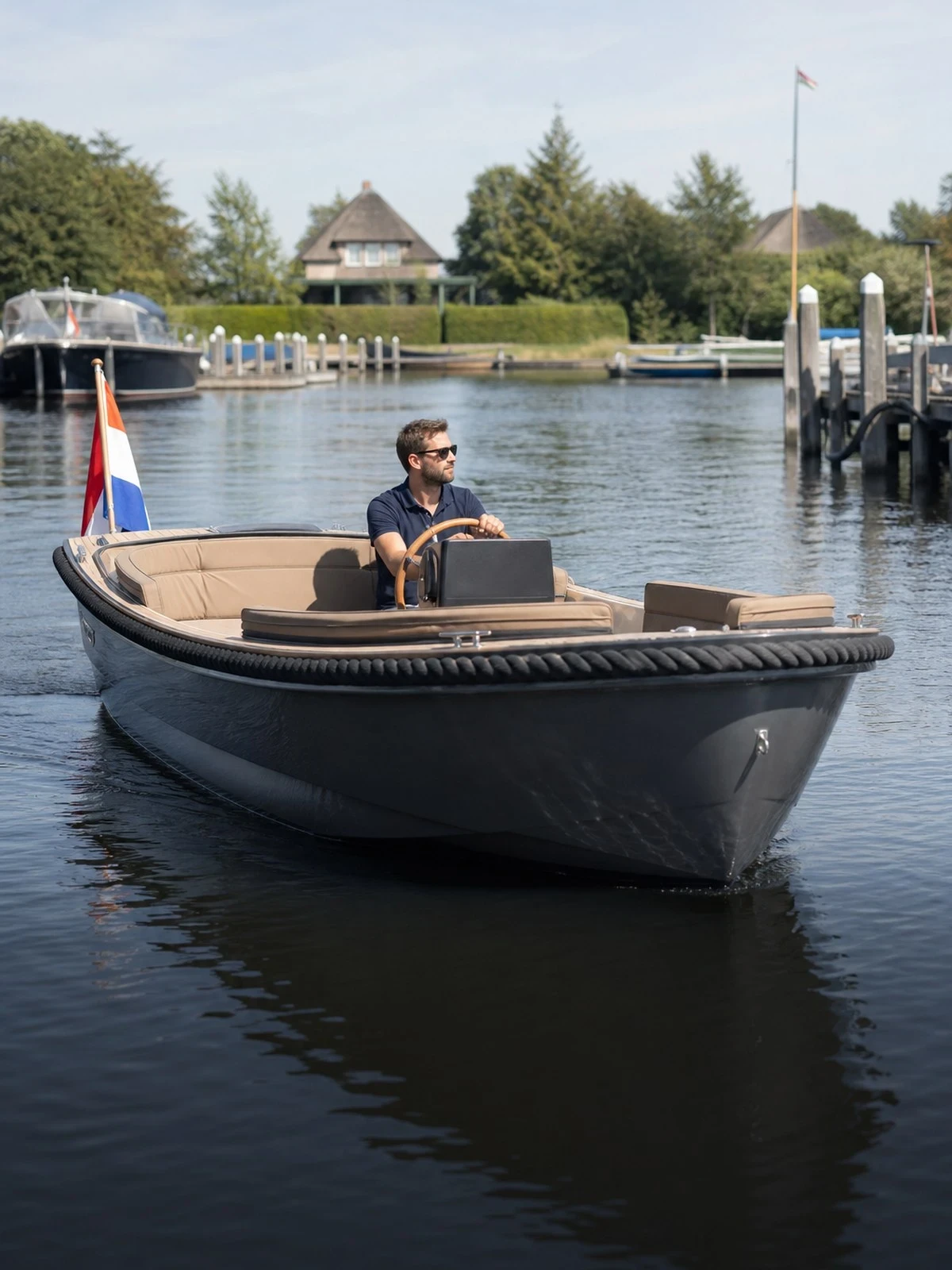
A tender is sometimes an independent day boat and sometimes the tender to a yacht. That distinction determines which policy a claim belongs on.
- Several insurers compared objectively
- 9.5 customer rating for a new policy
- AFM licence 12016589
- Personal 072 - 509 24 56, weekdays 9–17
This page in another language: Nederlands
The calculator and the quote form below are in Dutch. Prefer to do this in English? Email info@finassverzekert.nl or call 072 - 509 24 56 and we will take it from there.
Work out for yourself what it would cost.
Enter your details; you will receive a proposal within one working day.
- We compare the offerings of several insurers
- An adviser checks whether the cover suits your situation
- We arrange the switch, including cancellation
A premium indication, not personal advice. Prefer to talk it through? Call 072 - 509 24 56.
- Independent advice
- Several insurers
- Switching arranged
- Help with claims
In brief
The term tender covers two different things. There are luxury day tenders with an inboard engine that are used independently, and there are smaller tenders that hang in davits behind a yacht and serve to get from a buoy to the shore. For insurance that is a fundamental difference. The general explanation is set out at pleasure craft insurance, and a related explanation at insuring a tender.
If the tender belongs to a larger vessel, the first question is whether it appears as a tender on the yacht policy, with its name, value and engine details. Many policy conditions cover a tender only up to a certain length or value, and only while it is with the mother vessel. If the tender goes ashore independently with guests on board, some policies place it outside that description. If the tender costs more than the limit stated in the conditions, a your own policy is almost always the safer choice. See also exclusive yacht insurance.
The second point is the lifting, launching and towing. The damage rarely arises while sailing but during the operation leading up to it: a sling that breaks, a davit that bends, a tender that swings against the yacht's hull, or a tender that fills up under tow during a passage and disappears. Check that those moments are expressly included and what the conditions say about the soundness of lifting equipment. Unsound or undersized equipment counts as an inherent defect and that is excluded.
This page deals with one situation. The full overview is on Compare pleasure craft insurance.
Independent, personal, sorted quickly
We compare your pleasure craft insurance across dozens of insurers, explain where the real differences lie, and arrange the switch from start to finish — without you having to chase it yourself.
 Pleasure craft insurance
 Compare
 Get covered
Why arrange it through Finass Verzekert?
We look at the terms as well as the premium, and stay your point of contact when there is a claim.
Independent
We are not tied to one insurer and compare on the basis of an objective analysis of several companies.
One fixed adviser
You call or email someone who knows your file. No menu options, no changing call centres.
Switching without hassle
We cancel your old policy and align the start date, so you are never a day without cover.
Help with claims
We report the claim and monitor how it is handled. In urgent cases you can reach us on the emergency line.
What to look out for
Four points that determine whether damage to a tender is actually paid for.
Towing on open water
A tender towed behind the vessel fills up, capsizes or breaks free. Many policies exclude loss while under tow on the open sea or require the tender to be placed on deck or in davits for passages. Read that provision before you leave. It is one of the few exclusions that states precisely which behaviour is and is not allowed.
Use by guests and family
Going ashore is often left to whoever happens to be on board. If the policy states an age limit or a requirement of experience, that applies to guests too. If a guest runs into someone, you are involved as the owner and Article 6:162 of the Dutch Civil Code applies to the person who caused it. Make sure the liability section treats guests as insured persons and not only the owner.
Theft of the tender and the motor
A tender at a jetty or on a beach is an easy target. The prevention requirements are specific: an approved motor lock, securing the motor with bolts, a cable or chain to a fixed point and sometimes a tracking system. If the prescribed security is missing, a theft claim is refused. Have the arrangements agreed recorded on the policy schedule.
What is not covered
Outside the cover are, among other things, damage during lifting with unsound or undersized equipment, loss while under tow where the conditions prohibit it, damage caused by wear and tear, UV deterioration, osmosis and glued seams coming apart, and hire or carriage of passengers for payment. Speed races are excluded, as are deliberate acts under Article 7:952 of the Dutch Civil Code.
What does your premium depend on?
- Value of the tender and the motor: decisive for whether a separate policy is needed
- Length and engine power: many policy conditions apply an upper limit here for tenders
- Use: independent day boat or tender to a yacht
- How it is carried: in davits, on the aft deck, on a platform or under tow
- Mooring and security: at the jetty, at the mother vessel or ashore
- Sailing area: inland waters, coastal waters or foreign waters
Insurers weigh these details differently. That is where your saving is.
What is covered
| Situation | The tender on the yacht policy | A separate tender policy |
|---|---|---|
| The tender lies at the yacht's jetty and is struck by a passing motor vessel | Yes | Yes |
| You make a ten-mile day trip with guests, far away from the mother vessel | Provided that | Yes |
| The shed in which the tender winters burns down | Provided that | Yes |
| The tender is stolen from the trailer during transport by road | No | Provided that |
| The tender fills up and sinks because the drain plug had not been put back | No | No |
| A guest drops their watch in the water while stepping across | No | No |
If the tender appears as a tender on the yacht policy, look first at the limit on length and value stated there.
Frequently asked questions
This is what people ask us most.
Is my tender automatically covered on my yacht's policy?
Only if the policy conditions say so and the tender falls within the stated limits on length, value or engine power. Above those limits, or where it is used independently out of sight of the mother vessel, there is often no cover. Have the tender listed on the policy schedule with its make, type, hull number and engine number; a description as a tender without details leads to discussion afterwards.
What if the tender falls during lifting?
The cause is then examined. If a sling breaks that was visibly worn, or the lifting point was too light, there is an inherent defect and no payment follows for the part itself. If the damage arises because a yard's crane fails, that is a matter for the yard and their liability insurance. Photograph the situation before anything is cleared away.
Can I take the tender to the beach as well?
You can, but bear two things in mind. Damage to the propeller and the outdrive from contact with the bottom is often regarded as an operating error and not as an insured event. And a tender left unattended on the beach falls under the prevention requirements for theft. Secure the tender to a sound point and do not simply assume the motor is covered as a loose item.
Do I have to tell my insurer about a tender if I buy one later?
Yes. A new tender changes the interest insured and the risk. Article 7:928 of the Dutch Civil Code deals with the duty of disclosure when the insurance is taken out, but the policy conditions also require you to report changes during the term. Report the purchase of a more powerful motor too: that is not only a question of value but also of risk.
Every situation is different. For these situations we have a separate page.
- Compare pleasure craft insuranceThe main page
- Insuring a tenderTender, separate or included, theft
- Insuring an inflatable boat, RIB and tenderProne to theft, motor, tender
- Insurance for a RIBTubes, speed, kill cord
- A tender on the pleasure craft insuranceOwn-damage cover, tender, sailing area
- Insuring a yachtValuation, sailing area, crew
- Insurance for an exclusive yachtValuation, crew, refit and yard period
- Insuring a yachtOwn-damage cover, valuation, sailing area