

Insurance for a RIB
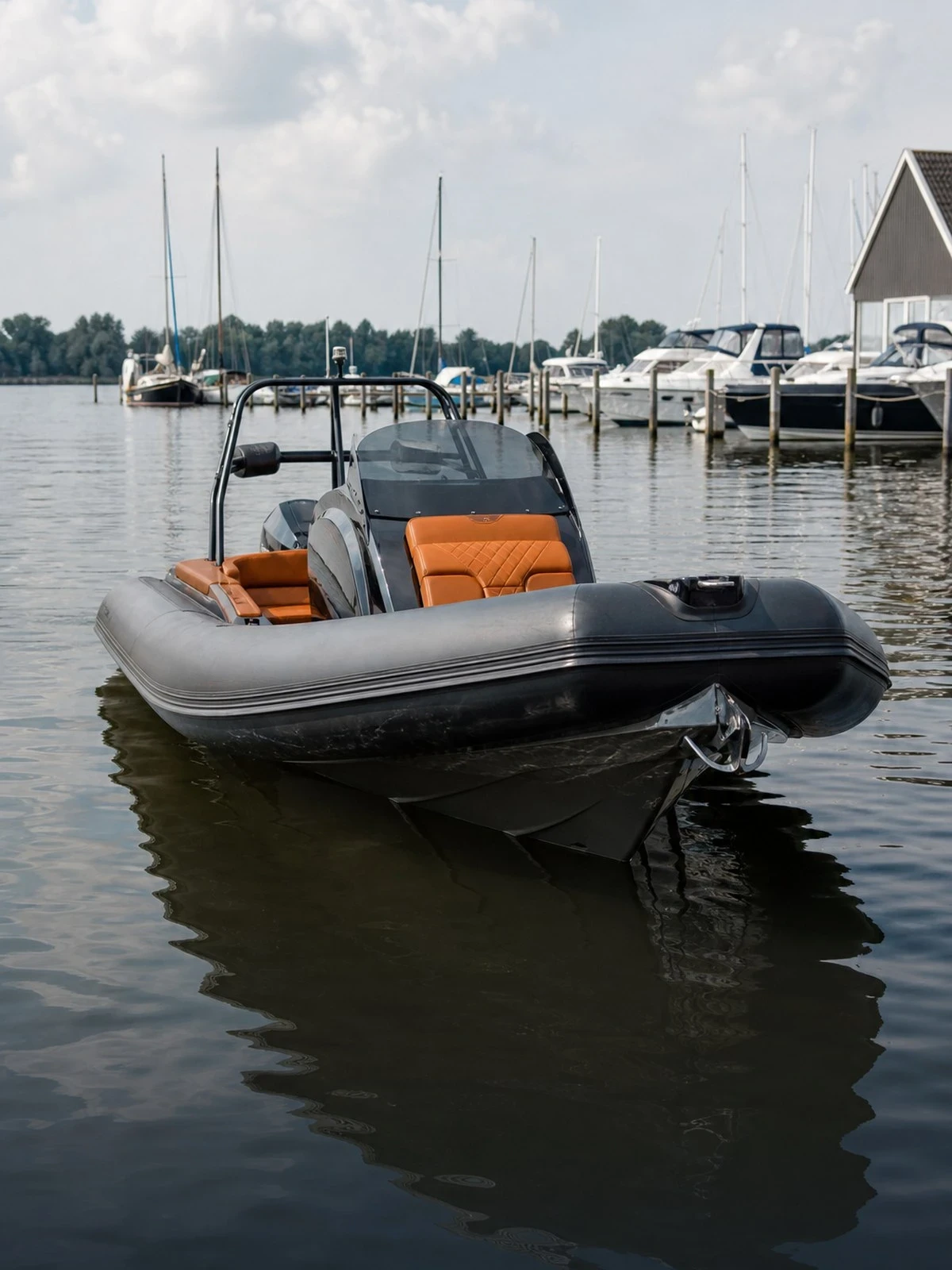
A RIB combines a rigid hull with inflatable tubes and a substantial amount of power. The damage is usually in those tubes and in The speed at which The boat is driven.
- Several Insurers compared objectively
- 9.5 customer rating for a new policy
- AFM license 12016589
- Personal 072 - 509 24 56, weekdays 9–17
This page in another language: Nederlands
Work out for yourself what it would cost.
Enter your details; you will receive a proposal within one working day.
- We compare the offerings of Several insurers
- An advisor checks whether the cover suits your situation
- We arrange The switch, including cancellation
A premium indication, not Personal advice. Prefer to talk it through? Call 072 - 509 24 56.
- Independent advice
- Several Insurers
- Switching arranged
- Help with claims
In letter
A RIB, a rigid inflatable boat, is used for fast cruising, diving, water-skiing and as a Tender to a larger vessel. The basic structure of the cover is set out at pleasure craft Insurance and a related explanation can be found at Insuring a RIB. What makes this Type of boat distinctive is the combination of light construction with a great deal of power: the pattern of damage consists of hard impacts, high collision speeds and damaged air chambers.
The tubes are The part that causes most discussion. A leak that arises because you scrape along a quay wall or because another vessel hits you is an insured event. A tube that starts to leak at The glued seamsafter years of sun and salt is not: that falls under the exclusion for gradual effects, aging and wear. Insurers look at the age of the tube material and often apply a deduction on that basis, even for damage that is covered in itself.
The second point is speed and handling. A craft capable of more than twenty kilometers per hour is subject to the boating license requirement, and a RIB reaches that as a matter of course. If someone sails without that license or under the influence, the claim is refused. Almost all policies also require the use of the kill cord; if the driver goes overboard while the cord was not attached and the boat carries on, the resulting damage is hard to recover from the Insurance.
This page deals with one Situation. The full overview is on Compare pleasure craft Insurance.
Independent, Personal, sorted quickly
We compare your pleasure craft Insurance across dozens of insurers, explain where the real differences lie, and arrange the switch from start to finish — without you having to chase it yourself.
 pleasure craft insurance
 Compare
 Get covered
Why arrange it through Finass Verzekert?
We look at the terms as well as the premium, and stay your point of Contact when there is a claim.
Independent
We are not tied to one insurer and compare on The basis of an objective analysis of several companies.
One fixed adviser
You call or E-mail someone who knows your file. No menu options, no changing call centres.
Switching without hassle
We cancel your old policy and align The start date, so you are never a day without cover.
Help with claims
We report The claim and monitor how it is handled. In urgent cases you can reach us on The emergency line.
What to look out for
Four points that come up more often on a RIB than on an ordinary motorboat.
Water skiing, wakeboarding and towing activities
Towing a skier, a wakeboarder or an inflatable is not automatically covered. Policy conditions set requirements for an extra lookout on board and for The waters where it is allowed. If The person being towed is injured, you are liable under Article 6:162 of The Dutch Civil Code and it is an injury claim that can run for years. Have this extension expressly stated on The policy.
Engine, transom and loads while sailing
A heavy outboard Engine puts a constant load on the transom. Cracks that arise from normal loading or from incorrect fitting fall under inherently defective and are excluded. Water ingress into the engine because the boat takes a wave badly is also often treated as an operating error. Have the motor fitted by an authorized dealer and keep the fitting invoice. In a dispute that is the only hard evidence.
Exclusions that matter on a RIB
Are excluded wear and aging of the tubes, the glued seams and material attacked by UV, taking part in speed races and training for them, professional or paid use such as diving or boating instruction for a fee and running paid trips, and theft of the outboard Engine where the prescribed security device or Engine lock was missing. Deliberate acts and recklessness remain excluded under Article 7:952 of The Dutch Civil Code.
On the Trailer and ashore
A RIB stands on a trailer more often than it lies in the water. That means part of the risk lies on the road and on the yard. If the trailer tips over, damage to others is met by the Third party liability cover of the towing vehicle under Article 2 of the Dutch Engine Insurance Liability Act (WAM). Theft of the boat and Trailer together is subject to separate prevention requirements: a hitch lock, a wheel clamp and sometimes a locked site.
What does your premium depend on?
- Engine power and top speed: the most important yardstick on this Type of boat
- Value of the hull, the tubes and the engine: the engine is often the most expensive part
- Age of The tube material: determines The deduction on a covered claim
- Use: day trips, diving, towing watersports or use as a Tender
- Storage and security: a Trailer at home, a supervised site or a mooring in a marina
- Sailing area: inland waters, coastal waters or the Wadden Sea
Insurers weigh these details differently. That's where your saving is.
What is covered on a RIB
| Situation | Third party liability | Comprehensive |
|---|---|---|
| Your anchor line gets into another craft's propeller and damages The drive | Yes | Yes |
| The RIB tears its buoy loose in a storm and is damaged against The basalt revetment | No | Yes |
| The Engine takes in water because you take a wave from a passing inland vessel badly | No | Provided that |
| Theft of the VHF radio and the chart plotter from the Open console | No | Provided that |
| You sail on the Wadden Sea while the policy states inland waters only | No | No |
| Frost damage to the cooling system because the engine was not drained before winter storage | No | No |
On a covered tube claim The insurer almost always applies a deduction based on The age of The material.
Frequently asked questions
This is what people ask us most.
Are damaged tubes covered?
Only if the cause is a sudden event, such as a collision, vandalism or contact with a sharp object. Leaks at the seams, fading, hardening or material that has become porous are regarded as aging and fall outside the cover. On a covered claim the insurer usually applies a deduction based on the age of the tubes, even where only one segment is replaced.
May I use my RIB as a Tender to a larger vessel?
Yes, but declare it, because extra situations then apply: lifting in davits, towing at sea and lying alongside the mother vessel. Those moments are not always covered on an ordinary boat policy. It is often more practical to list the RIB as a Tender on the yacht policy than as a separate craft, so that no gap falls between the two policies.
What part does a boating license play on a RIB?
For craft capable of more than twenty kilometers per hour, a small craft boating license is compulsory by law, and virtually every RIB reaches that. If someone sails without that license, you are acting contrary to the law and to the policy conditions. The insurer can refuse the own-damage claim and recover from you any payment made to the injured party. Record who may sail with your permission.
Am I insured if I sail abroad?
Only within the sailing area stated on the policy schedule. If you take the RIB to Croatia, Spain or France, ask for an extension in advance and declare the road transport as well. Bear in mind local rules on registration, compulsory safety equipment and boating licenses; Failing to comply can bring not only a fine but also consequences for your cover.
Every Situation is different. For these situations we have a separate page.
- Compare pleasure craft Insurancethe main page
- Insurance for a console boatOpen boat, outboard motor, use of a Trailer
- A RIB on the pleasure craft InsuranceOwn-damage cover, tubes, sailing area
- Insuring an inflatable boat, RIB and TenderProne to theft, motor, Tender
- Insurance for a TenderTender, lifting and towing, separate policy or included
- Insuring a RIBOutboard motor, theft, Trailer
- Speedboat on the pleasure craft InsuranceOwn-damage cover, speed, sailing area
- Insuring an inflatable boatValue, Engine, storage
- Speedboat insurance: engine power and boating licenseSpeed, boating licence, sailing area