

Boat insurance through Nationale-Nederlanden
A boat policy often runs on unchanged for years while the use changes: a heavier engine, a different marina, or a son who takes the boat out on his own.
- Several insurers compared objectively
- 9.5 customer rating for a new policy
- AFM licence 12016589
- Personal 072 - 509 24 56, weekdays 9–17
This page in another language: Nederlands
Work out for yourself what it would cost.
Enter your details; you will receive a proposal within one working day.
- We compare the offerings of several insurers
- An adviser checks whether the cover suits your situation
- We arrange the switch, including cancellation
A premium indication, not personal advice. Prefer to talk it through? Call 072 - 509 24 56.
- Independent advice
- Several insurers
- Switching arranged
- Help with claims
In brief
Nationale-Nederlanden is one of the insurers Finass can use for a pleasure craft. We act as an intermediary and compare several insurers objectively. The choice follows from your vessel and your use of it. This insurer's wider range is set out at the overview page. If you live on board, the policy you need is not this one but houseboat insurance the right starting point.
The point that most often leads to discussion on private boat policies is who was at the helm. Policies name a group of people who may sail with the policyholder's permission, sometimes with an age limit and with the requirement of a valid boating licence. For a boat longer than fifteen metres or faster than twenty kilometres per hour, that licence is compulsory by law. If someone outside that group sails, liability towards the injured party still stands under Article 6:162 of the Dutch Civil Code, but the insurer can recover the loss from you or refuse the hull claim.
The second point is concurrent insurance. Loose belongings on board sometimes fall partly under your home contents insurance, jewellery and camera equipment under a valuables insurance, and a dispute with a marina or yard under your legal expenses insurance. Two policies covering the same interest do not produce a double payment: Article 7:960 of the Dutch Civil Code prohibits you from being better off as a result of a loss. Map out that overlap and you will not pay two premiums for one risk.
This page deals with one situation. The full overview is on Compare pleasure craft insurance.
Independent, personal, sorted quickly
We compare your pleasure craft insurance across dozens of insurers, explain where the real differences lie, and arrange the switch from start to finish — without you having to chase it yourself.
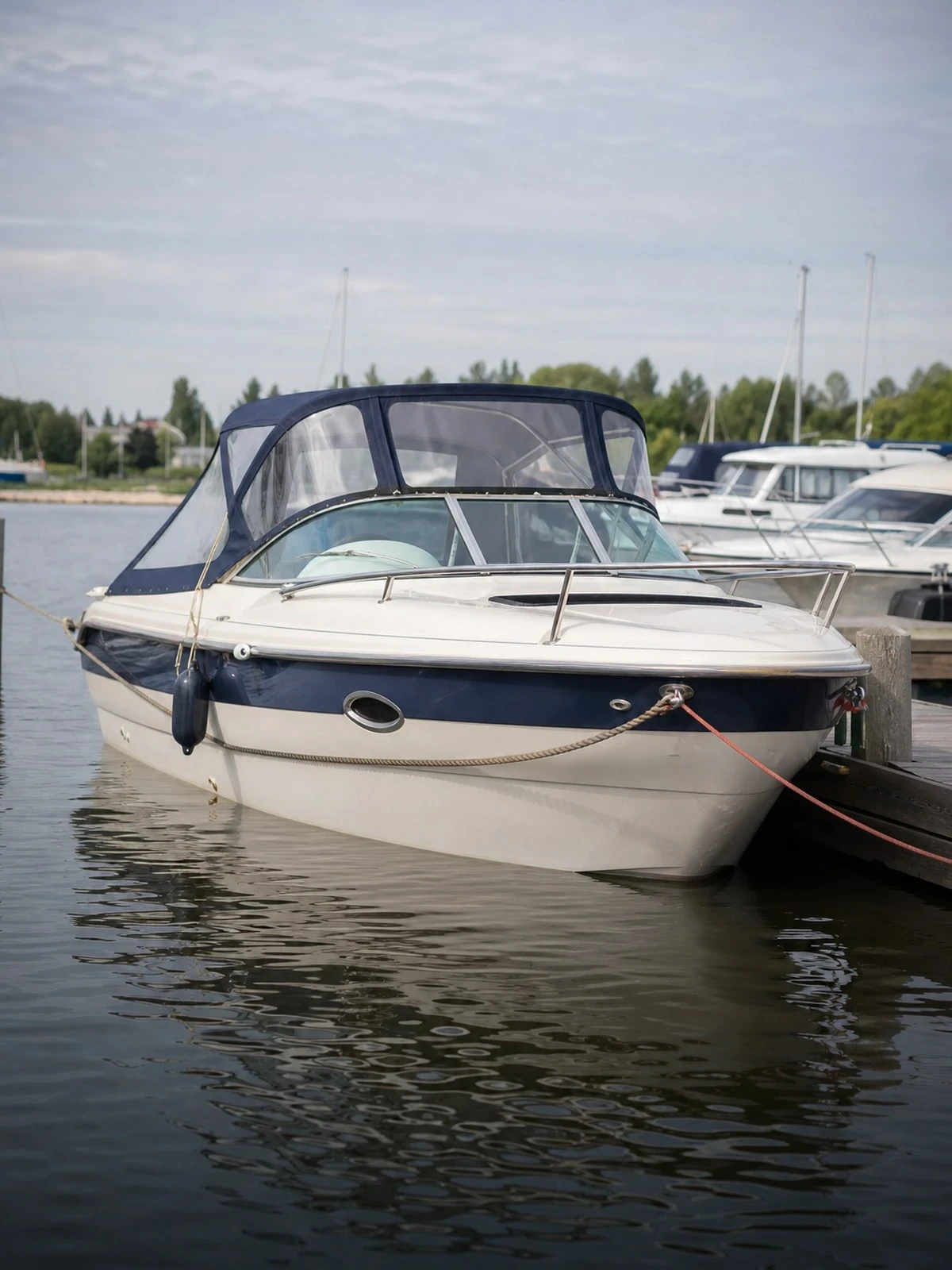 Pleasure craft insurance
 Compare
 Get covered
Why arrange it through Finass Verzekert?
We look at the terms as well as the premium, and stay your point of contact when there is a claim.
Independent
We are not tied to one insurer and compare on the basis of an objective analysis of several companies.
One fixed adviser
You call or email someone who knows your file. No menu options, no changing call centres.
Switching without hassle
We cancel your old policy and align the start date, so you are never a day without cover.
Help with claims
We report the claim and monitor how it is handled. In urgent cases you can reach us on the emergency line.
What to look out for
Four points that decide whether a reported boat claim leads to a payment.
Making the boat ready for winter is a policy obligation
Draining the engine or filling it with antifreeze, emptying the cooling water system, emptying the drinking water pipes and the calorifier, disconnecting the batteries: almost every set of policy conditions states this as an obligation, not as advice. Frost and ice damage is excluded where those steps have not been taken. If you have a yard do it, keep the works order. That is your evidence.
Collisions, locks and busy waterways
Most liability claims on inland waters arise during manoeuvres: scraping along another vessel in a lock, a damaged jetty, a bridge fender struck in passing. Commercial vessels can also claim business interruption for delay. So do not look only at the sum insured for damage to property, but also at how the policy deals with third parties' consequential loss.
What is always excluded
There is no cover for hire, charter and carriage for payment, for living on board permanently without houseboat cover, for damage caused by wear and tear, rust, osmosis and deferred maintenance, and for taking part in races where speed is the object. Sailing under the influence and sailing without the required boating licence lead to refusal; deliberate acts are excluded under Article 7:952 of the Dutch Civil Code.
Changes during the term
A heavier engine, a conversion, a move to a different marina or a longer trip than usual are all changes in the risk. Article 7:928 of the Dutch Civil Code governs what you have to disclose at the outset. The policy conditions govern what you have to report during the term. A boat that has lain somewhere other than the address on the policy schedule for three seasons is the classic reason for a reduced payment after a theft.
What does your premium depend on?
- Value of the boat and engine: including fixed equipment and options added later
- Type of vessel: sloop, sailing boat, cabin motor yacht or open day boat
- Speed: decisive for acceptance and for the boating licence requirement
- Mooring: supervised marina, a berth at home or a public jetty
- Claims history: earlier collisions, theft or storm damage
- Sections chosen: liability, own damage, equipment and assistance
Insurers weigh these details differently. That is where your saving is.
What is covered
| Situation | Third-party liability | Comprehensive |
|---|---|---|
| A tree blows over in an autumn storm and falls on your boat's cabin | No | Yes |
| Your outboard motor is unbolted and taken while the boat lies in a locked berth | No | Provided that |
| A guest falls while stepping on board and breaks a wrist | Yes | Yes |
| The inboard engine seizes because the impeller of the cooling water pump has perished | No | No |
| The trailer tips over while you are taking the boat to the slipway and the hull cracks | No | Provided that |
| Fenders, lifejackets and the tender disappear during an overnight stay in a public visitors' marina | No | No |
Third-party liability cover deals with damage you cause to others; everything that happens to your own vessel runs solely through the own-damage cover.
Frequently asked questions
This is what people ask us most.
May my child take the boat out alone?
That depends on the age limit in the policy conditions and on the boating licence requirement. For a boat capable of more than twenty kilometres per hour, the small craft boating licence is compulsory from the age of eighteen. If the policy states a minimum age or a requirement of experience, that applies alongside the statutory rule. Have the group of people allowed at the helm set out expressly.
Is storm damage in the marina covered?
Damage caused by the vessel breaking free, striking the jetty or being hit by a fallen tree falls under the hull cover in principle. The exception lies with the mooring gear itself: worn lines, chafed fenders and unsound mooring arrangements are regarded as insufficient care. Check the lines before a storm and record the situation with photographs if things go wrong anyway.
What if another vessel runs into me?
Report it to your own insurer and provide the details of the other vessel. Your insurer can advance the cost and recover it from the other party. Do not admit liability yourself. That is for the insurer. Article 7:941 of the Dutch Civil Code requires you to report the claim in good time and to cooperate, including by supplying photographs, witness statements and the circumstances on the water.
Does cover continue while the boat is ashore?
Yes, provided the storage location is known. Fire, theft and storm on the yard site generally remain covered. Damage that occurs during lifting is a different matter: that is usually for the yard and their liability insurance. Ask in advance whether moving the boat around the site and placing it in the cradle falls under your policy or under the yard's.
Every situation is different. For these situations we have a separate page.
- Compare pleasure craft insuranceThe main page
- Boat insurance through a.s.r.Valuation, sailing area, basis of settlement
- Watersports insurance through UnigarantModular structure, equipment on board, people on board
- Insurance for a console boatOpen boat, outboard motor, use of a trailer
- Insurance for a RIBTubes, speed, kill cord
- Speedboat insurance: engine power and boating licenceSpeed, boating licence, sailing area
- Insuring a SkybootOwn damage, liability, sailing area