

Liability
- Damage to third parties
- Employers' liability
- Care, custody and control as an extension
This page is about one policy: public and employers' liability insurance, and about when a leisure business has to pay for a visitor's injuries.
This page in another language: Nederlands · Deutsch
Work out for yourself what it would cost.
Enter your details; you will receive a proposal within one working day.
A premium indication, not personal advice. Prefer to talk it through? Call 072 - 509 24 56.
A leisure business carries two kinds of liability at once. The first arises from ownership: as the possessor of a defective structure you are liable under Article 6:174 of the Dutch Civil Code for the loss, even without any fault. A rotten jetty, a handrail that has come loose or a gate that does not close properly at a swimming pond are enough. The second follows from doing: in an organised activity, conduct is measured against the standard of care in Article 6:162 of the Dutch Civil Code.
Liability for staff is added to that. For mistakes by subordinates, Article 6:170 of the Dutch Civil Codeapplies, and for self-employed people you engage, Article 6:171 of the Dutch Civil Code. If you work in the season with school pupils, agency workers and volunteers, they are equally people for whom you can be held liable. The AVB covers both those claims and the defence against them.
This page describes only the liability cover. If you want to know how it relates to fire, business interruption and staff cover in a single package, read insurance for the leisure sector or the SME insurance package.
We compare your personal liability insurance (AVP) across dozens of insurers, explain where the real differences lie, and arrange the switch from start to finish — without you having to chase it yourself.
 Personal liability insurance (AVP)
 Compare
 Get covered
The structure of the cover in three parts, with an overview per situation below.
AVB for property damage and injury, BAV for professional errors.
Business contents, goods and lost turnover during downtime.
Sickness absence, accidents and the traffic risk.
What is covered
| Situation | AVB | BAV | Cyber |
|---|---|---|---|
| Injury to a visitor or customer | Yes | No | No |
| Damage to a client's property | Sometimes | No | No |
| Financial loss caused by an advisory or calculation error | No | Yes | No |
| Downtime after a ransomware attack | No | No | Yes |
| Data breach involving personal data | No | Sometimes | Yes |
| Damage to property in your care | No | No | No |
This overview is general in nature and is not personal advice. What is actually covered, including exclusions, limits and the excess, is set out in the policy conditions and the insurance card (verzekeringskaart) of the insurer; you receive both before you take out cover. Taking out cover without advice? Then read what execution only means for you.
Insurers weigh these details differently. That is where your saving is.
We look at the terms as well as the premium, and stay your point of contact when there is a claim.
We are not tied to one insurer and compare on the basis of an objective analysis of several companies.
You call or email someone who knows your file. No menu options, no changing call centres.
We cancel your old policy and align the start date, so you are never a day without cover.
We report the claim and monitor how it is handled. In urgent cases you can reach us on the emergency line.
Customers rate our service on four aspects: personal service, service delivery, availability and the outcome. The reviews are collected and published by NH1816 and come from customers who have actually taken out a policy with Finass Advies B.V. or reported a claim.
Four points that make the difference between a policy that pays out and one that does not.
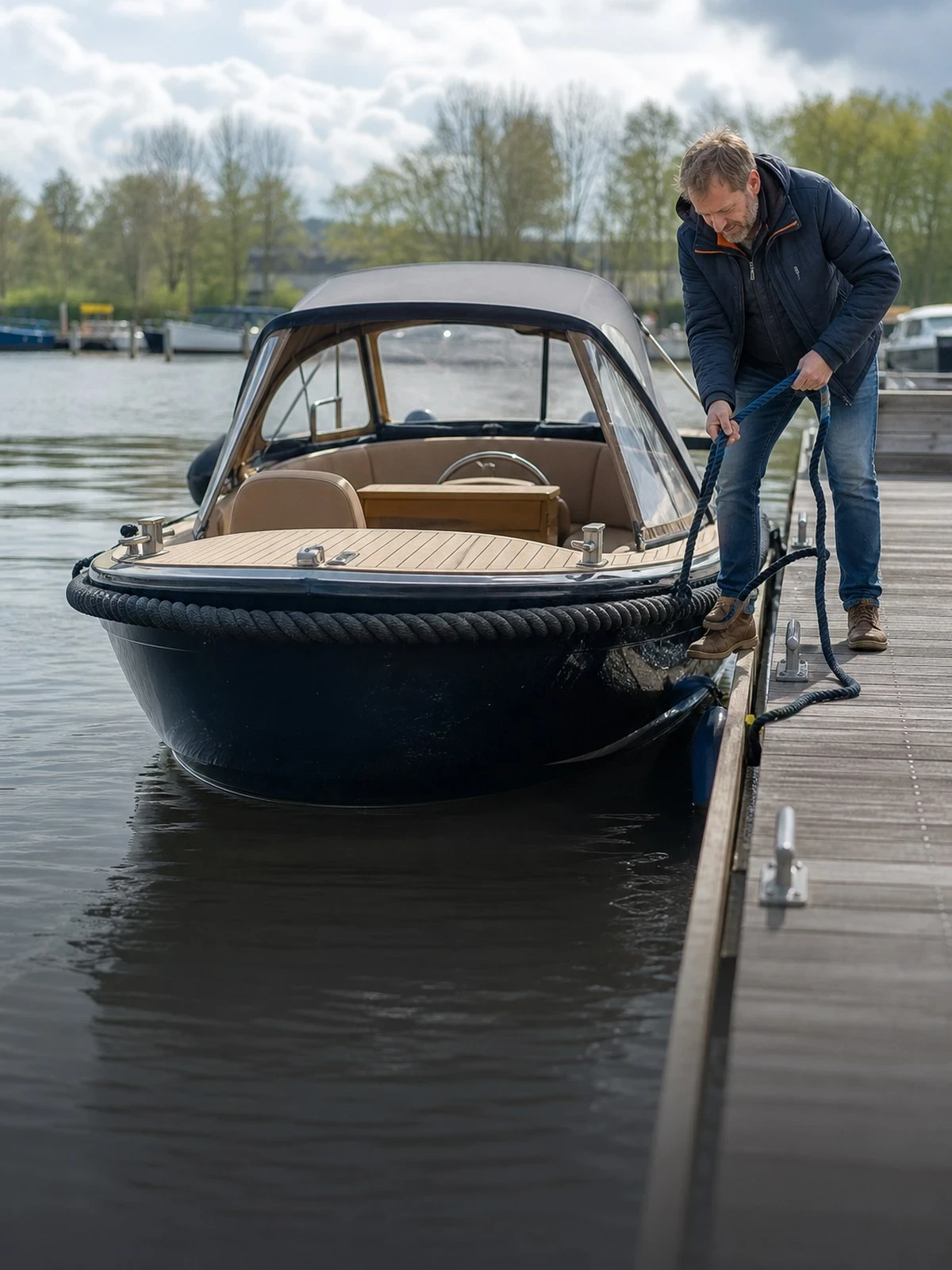
If you damage or lose property you manage temporarily, that falls under the care, custody and control exclusion and is excluded as standard. Think of a caravan in storage, a boat on the launch ramp, luggage in a store or a bicycle in the hire shed. In leisure businesses this is the most common ground for rejecting a claim. It can be insured, but that requires an express statement of what you take into your care and up to what amount.
Play equipment is subject to inspection and log book requirements. Where a child is injured, the log book is the first thing requested. If it is missing, you are in a weak position whatever actually happened and the insurer can rely on the prevention condition. The same applies to climbing structures, bouncy castles and trampolines. Record inspections, repairs and daily checks in writing for each item.
As soon as you organise an activity yourself — a canoe trip, a climbing course, a survival programme — not only the state of the site is considered but also instruction, supervision and choice of equipment. The court then examines whether you warned the participant sufficiently about a danger they could not assess themselves. Record instructions and the safety equipment used, because that documentation carries the defence.
Outside the AVB: damage to property in your care as long as care, custody and control is not insured; pure financial loss without injury or damage to property, such as a booking that falls through; damage caused with motor vehicles, which falls under the WAM; fines and penalty payments imposed; and claims under a contractual guarantee that goes beyond liability in law. Professional errors in advice belong on professional indemnity insurance.
This is what people ask us most.
Not automatically. On a natural site some care may be expected of visitors, and a tree root is not a defect within the meaning of Article 6:174 of the Dutch Civil Code in the way a sunken paving slab can be. What is decisive is whether the danger was visible and whether you gave a warning. In both cases the AVB covers the defence against the claim.
Only to a limited extent. A warning can count in deciding whether you acted carefully, but a general exclusion of liability rarely holds up against consumers, certainly not for injury. Signs do not replace maintenance or supervision. They are useful as an addition to demonstrable measures, not as a substitute for them.
On an AVB they are usually covered as subordinates, both for damage they cause to third parties and for their own injuries through employer's liability under Article 7:658 of the Dutch Civil Code. They do have to be declared in the payroll or as a separate category. Report peak staffing in the season, otherwise the rating basis is wrong.
Open water on your own site calls for fencing, depth markings, a visible supervision policy and clear rules for children. If those are missing, both liability as possessor and the standard of care are invoked. Record who checks what and when; when a claim comes, that record is often the only evidence that you did take measures.
Every situation is different. For these situations we have a separate page.
Request a quote without obligation. We will look at which insurer best matches your activities and your risk.
Prefer to call? 072 - 509 24 56, weekdays 09:00–17:00.
Claim on the road? Emergency line 06 - 55 20 40 72.
Finass Verzekert is a trading name of Finass Advies B.V. We advise on and arrange non-life insurance on the basis of an objective analysis of several insurers, and receive commission for this from the insurer, which is included in the premium. You pay no separate advice fee. Before you take out cover, we establish your wishes and needs.
You will find our licence, KvK and Kifid details and our complaints procedure at the foot of every page.
This page was compiled by Finass Verzekert (LinkedIn). Last updated on .
The information on this page is general in nature and is not personal advice.
Maandag- Vrijdag: 09:00- 17:00
We use cookies and similar technologies to improve your experience on our website.