

Comprehensive worldwide
- Damage from falls and knocks
- Theft from the car
- Damage on stage
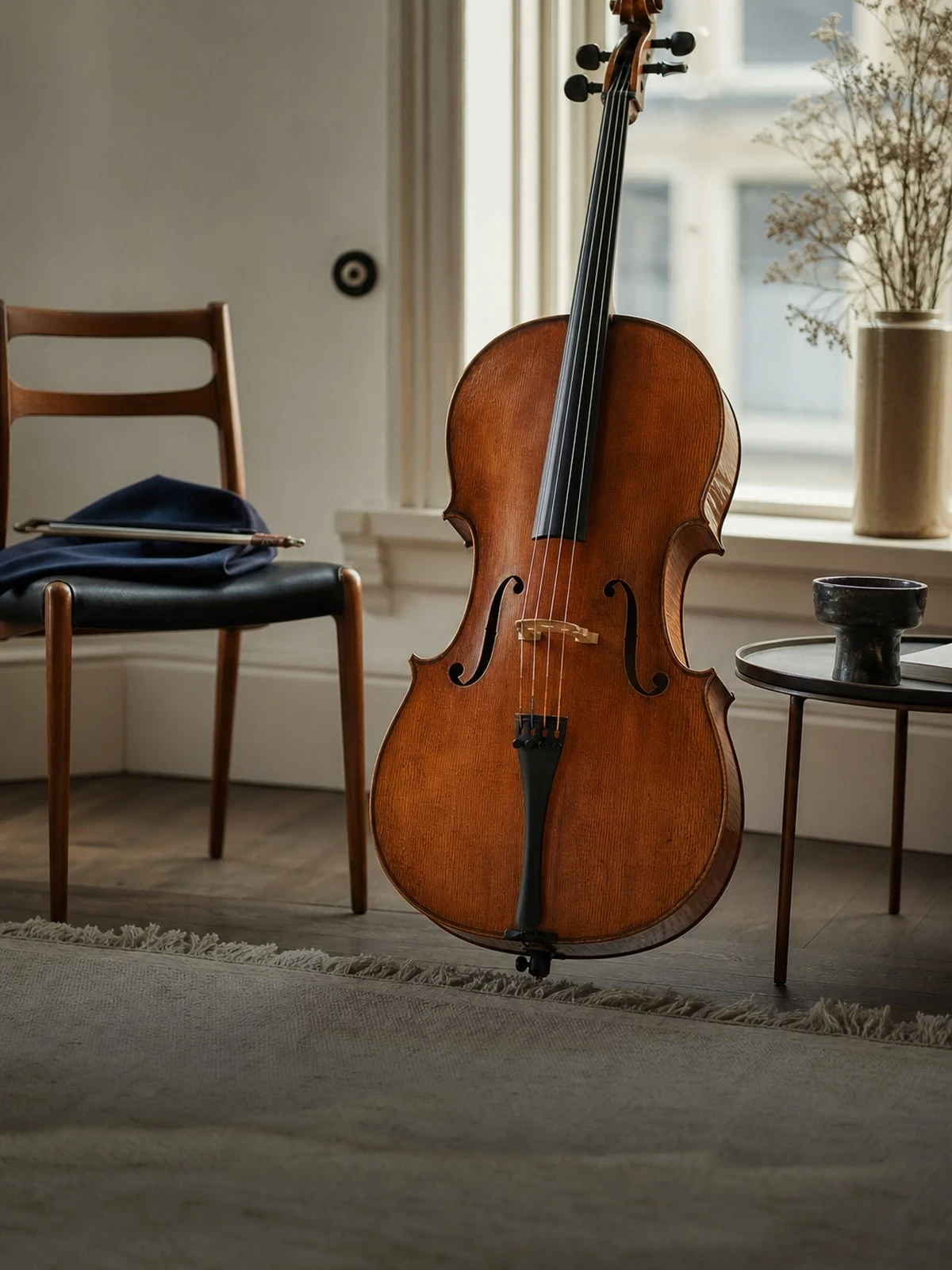
An instrument is the only valuable possession that comes out of its case every week and is played. That use drives the whole policy.
This page in another language: Nederlands · Deutsch
Work out for yourself what it would cost.
Enter your details; you will receive a proposal within one working day.
A premium indication, not personal advice. Prefer to talk it through? Call 072 - 509 24 56.
You insure an instrument as a separately described item on a valuables policy, with cover at home, on the road and on stage. For old or hand-built instruments this is done on the basis of a valuation by a maker or an expert in that type of instrument. If the report has been drawn up as intended in Article 7:960 of the Dutch Civil Code, the value is fixed for the term and the discussion after a loss shifts to the repair rather than to the amount.
The question of acceptance that decides everything here is amateur or professional. Paid performances, orchestral contracts and tours make the risk fundamentally different: the instrument travels more often, sits in dressing rooms and goes abroad. Declare that when you apply; failing to do so engages the duty of disclosure under Article 7:928 of the Dutch Civil Code.
Everything arising from playing itself remains excluded. Strings, bow hair, dampers, keys and pads wear out, and that is maintenance. Cracks and splits arising from dryness or a change in temperature are also assessed as gradual. What is insured is the fall, the knock, the collision and the theft. What else the type of policy involves is set out at valuables insurance.
We compare your valuables insurance across dozens of insurers, explain where the real differences lie, and arrange the switch from start to finish — without you having to chase it yourself.
 Valuables insurance
 Compare
 Get covered
The structure of the cover in three parts, with an overview per situation below.
At home, on the road and on location.
Amateur or professional makes a fundamental difference.
With string instruments the bow counts for a great deal.
What is covered
| Situation | Covered |
|---|---|
| A fall during rehearsal or performance | Yes |
| Theft from a locked space | Sometimes |
| Damage in transit | Yes |
| Professional use, declared | Sometimes |
| A crack from dryness or a change in temperature | No |
| Wear of strings and bow hair | No |
This overview is general in nature and is not personal advice. What is actually covered, including exclusions, limits and the excess, is set out in the policy conditions and the insurance card (verzekeringskaart) of the insurer; you receive both before you take out cover. Taking out cover without advice? Then read what execution only means for you.
Insurers weigh these details differently. That is where your saving is.
We look at the terms as well as the premium, and stay your point of contact when there is a claim.
We are not tied to one insurer and compare on the basis of an objective analysis of several companies.
You call or email someone who knows your file. No menu options, no changing call centres.
We cancel your old policy and align the start date, so you are never a day without cover.
We report the claim and monitor how it is handled. In urgent cases you can reach us on the emergency line.
Customers rate our service on four aspects: personal service, service delivery, availability and the outcome. The reviews are collected and published by NH1816 and come from customers who have actually taken out a policy with Finass Advies B.V. or reported a claim.
Four points that make the difference between a policy that pays out and one that does not.
With string instruments the bow represents a considerable independent share of the value, and with wind instruments the same applies to the mouthpiece. If only the bow is stolen or it breaks, it must appear separately on the policy schedule to count as an insured item. The same applies to a made-to-measure case. Have them described separately when you apply, with make, maker and value; a collective item is not enough here.
Wood shrinks in dry air and expands in damp. A crack arising in winter because the heating is on is regarded by insurers as gradual and is not covered. If the same crack arises because the case falls off a table, there is a sudden event. Keep the instrument with a humidifier and record the conditions. In case of doubt, the maker's report decides which side of that line you are on.
Most losses occur between home and stage. Policies therefore contain provisions on leaving an instrument in a vehicle or in a dressing room: out of sight, properly locked, and not overnight. If the instrument goes on an aircraft, it often has to travel as hand luggage; hold luggage is excluded by many insurers. Ask about that before you book a tour.
Instruments are regularly lent to a pupil, a colleague or an orchestra member. Under most policies cover then continues as long as the use is occasional and you remain the owner. Long-term loan or hire for a fee is not: there is then a different user and a different risk, and it must appear on the policy schedule. Put any loan in writing, including who bears the excess.
For protection against underinsurance, the report must be drawn up as referred to in Article 7:960 of the Dutch Civil Code, with the additional provision on value. A dealer's value statement does not always meet that requirement. The amount is then fixed for the term of the valuation. If the valuation has expired at the time of the loss, you fall back on market value.
In the event of loss or theft, the first question is whether the item existed and what it was worth. Keep the purchase invoice with the serial number, the valuation report, the box and the papers, and photograph everything from several angles. Store that digitally and not only at home; after a fire or burglary that is often the only evidence left.
This is what people ask us most.
Yes, if it has a value worth mentioning. A bow is an item in its own right and is assessed as such after damage or theft. If it is not described separately on the policy schedule, many insurers place it under a low collective item or outside the cover altogether. Have the make, maker and valued amount recorded, just as for the instrument itself.
Usually not. Shrinkage cracks and splits arising from low humidity or a change in temperature count as gradual and fall outside the cover. Only where the crack is demonstrably the result of a sudden event, such as a fall or a knock, does the insurer come into play. A statement from the maker about the cause is then the most important document in your file.
Occasional use by someone else is covered under most policies as long as you remain the owner and no fee is involved. If you lend the instrument for a longer period or hire it out, the risk changes and that must be reported. Put the loan in writing and agree who bears the excess if something goes wrong.
For your cover that is a relevant question. Many insurers exclude damage and loss where the instrument is checked in as hold luggage, and cover it only as hand luggage or on a purchased seat. For larger instruments, carriage by a freight forwarder is sometimes the only route; declare that in advance, because a separate transit provision then applies.
Every situation is different. For these situations we have a separate page.
Request a quote without obligation. We will look at which insurer best matches your activities and your risk.
Prefer to call? 072 - 509 24 56, weekdays 09:00–17:00.
Claim on the road? Emergency line 06 - 55 20 40 72.
Finass Verzekert is a trading name of Finass Advies B.V. We advise on and arrange non-life insurance on the basis of an objective analysis of several insurers, and receive commission for this from the insurer, which is included in the premium. You pay no separate advice fee. Before you take out cover, we establish your wishes and needs.
You will find our licence, KvK and Kifid details and our complaints procedure at the foot of every page.
This page was compiled by Finass Verzekert (LinkedIn). Last updated on .
The information on this page is general in nature and is not personal advice.
Maandag- Vrijdag: 09:00- 17:00
We use cookies and similar technologies to improve your experience on our website.