

Comprehensive
- Theft and loss
- Falls and knocks
- Covered worldwide
An instrument is rarely at rest: it goes to lessons, rehearsals and performances, and a different provision applies at each of those moments.
This page in another language: Nederlands
Work out for yourself what it would cost.
Enter your details; you will receive a proposal within one working day.
A premium indication, not personal advice. Prefer to talk it through? Call 072 - 509 24 56.
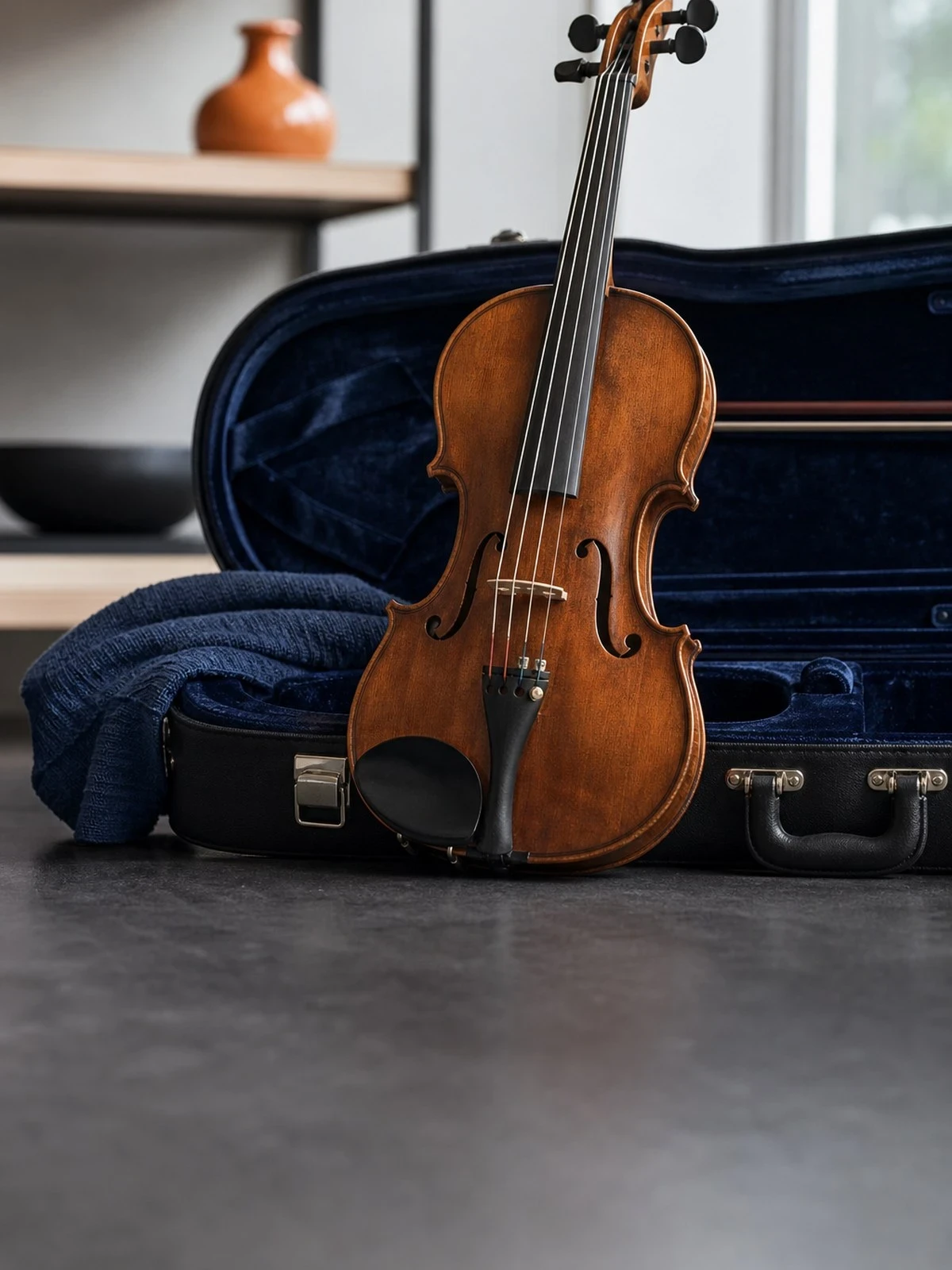
With instruments the policy turns on three questions: who plays it, where does it stand between rehearsals, and do you earn money with it. A private valuables insurance covers the amateur's instrument; anyone playing professionally needs an instrument policy that also covers performances and tours.
The second theme is material. Wood, gut strings, leather and varnish react to damp and temperature. Damage arising from that is gradual pollution and is excluded on virtually every policy, however expensive the repair. The same applies to tuning problems, cracked soundboards and glue joints coming apart.
In the application we record which accessories are included and whether others may play the instrument, so that cover does not lapse the moment you lend it out.
We compare your valuables insurance across dozens of insurers, explain where the real differences lie, and arrange the switch from start to finish — without you having to chase it yourself.
 Valuables insurance
 Compare
 Get covered
The structure of the cover in three parts, with an overview per situation below.
Loss, falls and damage as well.
Agreed in advance, no discussion afterwards.
What limits the cover.
What is covered
| Situation | Home contents | Valuables |
|---|---|---|
| Theft after a burglary at home | Sometimes | Yes |
| Loss outside the home | No | Yes |
| Falls or knocks | Sometimes | Yes |
| Theft from a bag in the street | No | Yes |
| Damage abroad | No | Yes |
| Wear and tear and ageing | No | No |
This overview is general in nature and is not personal advice. What is actually covered, including exclusions, limits and the excess, is set out in the policy conditions and the insurance card (verzekeringskaart) of the insurer; you receive both before you take out cover. Taking out cover without advice? Then read what execution only means for you.
Insurers weigh these details differently. That is where your saving is.
We look at the terms as well as the premium, and stay your point of contact when there is a claim.
We are not tied to one insurer and compare on the basis of an objective analysis of several companies.
You call or email someone who knows your file. No menu options, no changing call centres.
We cancel your old policy and align the start date, so you are never a day without cover.
We report the claim and monitor how it is handled. In urgent cases you can reach us on the emergency line.
Customers rate our service on four aspects: personal service, service delivery, availability and the outcome. The reviews are collected and published by NH1816 and come from customers who have actually taken out a policy with Finass Advies B.V. or reported a claim.
Four points that make the difference between a policy that pays out and one that does not.
A private valuables policy almost always excludes professional use. If you play paid work in an orchestra, teach with your own instrument or record in a studio, the instrument belongs on a commercial instrument policy. If that only becomes clear after a loss, the duty of disclosure under Article 7:928 of the Dutch Civil Code comes into play and the payout may be refused. Declare mixed use in advance.
An instrument left in a parked car falls under a separate provision. Many policies cover theft from a vehicle only where there are signs of forced entry, only during the day, only from a locked boot and sometimes not at all. Never leave the instrument in sight, and read how your policy deals with theft from a vehicle before you drive to the rehearsal.
If the instrument is played by someone else, the question is who is insured. Some policies cover damage only while you yourself are playing or transporting it; others extend cover to named players. If you lend it out regularly, have that recorded as loan on the policy schedule and set out in writing who bears which part of a loss.
With string instruments the bow sometimes represents a considerable share of the value, and a bow breaks more often than the instrument. Cases, mouthpieces, keys and electronics are included on many policies only where they have been declared separately. Include them in the schedule of items with valued amounts, or they will fall outside the cover after a loss or under a single limited sub-limit.
This is what people ask us most.
No. Cracks caused by surroundings that are too dry or too damp count as gradual effects and not as a sudden event. That damage is excluded on virtually every policy. A hygrometer and a humidifier in the case prevent the problem; insurance does not. The same applies to glue joints coming apart and warping wood.
Only within the limits your policy sets. Many conditions cover theft from a vehicle only where there is demonstrable forced entry, from a locked luggage compartment and sometimes only between certain hours. Without signs of forced entry there is usually no cover. Take the instrument inside with you. That is the only truly watertight solution.
Yes. Teaching for a fee is professional use and falls outside a private valuables policy. Declare it when you apply, so that the instrument goes on a commercial instrument policy or the mixed use is expressly included. Concealing it gives grounds for relying on the duty of disclosure when you claim.
Not by default. On most policies the bow, case and accessories are covered only where they have been declared separately, and otherwise up to a limited sub-limit. Since a bow breaks more often than the instrument itself, it is worth putting it on the schedule of items with its own valued amount.
Every situation is different. For these situations we have a separate page.
Request a quote without obligation. We will look at which insurer best matches your activities and your risk.
Prefer to call? 072 - 509 24 56, weekdays 09:00–17:00.
Claim on the road? Emergency line 06 - 55 20 40 72.
Finass Verzekert is a trading name of Finass Advies B.V. We advise on and arrange non-life insurance on the basis of an objective analysis of several insurers, and receive commission for this from the insurer, which is included in the premium. You pay no separate advice fee. Before you take out cover, we establish your wishes and needs.
You will find our licence, KvK and Kifid details and our complaints procedure at the foot of every page.
This page was compiled by Finass Verzekert (LinkedIn). Last updated on .
The information on this page is general in nature and is not personal advice.
Maandag- Vrijdag: 09:00- 17:00
We use cookies and similar technologies to improve your experience on our website.