

Comprehensive worldwide
- A fall on set
- Theft from the car
- Worldwide
Photographic and film equipment is not jewellery but a tool: the question of cover here is not about valuation, but about who works with it and for what purpose.
This page in another language: Nederlands
Work out for yourself what it would cost.
Enter your details; you will receive a proposal within one working day.
A premium indication, not personal advice. Prefer to talk it through? Call 072 - 509 24 56.
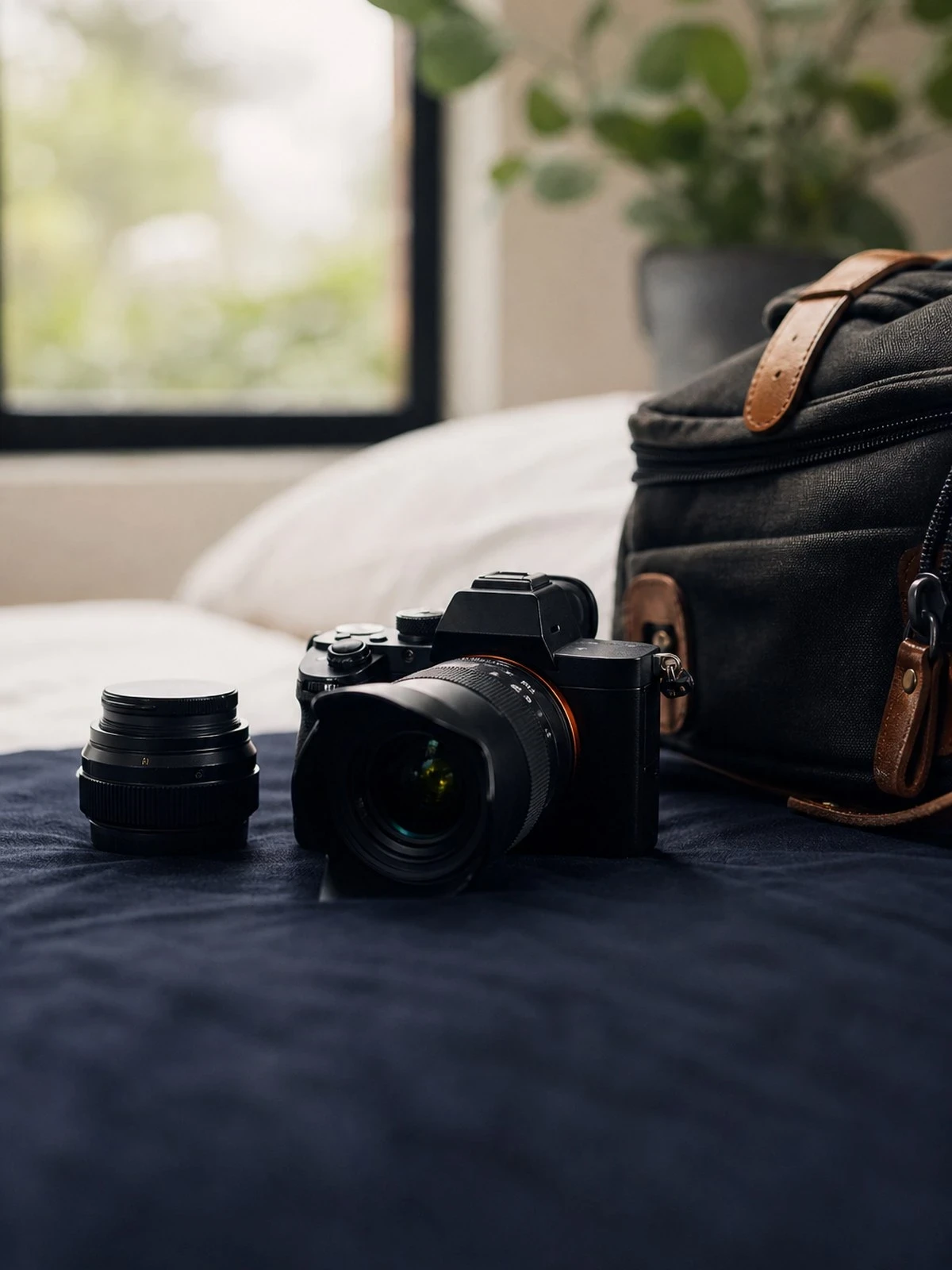
You insure cameras, lenses, lighting and sound on a valuables policy with cover away from home and worldwide. That is necessary because in this category the risk is hardly ever at home: equipment falls off a tripod, disappears from a car during a break and travels to locations where you set the bag down for a moment. Home contents insurance does not follow that movement and has virtually no cover outside the home.
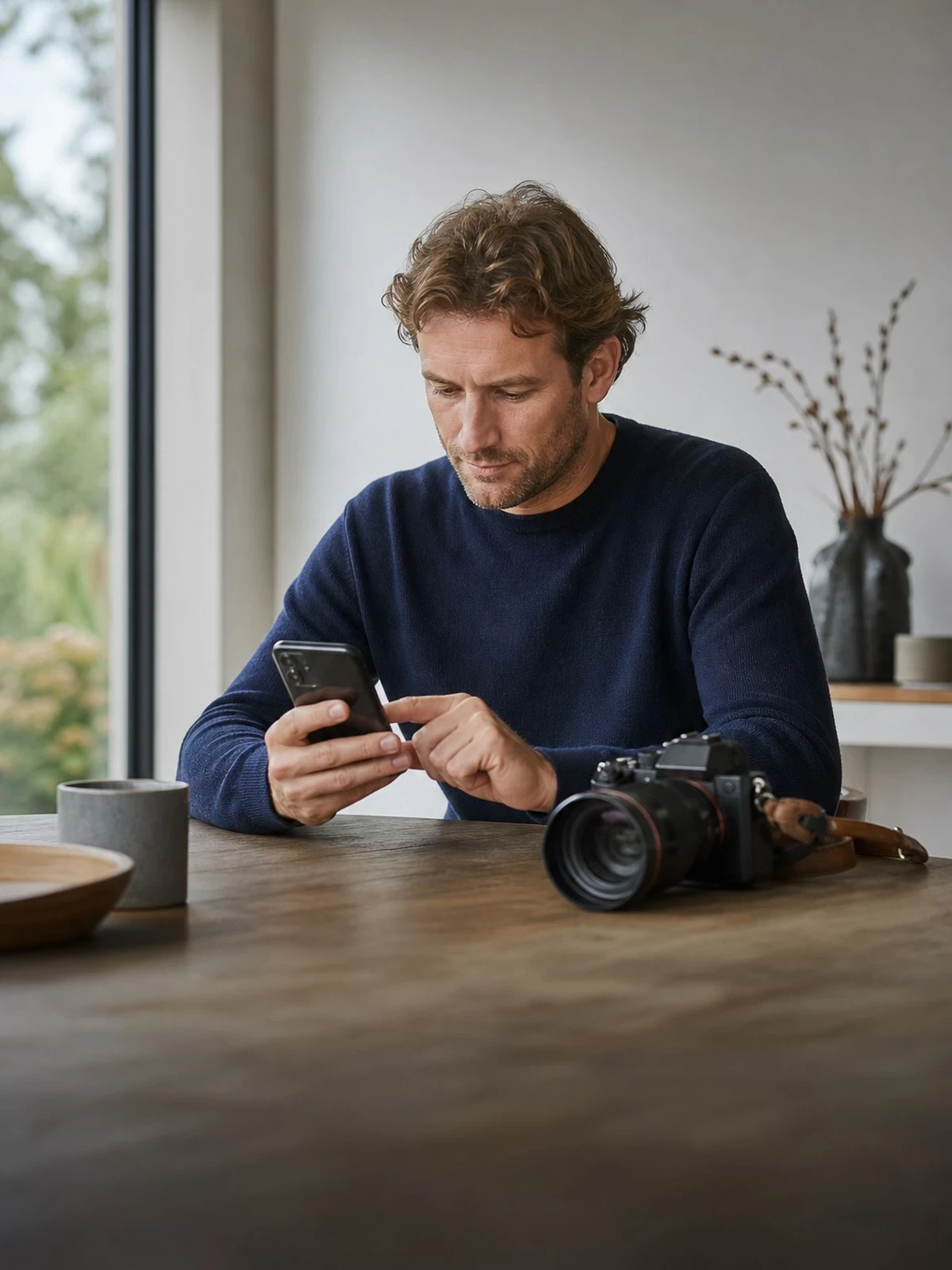
The dividing line that determines everything with camera equipment is personal against professional. As soon as you do paid work, the risk is different: more shooting days, more transport, and a client on the other side of the table. If you leave that out when applying, you fall foul of the duty of disclosure in Article 7:928 of the Dutch Civil Code and the insurer may, under Article 7:930 of the Dutch Civil Code reduce or refuse the payout.
The third distinctive feature is hired equipment. Anyone who hires in a lens, a light or a gimbal signs a hire contract under which they are liable for damage and loss. That liability for property in your care, custody and control falls under the care, custody and control exclusion and is excluded as standard. So have hired equipment included as a separate section. A fuller explanation of this type of policy can be found under valuables insurance.
We compare your valuables insurance across dozens of insurers, explain where the real differences lie, and arrange the switch from start to finish — without you having to chase it yourself.
 Valuables insurance
 Compare
 Get covered
The structure of the cover in three parts, with an overview per situation below.
Drop, impact and water damage and theft on location.
Personal or professional use determines the policy.
You are contractually liable for what you hire.
What is covered
| Situation | Covered |
|---|---|
| A fall from a tripod | Yes |
| Theft from a locked car | Sometimes |
| Water damage during an assignment | Yes |
| A hired lens damaged | Sometimes |
| Professional use not declared | No |
| Drones without separate cover | No |
This overview is general in nature and is not personal advice. What is actually covered, including exclusions, limits and the excess, is set out in the policy conditions and the insurance card (verzekeringskaart) of the insurer; you receive both before you take out cover. Taking out cover without advice? Then read what execution only means for you.
Insurers weigh these details differently. That is where your saving is.
We look at the terms as well as the premium, and stay your point of contact when there is a claim.
We are not tied to one insurer and compare on the basis of an objective analysis of several companies.
You call or email someone who knows your file. No menu options, no changing call centres.
We cancel your old policy and align the start date, so you are never a day without cover.
We report the claim and monitor how it is handled. In urgent cases you can reach us on the emergency line.
Customers rate our service on four aspects: personal service, service delivery, availability and the outcome. The reviews are collected and published by NH1816 and come from customers who have actually taken out a policy with Finass Advies B.V. or reported a claim.
Four points that make the difference between a policy that pays out and one that does not.
Filming a wedding for a friend in return for expenses looks harmless, but it is professional use. Personal valuables policies exclude it, even where it is only a few assignments a year. Declare the actual use on the application and report it as soon as it changes. That is the essence of Article 7:928 of the Dutch Civil Code. If you do not, then after a loss you will not be discussing the camera but your declaration, and that is an argument you rarely win.
Hire companies' contracts place the full risk with the hirer, including theft from a locked vehicle. Your own equipment cover does not contribute to that: damage to property belonging to someone else that you have in your care is excluded by the care, custody and control exclusion. Insure hired equipment as a separate section with its own sum insured, matched to the most expensive combination you hire on a single production, and keep the hire contract with your claim file.
With jewellery or art the discussion about revaluation is upward. With camera equipment it is about depreciation. Policies pay replacement value as new for a limited period and market value thereafter, and that switch is set out in the conditions, not on your policy schedule. Record the serial number, the date of purchase and the invoice for each body and lens. Without a serial number a stolen lens cannot be identified and the police report is worth little.
Theft from a vehicle is the most common claim in this category and at the same time the most heavily conditioned. Insurers usually require the bag to be out of sight, the vehicle to be properly locked and the equipment not to be left in it overnight. If you leave the kit visible on the back seat, Article 7:952 of the Dutch Civil Code on material fault comes into play and you are left with the loss.
For protection against underinsurance, the report must be drawn up as referred to in Article 7:960 of the Dutch Civil Code, with the additional provision on value. A dealer's value statement does not always meet that requirement. The amount is then fixed for the term of the valuation. If the valuation has expired at the time of the loss, you fall back on market value.
In the event of loss or theft, the first question is whether the item existed and what it was worth. Keep the purchase invoice with the serial number, the valuation report, the box and the papers, and photograph everything from several angles. Store that digitally and not only at home; after a fire or burglary that is often the only evidence left.
This is what people ask us most.
Usually not. A drone falls under its own rules for unmanned aircraft and calls for separate liability cover for injury and damage to property on the ground. The camera attached to it shares in that exclusion. If you fly professionally, declare that separately. The risk of an aircraft coming down is not comparable to that of a bag on a set.
Under comprehensive cover, drop and impact damage to your own lens is covered, whoever was holding the camera. If the assistant is employed by you, you are also liable under Article 6:170 of the Dutch Civil Code for damage he causes to third parties. That is a liability question and belongs on a different policy from your equipment cover.
That depends on the age of the item. Insurers apply a replacement-value-as-new period and then switch to market value, with the market price of a comparable second-hand example as the guide. With lenses that value often falls less sharply than with bodies. Read the depreciation arrangement before you sign. This is where the biggest difference between providers lies.
Water or sand suddenly getting in during a shoot is usually covered under comprehensive cover. Gradual deterioration, corrosion and a fault arising from the item itself are not: that falls under inherent defect and wear and tear. A sensor slowly getting dirty is maintenance, a camera falling in the water is damage. That distinction determines the outcome.
Every situation is different. For these situations we have a separate page.
Request a quote without obligation. We will look at which insurer best matches your activities and your risk.
Prefer to call? 072 - 509 24 56, weekdays 09:00–17:00.
Claim on the road? Emergency line 06 - 55 20 40 72.
Finass Verzekert is a trading name of Finass Advies B.V. We advise on and arrange non-life insurance on the basis of an objective analysis of several insurers, and receive commission for this from the insurer, which is included in the premium. You pay no separate advice fee. Before you take out cover, we establish your wishes and needs.
You will find our licence, KvK and Kifid details and our complaints procedure at the foot of every page.
This page was compiled by Finass Verzekert (LinkedIn). Last updated on .
The information on this page is general in nature and is not personal advice.
Maandag- Vrijdag: 09:00- 17:00
We use cookies and similar technologies to improve your experience on our website.