

Liability
- Damage to third parties
- Employers' liability
- Care, custody and control as an extension
For a dealership the largest risk lies not in the workshop but on the forecourt: the trading stock stands there unattended at night and goes out on the road on a trade plate during the day.
This page in another language: Nederlands
Work out for yourself what it would cost.
Enter your details; you will receive a proposal within one working day.
A premium indication, not personal advice. Prefer to talk it through? Call 072 - 509 24 56.
For a dealer, motor trade insurance (garageverzekering) revolves around two sections that other automotive businesses barely need. The first is stock cover: new and used cars that you own or hold on consignment, usually insured at purchase value and not at the selling price. The second is the cover around the trade plate, used for test drives, collection and delivery runs and demonstration drives.
The difference from a workshop is the concentration of value at one address. A hailstorm, a fire or a theft at night affects not one vehicle but the whole row or the whole site. Insurers therefore impose requirements on fencing, camera surveillance, lighting and the way keys are kept; those requirements are not advice but a condition of payment.
For the wider picture of the sector and how it links to workshop, repair and detailing work, see the page on the automotive sector. Related specialisations are the car trade and the MOT testing station.
We compare your motor trade insurance across dozens of insurers, explain where the real differences lie, and arrange the switch from start to finish — without you having to chase it yourself.
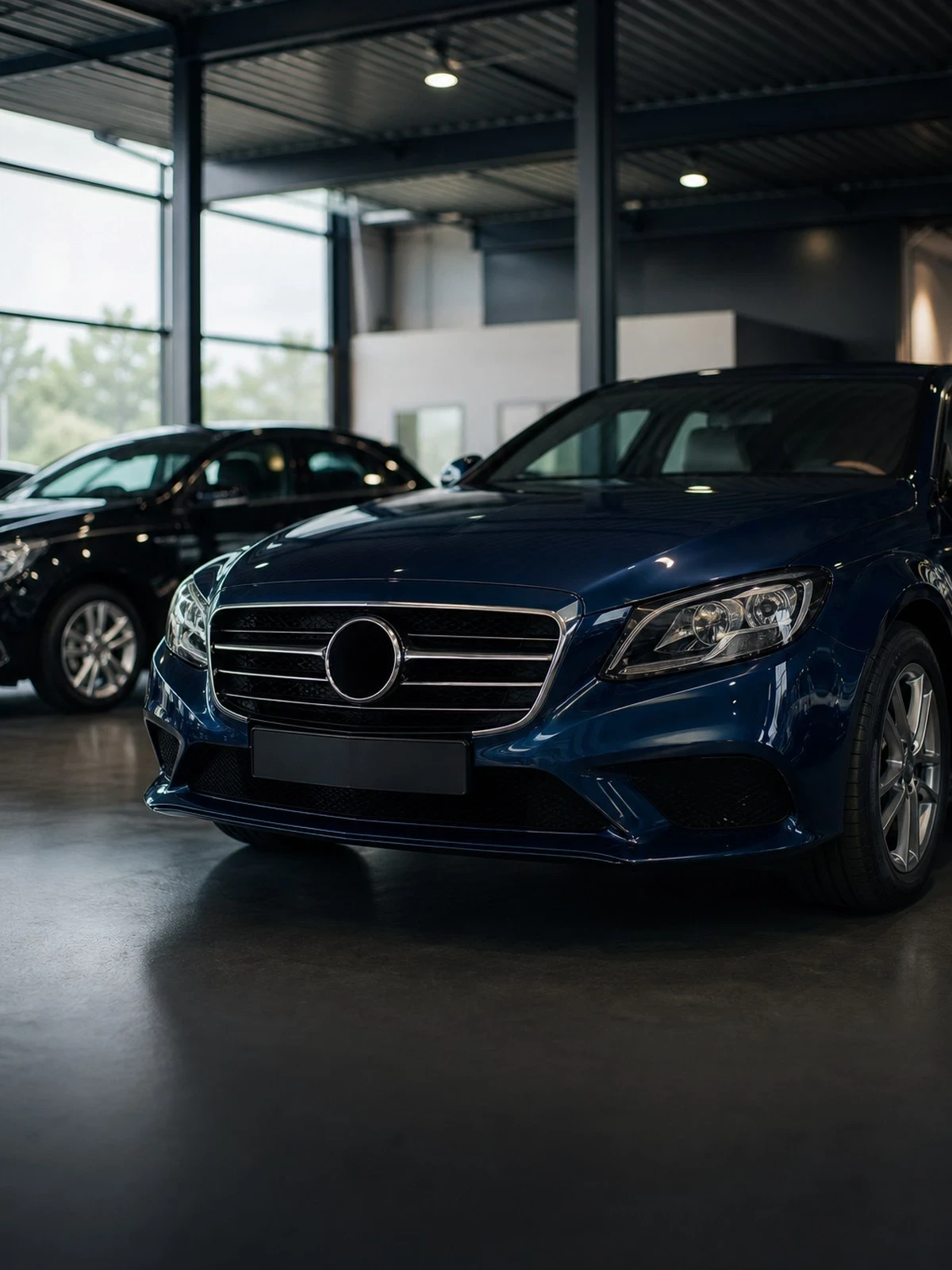 Motor trade insurance
 Compare
 Get covered
The structure of the cover in three parts, with an overview per situation below.
AVB for property damage and injury, BAV for professional errors.
Business contents, goods and lost turnover during downtime.
Sickness absence, accidents and the traffic risk.
What is covered
| Situation | AVB | BAV | Cyber |
|---|---|---|---|
| Injury to a visitor or customer | Yes | No | No |
| Damage to a client's property | Sometimes | No | No |
| Financial loss caused by an advisory or calculation error | No | Yes | No |
| Downtime after a ransomware attack | No | No | Yes |
| Data breach involving personal data | No | Sometimes | Yes |
| Damage to property in your care | No | No | No |
This overview is general in nature and is not personal advice. What is actually covered, including exclusions, limits and the excess, is set out in the policy conditions and the insurance card (verzekeringskaart) of the insurer; you receive both before you take out cover. Taking out cover without advice? Then read what execution only means for you.
Insurers weigh these details differently. That is where your saving is.
We look at the terms as well as the premium, and stay your point of contact when there is a claim.
We are not tied to one insurer and compare on the basis of an objective analysis of several companies.
You call or email someone who knows your file. No menu options, no changing call centres.
We cancel your old policy and align the start date, so you are never a day without cover.
We report the claim and monitor how it is handled. In urgent cases you can reach us on the emergency line.
Customers rate our service on four aspects: personal service, service delivery, availability and the outcome. The reviews are collected and published by NH1816 and come from customers who have actually taken out a policy with Finass Advies B.V. or reported a claim.
Four points that make the difference between a policy that pays out and one that does not.
The margin you would have made on a car is not a loss and is not paid. Insurers use the purchase or replacement value at the time of the damage. More important is that the sum insured must cover the peak in your stock, not the annual average. If your site fills up around a launch or at the end of a quarter, you are underinsured at that moment and every claim is reduced proportionately.
Cars registered in the name of an importer or a finance company are not your property but are your responsibility for as long as they are with you. Record who insures which part and whether the finance company must be named as an interested party on your policy. If you do not, two insurers can point at each other while the finance company simply comes to you. The same applies to part-exchanges not yet transferred.
When a trade plate is used, liability towards third parties is arranged through the compulsory third-party cover under Article 2 WAM. Own damage to your own stock car lies elsewhere: it falls under your stock or care, custody and control cover, usually with its own conditions on who may drive. Check the minimum age, the driving licence requirement and whether a member of staff must go along. For each test drive, keep a copy of the driving licence and a record of the route driven.
Theft using the vehicle's own key without signs of forced entry is declined if the key clause has not been complied with. Stock kept outside the site described on the policy, for example on rented overflow premises, is not covered unless notified. Warranty obligations under the sales contract and lost profit are not insured losses. Diminution in value after hail repairs is rarely paid, and intent falls away under Article 7:952 of the Dutch Civil Code.
This is what people ask us most.
Liability towards third parties runs through the compulsory third-party cover attached to the trade plate. Damage to the test drive car itself falls under your stock or care, custody and control cover, with its own provisions on who may drive. Watch the minimum age, the requirement for a valid driving licence and whether supervision is compulsory. If those are departed from, the own-damage claim can be declined while the third-party claim is still paid.
At purchase or replacement value, not at the selling price. The margin not yet realised is not a loss. Set the sum insured at the highest stock level that occurs during the year, because with underinsurance every claim is reduced proportionately, including a small one. If your stock rises and falls sharply, discuss whether a provisional premium policy with adjustment in arrears works in your situation.
Only if the policy says so expressly. Customer vehicles in the workshop fall under the care, custody and control section and not under stock. Cars held on consignment or under stock finance are not your property, but you are responsible for them for as long as they are with you. Have it recorded who insures which part and whether the finance company must be named as an interested party.
That keys are kept in a safe after closing time, not in the vehicle or in a cabinet in the showroom, and that you record who issues them. If a car is taken without signs of forced entry, the key clause is the first thing the loss adjuster looks at. Keep workshop keys separate from sales keys as well, so that a break-in in one area does not immediately expose the whole site.
Every situation is different. For these situations we have a separate page.
Request a quote without obligation. We will look at which insurer best matches your activities and your risk.
Prefer to call? 072 - 509 24 56, weekdays 09:00–17:00.
Claim on the road? Emergency line 06 - 55 20 40 72.
Finass Verzekert is a trading name of Finass Advies B.V. We advise on and arrange non-life insurance on the basis of an objective analysis of several insurers, and receive commission for this from the insurer, which is included in the premium. You pay no separate advice fee. Before you take out cover, we establish your wishes and needs.
You will find our licence, KvK and Kifid details and our complaints procedure at the foot of every page.
This page was compiled by Finass Verzekert (LinkedIn). Last updated on .
The information on this page is general in nature and is not personal advice.
Maandag- Vrijdag: 09:00- 17:00
We use cookies and similar technologies to improve your experience on our website.