

Liability
- Damage to third parties
- Employers' liability
- Care, custody and control as an extension
A motorcycle can be lifted into a van by two people. That is why an underwriter looking at a motorcycle business asks first how your customers' bikes are kept.
This page in another language: Nederlands
Work out for yourself what it would cost.
Enter your details; you will receive a proposal within one working day.
A premium indication, not personal advice. Prefer to talk it through? Call 072 - 509 24 56.
With cars, theft requires keys or forcing the vehicle. With motorcycles it does not: without a key, without bypassing an immobiliser and without noise, a bike is in a van within a minute. Insurers translate that into a storage clause with requirements on ground anchors, a locked space or detection. If those are not met, payment can be limited in the event of theft.
The motorcycles on your premises are almost never yours. Bikes in for repair, exchange or storage are in your in your care, and that category is excluded on liability cover. In winter their number peaks, while the limit is often still set for the summer situation.
The third point is the test ride. If you take a customer's bike or a bike for sale onto the road, the compulsory cover of Article 2 WAM applies. A trade plate arranges that for vehicles whose registration is not suspended and which have no insurance of their own. The injury risk of a test ride is higher on a motorcycle than in a car, simply because there is no bodywork around it.
We compare your motor trade insurance across dozens of insurers, explain where the real differences lie, and arrange the switch from start to finish — without you having to chase it yourself.
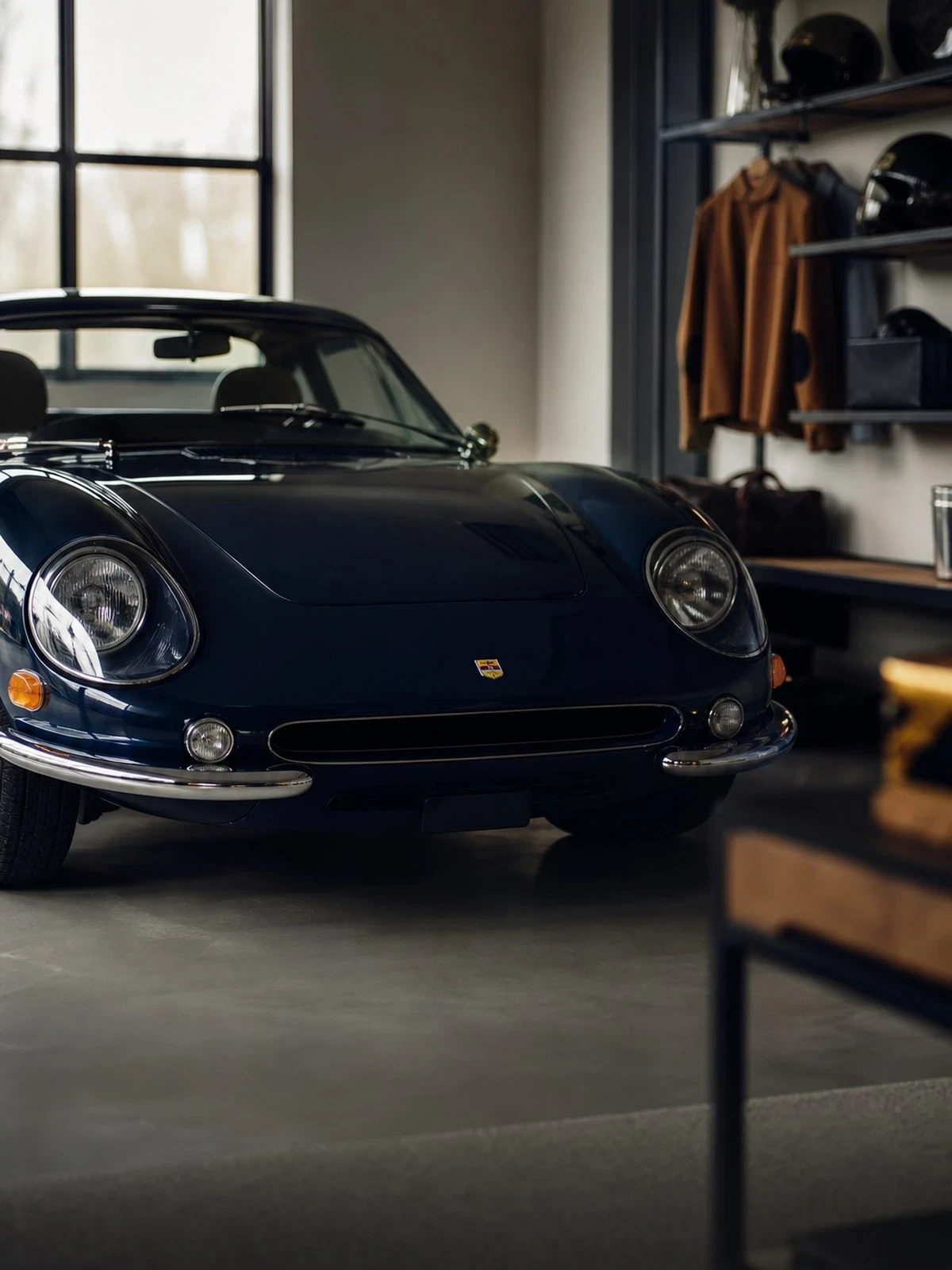 Motor trade insurance
 Compare
 Get covered
The structure of the cover in three parts, with an overview per situation below.
AVB for property damage and injury, BAV for professional errors.
Business contents, goods and lost turnover during downtime.
Sickness absence, accidents and the traffic risk.
What is covered
| Situation | AVB | BAV | Cyber |
|---|---|---|---|
| Injury to a visitor or customer | Yes | No | No |
| Damage to a client's property | Sometimes | No | No |
| Financial loss caused by an advisory or calculation error | No | Yes | No |
| Downtime after a ransomware attack | No | No | Yes |
| Data breach involving personal data | No | Sometimes | Yes |
| Damage to property in your care | No | No | No |
This overview is general in nature and is not personal advice. What is actually covered, including exclusions, limits and the excess, is set out in the policy conditions and the insurance card (verzekeringskaart) of the insurer; you receive both before you take out cover. Taking out cover without advice? Then read what execution only means for you.
Insurers weigh these details differently. That is where your saving is.
We look at the terms as well as the premium, and stay your point of contact when there is a claim.
We are not tied to one insurer and compare on the basis of an objective analysis of several companies.
You call or email someone who knows your file. No menu options, no changing call centres.
We cancel your old policy and align the start date, so you are never a day without cover.
We report the claim and monitor how it is handled. In urgent cases you can reach us on the emergency line.
Customers rate our service on four aspects: personal service, service delivery, availability and the outcome. The reviews are collected and published by NH1816 and come from customers who have actually taken out a policy with Finass Advies B.V. or reported a claim.
Four points that make the difference between a policy that pays out and one that does not.
Because motorcycles can be lifted away without forced entry, the policy schedule usually states how they must be kept outside working hours: anchored to the floor, in a locked space, or behind detection with alarm response. A bike that happened to be in the showroom that night instead of in the secure room falls outside the situation described. Set out the end-of-day round in a work instruction and stick to the wording of the clause.
Every journey on the public road requires valid liability cover; Article 2 WAM leaves no room on that point. For sales and demonstration bikes you use a trade plate. If you let a customer ride alone, record in writing who bears the excess and on what conditions they ride, including the licence category and the ban on carrying passengers.
If your mechanic comes off during a test ride, that leads to your employer's liability under Article 7:658 of the Dutch Civil Code, and where road use in working time is concerned, to Article 7:611 DCC. Prescribing and providing protective clothing is part of that. If a customer comes off during a test ride because of a defect you should have spotted, Article 6:162 DCC comes into play; a fall caused by their own riding does not.
During the storage season there are often more customers' motorcycles in your building than in the rest of the year put together. The care, custody and control limit must be set at that maximum and not at the average. Keep a list with registration number, frame number and arrival date. Without those records the size of your claim after a fire or theft cannot be substantiated.
This is what people ask us most.
Only within the care, custody and control cover and only if you comply with the storage clause. That clause prescribes how bikes must be kept outside working hours: anchored, in a locked space or behind detection. If the actual situation differs from it, the insurer can reduce the payment. Report the peak during the storage season as well, or the limit will be too low.
With motorcycles that is the rule rather than the exception, because nothing has to be forced on the vehicle itself. Insurers therefore look at marks on the building and at compliance with the security conditions. If you can show that the bikes were kept as the clause prescribes, the absence of forced entry on the vehicle is not an independent ground for refusal.
For damage to third parties, the insurance attached to the registration applies, usually your trade plate under Article 2 WAM. Damage to the motorcycle itself comes down to what you agreed in writing about the excess. Without a signed test ride declaration, that agreement is hard to enforce afterwards.
No. Storage is a separate activity with its own risk profile: a great deal of vehicle value, little movement and a long period without supervision. State how many motorcycles you store at most and where, and have the care, custody and control limit adjusted accordingly. Separate records for each stored bike are essential when you claim, to substantiate the amounts involved.
Every situation is different. For these situations we have a separate page.
Request a quote without obligation. We will look at which insurer best matches your activities and your risk.
Prefer to call? 072 - 509 24 56, weekdays 09:00–17:00.
Claim on the road? Emergency line 06 - 55 20 40 72.
Finass Verzekert is a trading name of Finass Advies B.V. We advise on and arrange non-life insurance on the basis of an objective analysis of several insurers, and receive commission for this from the insurer, which is included in the premium. You pay no separate advice fee. Before you take out cover, we establish your wishes and needs.
You will find our licence, KvK and Kifid details and our complaints procedure at the foot of every page.
This page was compiled by Finass Verzekert (LinkedIn). Last updated on .
The information on this page is general in nature and is not personal advice.
Maandag- Vrijdag: 09:00- 17:00
We use cookies and similar technologies to improve your experience on our website.