

Boat insurance through Turien & Co
A boat claim is rarely settled at a distance. A surveyor comes out, there is a repair estimate from a yard, and there is often another party to recover from.
- Several insurers compared objectively
- 9.5 customer rating for a new policy
- AFM licence 12016589
- Personal 072 - 509 24 56, weekdays 9–17
This page in another language: Nederlands
Work out for yourself what it would cost.
Enter your details; you will receive a proposal within one working day.
- We compare the offerings of several insurers
- An adviser checks whether the cover suits your situation
- We arrange the switch, including cancellation
A premium indication, not personal advice. Prefer to talk it through? Call 072 - 509 24 56.
- Independent advice
- Several insurers
- Switching arranged
- Help with claims
In brief
Turien & Co is an authorised underwriting agent: the policy is issued on behalf of one or more insurers and underwriting and claims handling also run through the agency. On a boat claim that means, above all, a short line between the notification, the surveyor and the yard. Finass acts as an intermediary here and also sets the offering of more than thirty insurers objectively side by side. This party's wider range is set out at the overview page, the product information on pleasure craft insurance.
What a boat claim founders on is the survey. A polyester hull with a crack below the waterline has to come out of the water, dry out and be blasted before it is clear exactly what is wrong. That sequence costs time and money, and the question of who bears which costs should be settled in advance: lifting, transport to the yard, storage during the repair and relaunching. Also ask about the excess per section, because that often differs between collision, theft, sail damage and damage during transport.
The second point is recovery from the person responsible. If your vessel is run into, damaged while being moved by a marina employee or mishandled by a yard, there is another party who is liable under Article 6:162 of the Dutch Civil Code. Own-damage cover means you do not have to wait for the outcome of that discussion: the insurer pays and takes over the recovery. Without it you have to fight it out yourself, even where the question of fault seems clear.
This page deals with one situation. The full overview is on Compare pleasure craft insurance.
Independent, personal, sorted quickly
We compare your pleasure craft insurance across dozens of insurers, explain where the real differences lie, and arrange the switch from start to finish — without you having to chase it yourself.
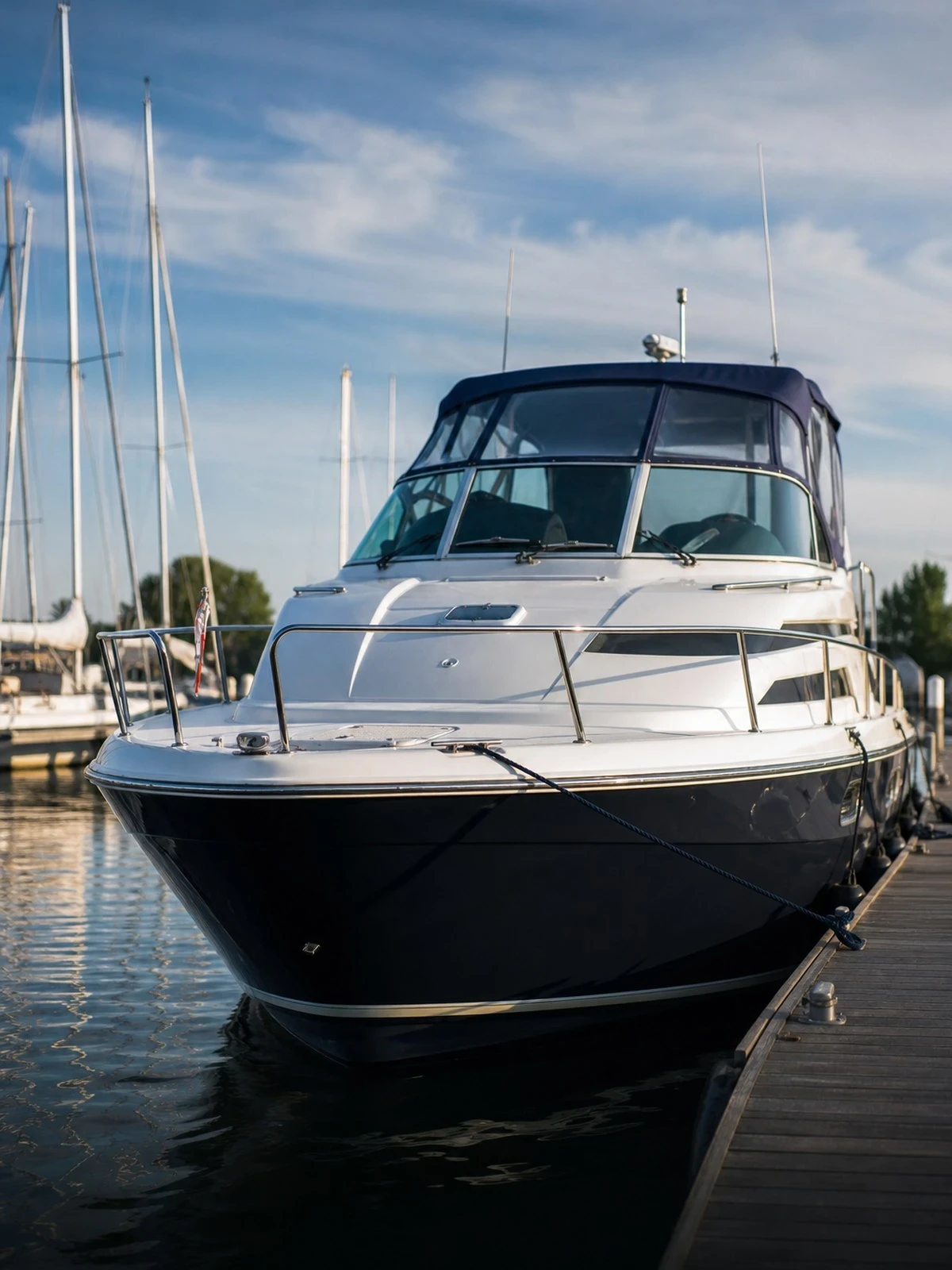 Pleasure craft insurance
 Compare
 Get covered
Why arrange it through Finass Verzekert?
We look at the terms as well as the premium, and stay your point of contact when there is a claim.
Independent
We are not tied to one insurer and compare on the basis of an objective analysis of several companies.
One fixed adviser
You call or email someone who knows your file. No menu options, no changing call centres.
Switching without hassle
We cancel your old policy and align the start date, so you are never a day without cover.
Help with claims
We report the claim and monitor how it is handled. In urgent cases you can reach us on the emergency line.
What to look out for
Four points that determine how a boat claim is settled.
Salvage, lifting and transport costs
A vessel that has sunk or run aground has to be salvaged before anything can be repaired. Those costs generally have a separate limit alongside the sum insured and on an older boat are sometimes higher than the value of the vessel itself. Check whether clearance costs are also included in case the waterway authority requires removal, and whether emergency repairs on the way are paid for.
Assistance is not own-damage cover
A breakdown on the way, a flat battery or a net around the propeller is not damage but a failure. That calls for a separate assistance module, distinguishing between a tow on the water, help with a defect and transport for those on board. Without that module you pay for the tug yourself, even when the boat is otherwise undamaged.
What is not reimbursed
Outside the cover are loss of value after a repair carried out correctly, costs of deferred maintenance that come to light during the repair, damage caused by osmosis, rust and rot, and damage during letting or paid transport. Taking part in speed races and sailing outside the agreed sailing area are also excluded. Deliberate acts stay outside the cover under Article 7:952 of the Dutch Civil Code.
The limit of the payment
On a total loss, the payment is determined by the basis of valuation on the policy schedule and limited by Article 7:960 of the Dutch Civil Code: a loss must not leave you in a clearly better position. So keep invoices for engines, electronics and improvements. Without evidence they stay outside the calculation, even where they were unmistakably in the vessel.
What does your premium depend on?
- Sum insured: boat, engine and fixed equipment together
- Excess per section: differs for collision, theft and sail damage
- Type and year of build of the vessel: determines the method and cost of repair
- Sailing area and season: as stated on the policy schedule
- Mooring and winter storage: afloat or ashore, supervised or not
- Assistance included: a tow, breakdown assistance and transport for those on board
Insurers weigh these details differently. That is where your saving is.
What is covered
| Situation | Liability | Own-damage cover |
|---|---|---|
| You run into the yacht of your neighbour at the mooring while coming alongside | Yes | Yes |
| In that same collision your own hull cracks below the waterline | No | Yes |
| A marina employee damages your boat while moving it and denies everything | No | Yes |
| The outboard motor is unbolted from the transom in winter storage | No | Provided that |
| Your mainsail tears in a squall on the IJsselmeer | No | Provided that |
| Someone on board slips on the wet foredeck and breaks a wrist | Provided that | No |
With own-damage cover you do not have to wait for the discussion with the other party: the insurer pays and pursues the recovery itself.
Frequently asked questions
This is what people ask us most.
Who chooses the yard that repairs my boat?
You may usually propose one yourself, but the insurer checks the estimate and can ask for a second quote. On a policy with an agreed value, or for the repair of a classic vessel, a fixed group of yards is used more often. Only give the instruction after the surveyor has seen the vessel; a repair already carried out can no longer be assessed afterwards and that costs you part of the payment.
What exactly does an authorised agent do when there is a claim?
The agency handles the notification, engages the surveyor and decides on payment within the authority granted by the insurer. The risk lies with the insurer behind it, the handling with the agency. In practice that means a single point of contact for notification, survey and payment, which saves time on a file involving a yard and another party.
Will I be paid the towing costs if I break down?
Only where assistance cover is included. An engine failure, a flat battery or running out of fuel is not damage within the meaning of the own-damage cover. What is paid are the costs of mitigating the loss: steps you take to limit imminent damage, for example towing away a vessel that is about to sink or fill up. Always report it first, so that you know in advance what will be covered.
How long does settling a boat claim take?
Longer than with a car, because the vessel often has to come out of the water and yards are seasonally full. So report it straight away, even if you want the repair done later; Article 7:941 of the Dutch Civil Code requires timely notification and delaying it makes the cause harder to establish. On a long-running file, ask for an advance payment on the basis of the survey report.
Every situation is different. For these situations we have a separate page.
- Compare pleasure craft insuranceThe main page
- Yacht and pleasure craft insurance through HienfeldBespoke underwriting, classic vessels, abroad
- Boat insurance through a.s.r.Valuation, sailing area, basis of settlement
- Insurance for an exclusive yachtValuation, crew, refit and yard period
- Watersports insurance through UnigarantModular structure, equipment on board, people on board
- Continuous travel insurance through Turien & CoBinding authority, co-insured persons, length of trip
- VvE insurance through Turien & CoRebuild value, deed of division, the board