

Third-party liability
- Damage to other vehicles and injury
- No cover for your own motorhome
- Compulsory under Article 2 of the Dutch Motor Insurance Liability Act (WAM)
- Often a lower rate where the mileage is low
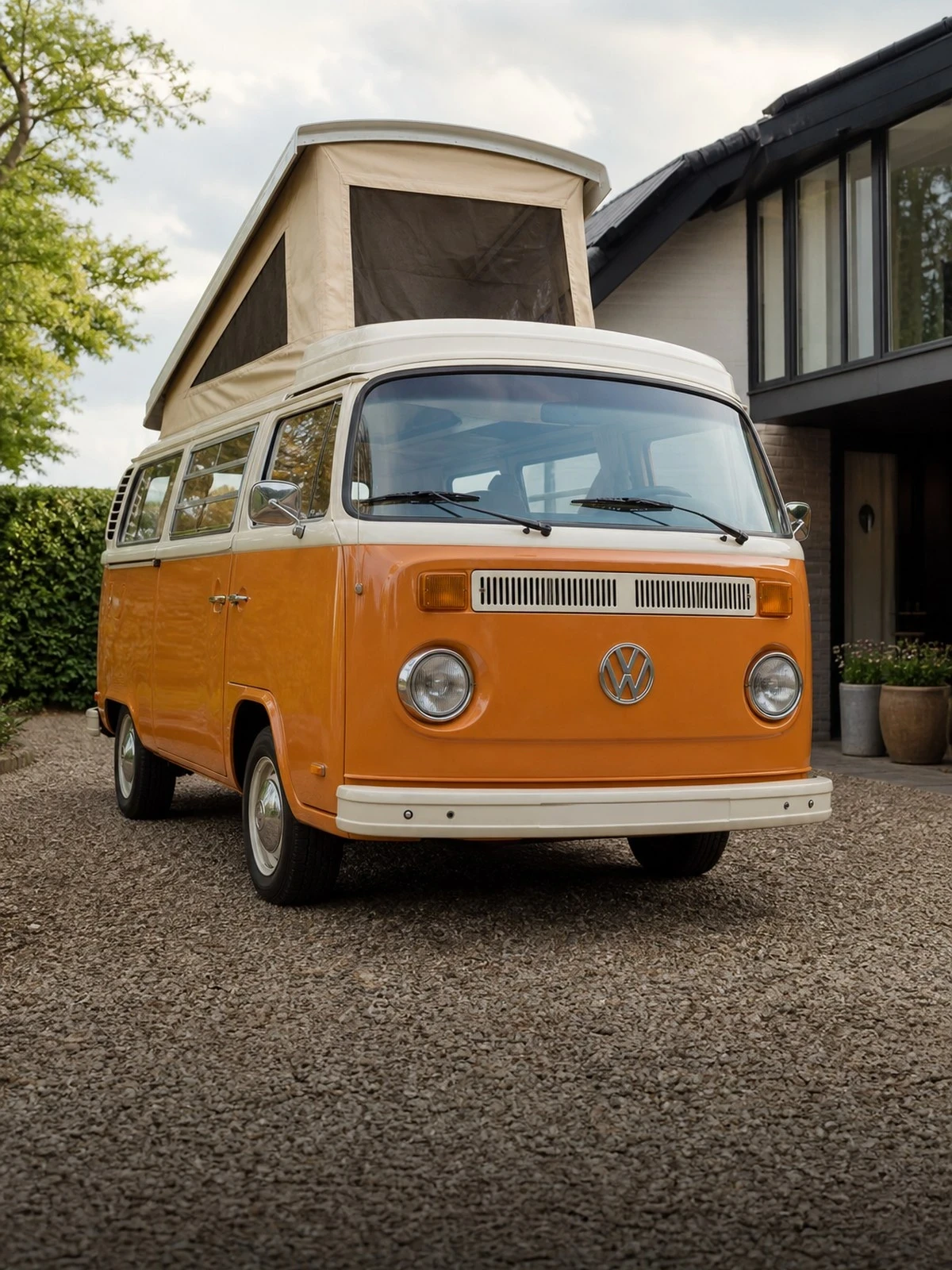
A classic camper van is not insured on market value but on an agreed value. In return there are conditions about use, storage and maintenance.
This page in another language: Nederlands
Work out for yourself what it would cost.
Enter your details; you will receive a proposal within one working day.
A premium indication, not personal advice. Prefer to talk it through? Call 072 - 509 24 56.
A classic camper van is a motor vehicle too, so the the insurance requirement in Article 2 WAM applies for as long as the registration is in your name. What differs is the valuation. On an ordinary camper van the insurer works with market value. On a classic that basis is meaningless, because restoration costs and rarity determine the market value. That is why an valuation report from a recognised expert is used.
A valuation fixes the value in advance, so that no discussion arises in the event of a total loss or theft. Bear in mind a limited period of validity, usually a few years, after which a revaluation is needed. The payout remains limited by the prohibition on enrichment in Article 7:960 of the Dutch Civil Code. Have the report describe the body, the fittings and any original parts fitted as well; otherwise these become a matter of discussion when you claim.
In return there are restrictions on use. Insurers offering a classic vehicle rate almost always require that the vehicle is not used for daily use or commuting, set a maximum number of kilometres per year and require a a locked garage. Vehicles of forty years and older are also exempt from vehicle tax, which reduces the fixed costs but changes nothing about the cover.
We compare your motorhome insurance across dozens of insurers, explain where the real differences lie, and arrange the switch from start to finish — without you having to chase it yourself.
 Motorhome insurance
 Compare
 Get covered
Three types of cover, with the situations that arise most often with a classic set out below.
The legally required cover for damage you cause to others with the motorhome.
Alongside third-party liability, a fixed list of events, with fire and theft from storage foremost.
All damage to the camper van itself, settled on the agreed value.
What is covered
| Situation | Third-party liability | Own-damage cover on an agreed value |
|---|---|---|
| Damage you cause to someone else with the motorhome | Yes | Yes |
| Fire or theft during winter storage | No | Yes |
| Payment on the basis of a valid valuation report | No | Yes |
| Damage while the mileage limit has been exceeded | Yes | Provided that |
| Daily commuting in the classic | Yes | No |
| Rust, wood rot and deferred maintenance | No | No |
What is actually covered, including exclusions, limits and the excess, is set out in the policy conditions and the insurance card (verzekeringskaart) that you receive before you take out cover.
Insurers weigh these details differently. That is where your saving is.
We look at the terms as well as the premium, and stay your point of contact when there is a claim.
We are not tied to one insurer and compare on the basis of an objective analysis of several companies.
You call or email someone who knows your file. No menu options, no changing call centres.
We cancel your old policy and align the start date, so you are never a day without cover.
We report the claim and monitor how it is handled. In urgent cases you can reach us on the emergency line.
Customers rate our service on four aspects: personal service, service delivery, availability and the outcome. The reviews are collected and published by NH1816 and come from customers who have actually taken out a policy with Finass Advies B.V. or reported a claim.
Four points that work differently with a classic than with a modern camper van.
A valuation report from a recognised expert fixes the value in advance, including the condition of the bodywork, engine and body. Without a report an expert only determines the value after the loss, and on a classic that almost always works out lower. Note the period of validity of the report and have the vehicle revalued in good time. An expired valuation takes you back to market value. The payout remains limited by Article 7:960 of the Dutch Civil Code.
The favourable classic vehicle rate exists because the insurer assumes limited, recreational use. Concrete conditions follow from that: a maximum number of kilometres per year, no commuting or daily use and usually a a locked garage. Some insurers also require you to own a second, everyday vehicle. If you do not meet those conditions, own-damage cover can fall away even though the premium has been paid as normal.
The following, among others, are outside the cover: rust, wood rot, wear and deferred maintenance; damp and leak damage through aged seams and sealant beads; mechanical and electrical defects without a collision; use contrary to the restrictions on use stated on the policy, such as daily commuting or hire; and driving without the required licence category or under the influence. Damage caused by intent or recklessness is also excluded (Article 7:952 of the Dutch Civil Code).
With a classic, the question of how it will be repaired matters at least as much as the sum insured. Record whether original or used parts will be used and whether you may choose a restorer yourself. Keep invoices for restoration and maintenance; they support the valuation. Report a claim as soon as is reasonably possible (Article 7:941 of the Dutch Civil Code) and do not start repairs before the expert has seen the vehicle.
This is what people ask us most.
That differs by insurer; many companies use twenty-five, thirty or forty years as the lower limit and also set requirements about condition and use. For tax purposes the line is clearer: vehicles of forty years and older are exempt from vehicle tax. That exemption says nothing about the cover; always ask separately which age limit your insurer applies.
For own-damage cover on a classic, almost every insurer requires one. Without a report, market value is used when you claim, which for a restored camper van is usually far too low. Have the valuation carried out by a recognised expert, have the body and the fittings described as well, and note the period of validity, because an expired report ceases to have effect.
That is stated on the policy schedule and differs by insurer. A limit goes with the lower classic vehicle rate. If you exceed it without reporting it, the insurer can restrict the cover or reduce the payout. If you expect to cover more miles, for example on a long tour, report that in advance and have the arrangement confirmed in writing.
On a classic vehicle policy, usually not. Daily use and commuting are generally excluded and some insurers require you to have a second vehicle for everyday use. If you nevertheless drive it every day, you are acting contrary to a policy condition and own-damage cover can fall away. If you do want to drive it daily, choose a regular camper van policy.
No. Rust, wood rot, wear and the consequences of deferred maintenance fall outside every own-damage cover. These are not sudden events coming from outside. Only where rust or damp is the direct result of an insured event, such as a collision or hail, does it qualify for payment. Regular maintenance and dry storage are the only solution here.
Every situation is different. For these situations we have a separate page.
Request a quote without obligation. We arrange the valuation and compare premiums and conditions of use.
Prefer to call? 072 - 509 24 56, weekdays 09:00–17:00.
Claim on the road? Emergency line 06 - 55 20 40 72.
Finass Verzekert is a trading name of Finass Advies B.V. We advise on and arrange non-life insurance on the basis of an objective analysis of several insurers, and receive commission for this from the insurer, which is included in the premium. You pay no separate advice fee. Before you take out cover, we establish your wishes and needs.
You will find our licence, KvK and Kifid details and our complaints procedure at the foot of every page.
This page was compiled by Finass Verzekert (LinkedIn). Last updated on .
The information on this page is general in nature and is not personal advice.
Maandag- Vrijdag: 09:00- 17:00
We use cookies and similar technologies to improve your experience on our website.