

Avéro Achmea buildings insurance
As soon as you let part of your business premises, cover runs along two lines: the shell that is yours and the alterations the tenant has made. Anyone who does not separate the two only discovers it after a fire.
- Several insurers compared objectively
- 9.5 customer rating for a new policy
- AFM licence 12016589
- Personal 072 - 509 24 56, weekdays 9–17
This page in another language: Nederlands
Work out for yourself what it would cost.
Enter your details; you will receive a proposal within one working day.
- We compare the offerings of several insurers
- An adviser checks whether the cover suits your activities
- We arrange the switch, including cancellation
A premium indication, not personal advice. Prefer to talk it through? Call 072 - 509 24 56.
- Independent advice
- Several insurers
- Switching arranged
- Help with claims
In brief
Buildings insurance covers the premises themselves. With business premises in multiple occupation, the first question is therefore who insures what. The owner insures the shell: structure, roof, walls, fixed installations. The tenant insures what they have installed at their own expense — A kitchenette, a suspended ceiling, partition walls, floor finishes. The latter are known as tenant's improvements and are not part of the owner's buildings policy. See tenant's improvements insurance.
As the owner you also run a liability risk that is separate from fire damage. Article 6:174 of the Dutch Civil Code makes the possessor of a structure liable for damage caused by a defect in that building, even without fault: a roof sheet that comes loose and hits a car, a visitor who falls over a sunken threshold. That claim belongs on liability cover, not on the buildings policy. You can read more about this at the public and employers' liability insurance.
Finass arranges Avéro Achmea buildings cover and compares several insurers objectively in doing so. Which insurer suits follows from the construction, the use and the tenancy situation. We assess alongside it contents insurance and business buildings insurance; the general explanation is on the hub page.
This page deals with one situation. The full overview is on Compare commercial buildings insurance.
Independent, personal, sorted quickly
We compare your commercial buildings insurance across dozens of insurers, explain where the real differences lie, and arrange the switch from start to finish — without you having to chase it yourself.
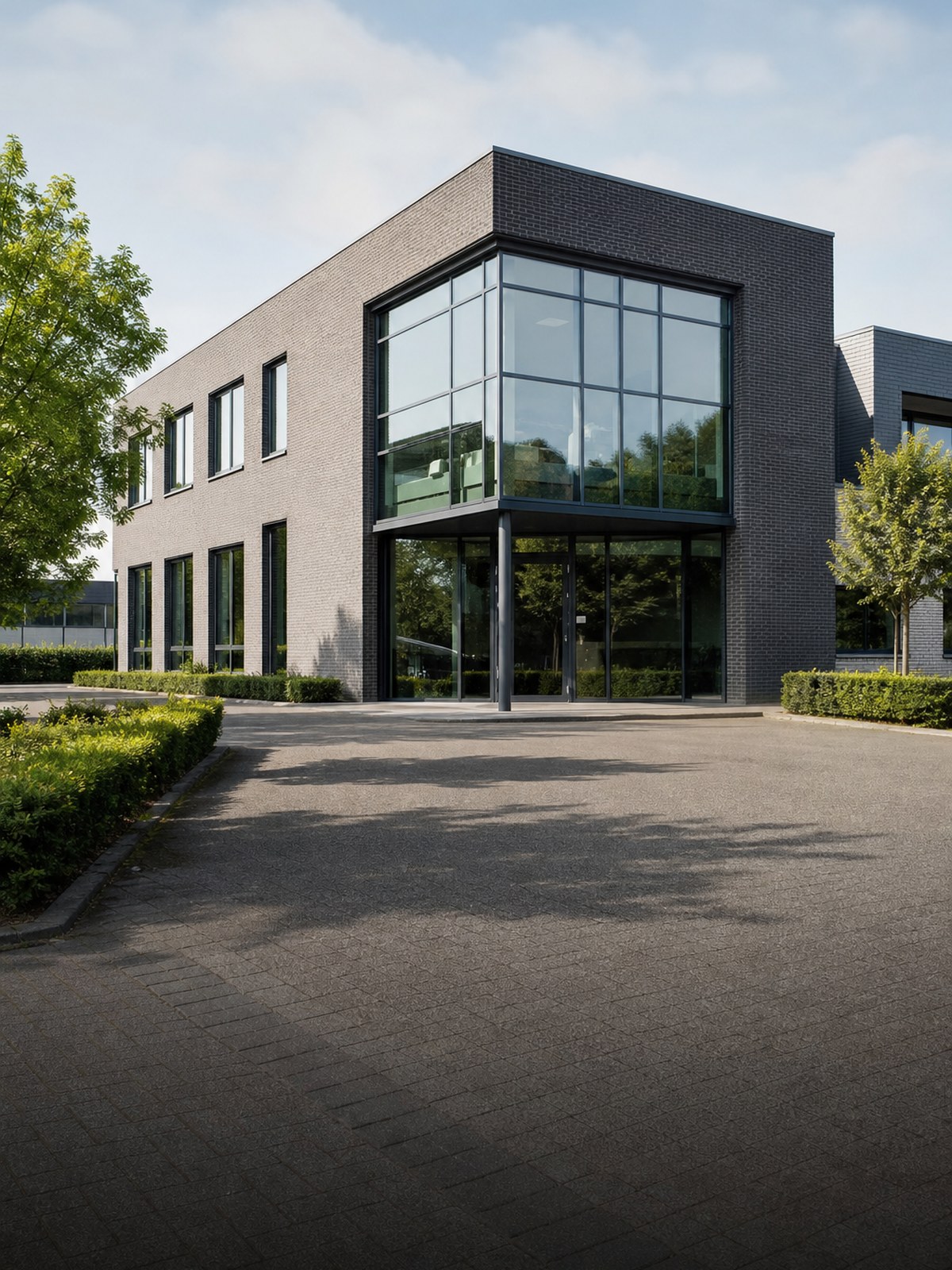 Commercial buildings insurance
 Compare
 Get covered
Why arrange it through Finass Verzekert?
We look at the terms as well as the premium, and stay your point of contact when there is a claim.
Independent
We are not tied to one insurer and compare on the basis of an objective analysis of several companies.
One fixed adviser
You call or email someone who knows your file. No menu options, no changing call centres.
Switching without hassle
We cancel your old policy and align the start date, so you are never a day without cover.
Help with claims
We report the claim and monitor how it is handled. In urgent cases you can reach us on the emergency line.
What to look out for
Four points that arise as soon as business premises have more than one occupier.
Record who insures the tenant's improvements
Many leases state that the tenant insures their own installations, but that is never checked. If the building burns down, the tenant claims from the owner after all. Set out in the lease who insures what and ask for a policy schedule each year. That prevents a fit-out paid for by the tenant turning out to be insured by nobody.
Glass and installations are separate sections
Breakage of glass in facades, frontages and internal walls is by no means always included in buildings cover, certainly not for large shop windows or laminated glass. The same applies to internal damage to lifts, refrigeration or air conditioning plant. Those are products in their own right; see the glass insurance and the machinery breakdown insurance.
The tenant's use determines your risk
An office building where part is let to a bar or restaurant, or a workshop with a spray booth, is a different risk from the premises you declared. You are obliged to report a change in use; if you do not, the insurer can rely on Articles 7:928 and 7:930 of the Dutch Civil Code and limit payment. Include an obligation to report a change of use in the lease.
What is not included
Excluded are deferred maintenance, inherent defect, subsidence and foundation damage, vermin and slowly penetrating damp. Loss of rent after a fire is not covered by the buildings section either: you insure that as business interruption or loss of rent cover. And damage caused deliberately is not covered under Article 7:952 of the Dutch Civil Code, not even where a third party acted deliberately without your knowledge.
What does your premium depend on?
- Rebuild value and indexation: the basis for the premium and for underinsurance
- Number of occupiers and their activities: mixed use raises the fire risk
- Construction, year of build and roof: masonry with a hard covering is viewed more favourably
- Glass included: area and type of glazing
- Security and fire prevention: detection, extinguishers and compartmentation
- Excess and claims history: often set separately for storm and water
Insurers weigh these details differently. That is where your saving is.
What is covered on the business premises
| Situation | Extended | Comprehensive |
|---|---|---|
| A fire in the staff restaurant also damages the floor above | Yes | Yes |
| Graffiti sprayed across the whole front elevation at the weekend | No | Provided that |
| Your tenant's forklift goes straight through a load-bearing internal wall | No | Yes |
| A blocked gutter lets rainwater run down the inside of the building | No | Provided that |
| In a burglary, the back door and its frame are forced open | Yes | Yes |
| A sprinkler pipe bursts in a warehouse the tenant left unheated | No | Provided that |
Where damage is caused by a tenant, the question of who ultimately bears the bill remains a matter for the lease, even where the insurer pays first.
Frequently asked questions
This is what people ask us most.
Who insures the fit-out my tenant paid for?
In principle the tenant, through tenant's improvements cover. Your buildings policy covers the shell as declared at the outset. If nothing has been agreed and the fit-out has become part of the building structurally, an argument arises about whether it still counts as tenant's improvements. Set it down in writing when the fit-out is completed.
Am I liable as owner for a defect in the premises?
Yes, you may be. Article 6:174 of the Dutch Civil Code places liability with the possessor of the structure where the building does not meet the standards that may be expected of it and thereby creates a danger. Negligence need not be involved. Buildings insurance does not pay those claims. For them you need liability cover on which the owner's interest is insured.
Will I be paid the rent if the premises are unusable?
Not from the buildings cover itself. Loss of rent is a separate section or a business interruption cover, with an indemnity period matched to the rebuilding time. Without that section the mortgage runs on while no rent comes in. Set the period realistically: permits and rebuilding together take considerably longer than the repairs themselves.
What if part of the premises stands empty for a while?
Report it. Vacancy changes the risk of burglary, vandalism, frost damage and arson, and many policies restrict cover to fire, storm and lightning after a period stated in the conditions. By reporting the vacancy and recording prevention arrangements — inspection rounds, a locked meter cupboard, water drained down — you keep the cover as wide as possible.
Every situation is different. For these situations we have a separate page.
- Buildings insurance (opstalverzekering) and commercial buildings insurance (gebouwenverzekering): the same or not?The main page
- Buildings insurance (opstalverzekering) for let propertyVacancy, loss of rent, owner's liability
- Commercial buildings insurance (opstalverzekering) when letting your premisesLoss of rent, vacancy, tenant's improvements
- Insurance for commercial buildingsRebuild value, tenants, vacancy
- Buildings insurance for businessesRebuild value, what counts as part of the building, clearing-up costs
- Buildings and premises insurance for propertyRebuild value, loss of rent, glass