

Commercial buildings insurance through Avéro Achmea
In a production or engineering business, fire usually starts inside: while welding, grinding, charging batteries, or in the electrical installation. That makes prevention a condition of cover, not a recommendation.
- Several insurers compared objectively
- 9.5 customer rating for a new policy
- AFM licence 12016589
- Personal 072 - 509 24 56, weekdays 9–17
This page in another language: Nederlands
Work out for yourself what it would cost.
Enter your details; you will receive a proposal within one working day.
- We compare the offerings of several insurers
- An adviser checks whether the cover suits your activities
- We arrange the switch, including cancellation
A premium indication, not personal advice. Prefer to talk it through? Call 072 - 509 24 56.
- Independent advice
- Several insurers
- Switching arranged
- Help with claims
In brief
Finass arranges cover from Avéro Achmea's commercial range. We are not tied to this insurer. We compare several insurers objectively and let the choice follow from how your premises are used. Business buildings insurance covers the building and its fixtures and fittings against fire, storm, lightning, burglary damage and water damage. Anything free-standing inside it is insured with business contents insurance. The general structure is set out on the buildings insurance.
In construction, engineering and industry, acceptance turns on what happens inside. Hot work, woodworking with extraction, spray booths, battery and forklift chargers, storage of plastics or oils and a large installed electrical load are all points of attention. Insurers translate that into clauses: periodic inspection of the electrical installation, a smoking ban, charging points on a non-combustible surface, separate storage and a minimum distance from the wall. Those clauses are conditions of payment.
Two misunderstandings come up repeatedly. The first: this is not liability insurance. If a facade panel falls on a visitor's car, you are liable as the possessor of a defective structure under Article 6:174 of the Dutch Civil Code, and that runs through the public and employers' liability insurance. The second: having the building back is not the same as having the business back. The period of shutdown is covered by business interruption insurance.
This page deals with one situation. The full overview is on Compare car insurance.
Independent, personal, sorted quickly
We compare your commercial buildings insurance across dozens of insurers, explain where the real differences lie, and arrange the switch from start to finish — without you having to chase it yourself.
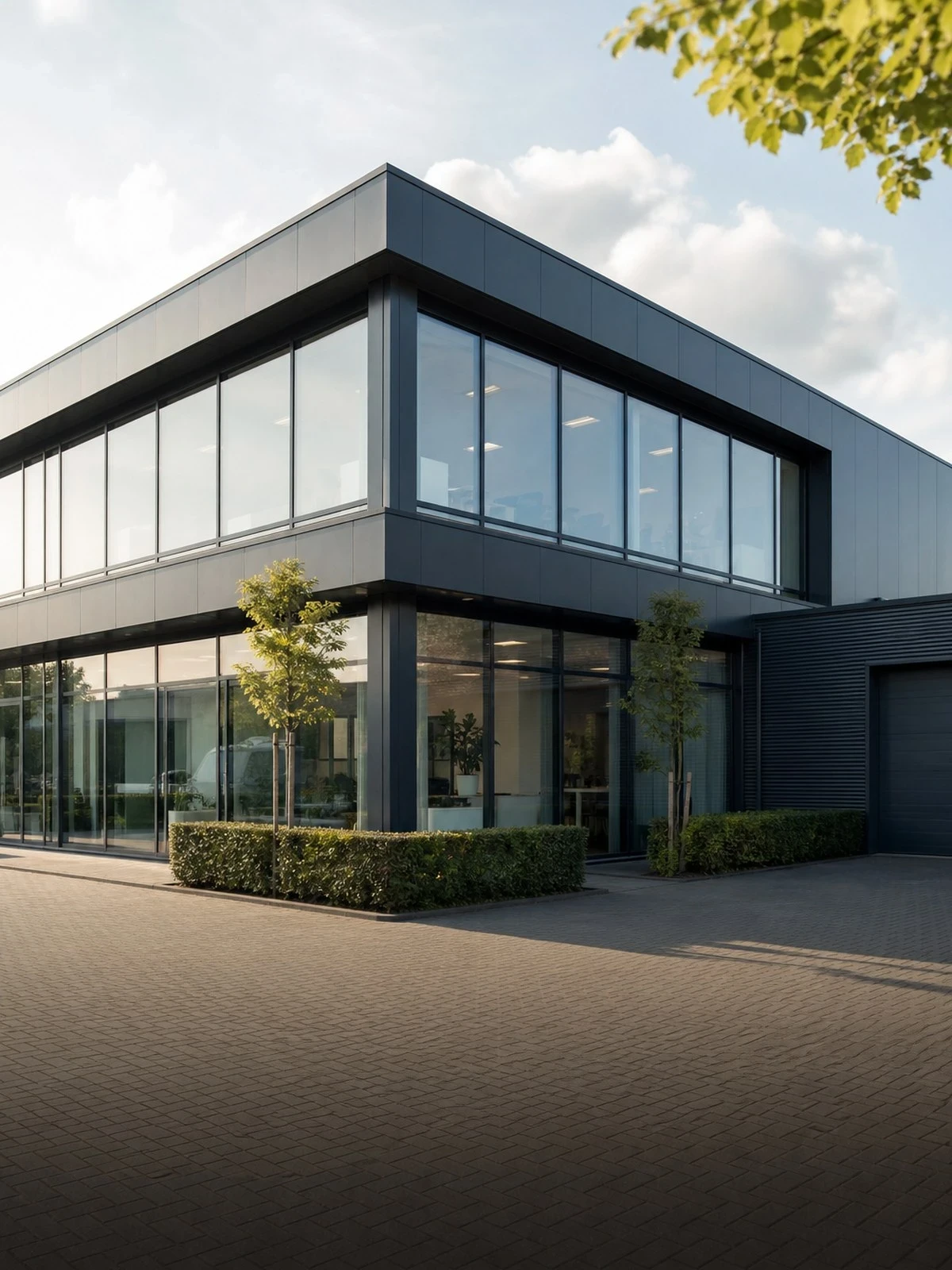 Commercial buildings insurance
 Compare
 Get covered
Why arrange it through Finass Verzekert?
We look at the terms as well as the premium, and stay your point of contact when there is a claim.
Independent
We are not tied to one insurer and compare on the basis of an objective analysis of several companies.
One fixed adviser
You call or email someone who knows your file. No menu options, no changing call centres.
Switching without hassle
We cancel your old policy and align the start date, so you are never a day without cover.
Help with claims
We report the claim and monitor how it is handled. In urgent cases you can reach us on the emergency line.
What to look out for
Four points that make the difference for business premises more often than the type of cover chosen.
Rebuild value, not market value
What is insured is what it costs to build the same premises again, including demolition, removal of debris and current building regulations. That is separate from what the premises would fetch. Work with a valuation the insurer accepts and an index that follows building costs. Without those two, underinsurance is almost certain in a major fire, and payment is then made proportionately.
Conversion, vacancy and change of use
If part of the building stands empty, if you sublet a unit, or if conversion work starts, the risk changes and usually the cover does too: with vacancy, cover often falls back to limited fire and storm cover. Report this in advance. Article 7:928 of the Dutch Civil Code requires correct information at the outset, and a change-of-risk clause governs what you must report during the term.
What is not a sudden event
Outside the cover are gradual action of damp and rising groundwater, construction and design faults, wear, subsidence and damage from flooding from a breached flood defence. Earthquake and landslip are excluded as standard as well. Damage arising during building or conversion work belongs on Construction all risks (CAR) insurance.
Solar panels, insulation and asbestos
Panels on the roof count towards the rebuild value and usually require an inspection and a certified installer. Sandwich panels with combustible insulation can lead to a higher rate or a refusal. If there is still asbestos-containing material in the roof, the remediation cost item is often dealt with separately and subject to a limit. After a fire that can be a large part of the bill.
What does your premium depend on?
- Construction type and roof covering: masonry with a hard roof covering is weighed differently from steel with plastic insulation
- Use of the premises: storage, production, paint shop or offices
- Fire prevention: compartmentation, extinguishers, sprinklers and detection
- Inspection of the electrical installation: often a hard clause on the policy schedule
- Rebuild value and index: the basis for premium and payment
- Sections included: glass, loss of rent, clearing debris and remediation costs
Insurers weigh these details differently. That is where your saving is.
What is covered
| Situation | Extended | Comprehensive |
|---|---|---|
| A fire in the spray booth spreading to the production hall | Yes | Yes |
| Roof sheets coming away from the unit in a force 8 wind | Yes | Yes |
| A forklift driven by your own employee hits a load-bearing column inside | No | Yes |
| Water damage because a blocked rainwater downpipe overflows | No | Provided that |
| Cable trays gnawed through by mice in the cavity | No | No |
| Failure of the solar panels through an internal fault in the inverter | No | No |
Comprehensive cover adds your own sudden accidental damage; anything gradual or failing from the inside stays outside both forms.
Frequently asked questions
This is what people ask us most.
What happens if the electrical inspection has expired?
If the inspection appears as a clause on the policy schedule, it is a condition of cover and not a recommendation. In a fire that started in the installation, the insurer can limit or decline payment. Build the inspection into your maintenance cycle and keep the report together with the findings resolved. That last part is what really matters when you claim.
Is damage to machinery included on the buildings policy?
No. Machinery and installations that are not fixtures of the building fall under the contents section. Internal breakdown or fracture of a machine is not fire damage either; machinery breakdown insurance exists for that. The line runs along the question of whether the item would go with you on a move; have that division recorded in advance to avoid double cover or gaps.
We let part of the unit. Does that change anything?
Yes. Use by a third party is an underwriting fact, particularly where that tenant carries out different activities or stores different goods from you. Report the name and the activity and make sure the tenant's liability is properly set out in the contract. If you want to protect the rental income when the premises are unusable after a fire, you insure loss of rent as a separate section.
What about environmental damage after a fire?
Contaminated firefighting water running into the soil, or asbestos fibres settling on neighbouring land, is not damage to the building. Remediation of your own and adjoining land belongs on environmental damage insurance, which is made for it. In both cases report the loss as quickly as possible; Article 7:941 of the Dutch Civil Code requires it and prompt action considerably limits the extent.
Every situation is different. For these situations we have a separate page.
- Buildings insurance (opstalverzekering) and commercial buildings insurance (gebouwenverzekering): the same or not?The main page
- a.s.r.'s buildings insurancePrevention, warranty clauses, fire safety
- Compare commercial buildings insuranceRebuild value, construction, fire prevention
- Buildings insurance for businessesRebuild value, what counts as part of the building, clearing-up costs
- Buildings insurance (opstalverzekering) for an industrial unitRebuild value, construction, prevention requirements
- Insurance for commercial buildingsRebuild value, tenants, vacancy
- Buildings and premises insurance for propertyRebuild value, loss of rent, glass