

Fleet insurance through a.s.r.
Few fleets consist of one type of vehicle. It is precisely that mix of cars, vans, trailers and equipment that determines what the contract looks like.
- Several insurers compared objectively
- 9.5 customer rating for a new policy
- AFM licence 12016589
- Personal 072 - 509 24 56, weekdays 9–17
This page in another language: Nederlands
Work out for yourself what it would cost.
Enter your details; you will receive a proposal within one working day.
- We compare the offerings of several insurers
- An adviser checks whether the cover suits your activities
- We arrange the switch, including cancellation
A premium indication, not personal advice. Prefer to talk it through? Call 072 - 509 24 56.
- Independent advice
- Several insurers
- Switching arranged
- Help with claims
In brief
Finass acts as an intermediary for a.s.r.'s business range. We are not tied to this insurer. We compare several insurers objectively and the choice follows from the make-up of your fleet. For individual vehicles, look at the business car insurance, for equipment at the agricultural machinery insurance and for heavy vehicles at the lorry insurance.
The starting point is a breakdown into categories. Cars, vans, lorries, trailers and semi-trailers each have their own rate and sometimes their own type of cover. Vehicles that have no registration or that never use the public road do not belong in the fleet but on an equipment policy. That classification is not an administrative formality: in the event of a loss it is checked whether the vehicle was in the right category, and a discrepancy touches on the duty of disclosure under Article 7:928 of the Dutch Civil Code.
Trailers and semi-trailers require separate attention. As long as a trailer is coupled, the third-party liability cover of the towing vehicle continues to apply; once uncoupled it stops and the trailer needs its own cover. The same applies to damage to the trailer itself. And, cargo is never part of a fleet insurance: your own goods are insured with an own-account carriage or goods in transit insurance, and clients' goods through carrier's liability.
This page deals with one situation. The full overview is on Compare car insurance.
Independent, personal, sorted quickly
We compare your van insurance across dozens of insurers, explain where the real differences lie, and arrange the switch from start to finish — without you having to chase it yourself.
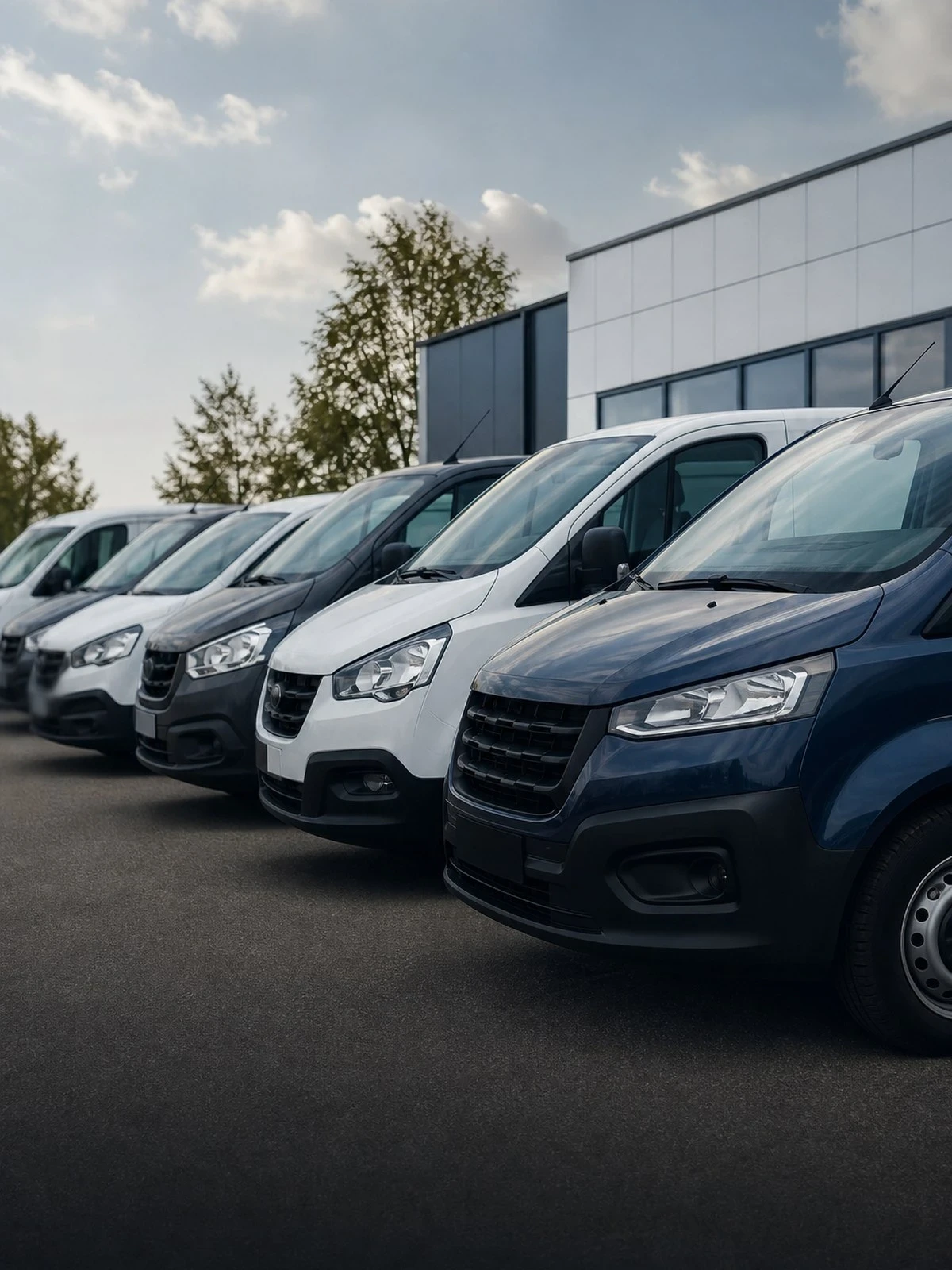 Van insurance
 Compare
 Get covered
Why arrange it through Finass Verzekert?
We look at the terms as well as the premium, and stay your point of contact when there is a claim.
Independent
We are not tied to one insurer and compare on the basis of an objective analysis of several companies.
One fixed adviser
You call or email someone who knows your file. No menu options, no changing call centres.
Switching without hassle
We cancel your old policy and align the start date, so you are never a day without cover.
Help with claims
We report the claim and monitor how it is handled. In urgent cases you can reach us on the emergency line.
What to look out for
Four points to consider with a mixed fleet.
Parking and theft prevention
Where the vehicles are parked overnight weighs heavily. An enclosed site with camera surveillance gives a different rate from vehicles scattered at employees' homes. If the parking arrangement changes, report it. In the event of theft the insurer checks the actual situation against what you declared, and Article 7:930 of the Dutch Civil Code can lead to a reduction in the payout.
Using the excess wisely
Within a fleet you can set the excess differently per category: low on vehicles with many small claims, high where you would bear the loss yourself anyway. Some contracts work with an annual maximum on excesses, which caps the cost of a bad year without pushing up the premium.
What is excluded
Outside the cover are load and tools, business interruption through downtime, wear and mechanical breakdown, and fines. Vehicles hired out to third parties or used to carry passengers for payment are not insured without a separate arrangement.
Drivers and entitlement to drive
With heavier vehicles it is not only the driving licence that matters but also professional competence: a missing code 95 or an expired licence costs you own-damage cover in the event of a loss and can make the third-party payout recoverable. Build a periodic check of driving licences into your procedures. It is the cheapest preventive measure there is.
What does your premium depend on?
- Number of vehicles per category: the basis of the rate
- List price and body: including permanent fitting-out and signwriting
- Storage and security: an enclosed site or the public road
- Area of deployment: regional, national or abroad as well
- Claims history per category: vans show a different pattern from cars
- Additional modules: legal expenses, breakdown assistance or a replacement vehicle
Insurers weigh these details differently. That is where your saving is.
What is covered
| Situation | Third-party liability | Comprehensive |
|---|---|---|
| An employee wrecks a customer's barrier with a pool car | Yes | Yes |
| Hail damages ten vehicles parked together on the company site | No | Yes |
| A van carrying your signwriting is stolen from outside an employee's home | No | Provided that |
| A trailer blows over while standing uncoupled on the site | No | Provided that |
| The tools that were in the stolen van | No | No |
| A car from the fleet is hired out for a weekend to a fellow business owner and is damaged | No | No |
The outcome depends per vehicle on the category it is listed under on the vehicle schedule.
Frequently asked questions
This is what people ask us most.
Can plant and machinery be included in the fleet?
Usually not. Forklift trucks, cranes, telehandlers and loading shovels fall under plant and machinery or agricultural machinery insurance, with their own cover for working with the machine. If the machine uses the public road, the insurance obligation under Article 2 of the Dutch Motor Insurance Liability Act (WAM) also applies. We make sure the two policies fit together so that no gap arises.
What about vehicles that are temporarily off the road?
You can have the registration suspended. The insurance obligation then lapses and so does the premium. The downside is that there is no longer any cover for fire or theft, not even on your own site, unless you arrange that separately. With a seasonal fleet, an arrangement for cover while parked is often better value than full suspension.
Are we insured when driving abroad?
Within the countries listed on the green card, yes. For regular journeys outside that area you make separate arrangements. Also pay attention to the liability limits: they differ by country, and for injury claims abroad the rules of the place of the accident apply. Report in advance which countries you visit regularly.
What happens in an accident in which an employee is injured?
Third-party liability cover protects the other party, not your driver if he caused the accident himself. As the employer you can still be liable under Article 7:611 of the Dutch Civil Code, which requires a proper arrangement for road use during working hours. A road traffic injury cover for staff fills that gap. It stands apart from the fleet contract.
Every situation is different. For these situations we have a separate page.