

Fleet insurance through Nationale-Nederlanden
With a fleet, the bonus-malus ladder disappears and your own claims burden takes its place. That changes what you should and should not claim for when there is damage.
- Several insurers compared objectively
- 9.5 customer rating for a new policy
- AFM licence 12016589
- Personal 072 - 509 24 56, weekdays 9–17
This page in another language: Nederlands
Work out for yourself what it would cost.
Enter your details; you will receive a proposal within one working day.
- We compare the offerings of several insurers
- An adviser checks whether the cover suits your activities
- We arrange the switch, including cancellation
A premium indication, not personal advice. Prefer to talk it through? Call 072 - 509 24 56.
- Independent advice
- Several insurers
- Switching arranged
- Help with claims
In brief
A fleet policy bundles all a company's vehicles under one agreement with one renewal date. The main difference from separate policies is how the premium is set: not the no-claims years per vehicle, but the claims burden of the whole fleet over a series of years determines the rate. A running series of small claims therefore costs you more at renewal than one large event. With light damage, work out whether claiming is worthwhile. That is a trade-off that hardly arises on a private policy. The general explanation is set out on the hub page on fleet insurance.
The second feature is the adjustment arrangement. Vehicles come and go, and the policy has to follow that without your having to obtain acceptance again for each vehicle. Agree within what period you register a new registration number and from what moment cover applies. A vehicle on the road that has not been registered is not insured, while Article 2 of the Dutch Motor Insurance Liability Act (WAM) does require the keeper to be insured. Suspended vehicles and trade plates also call for a separate arrangement.
The third point is the composition of the fleet. Cars, vans, trailers and self-propelled equipment do not automatically fall under the same policy. An excavator or forklift truck belongs on a plant and machinery insurance, heavy towing vehicles with the lorry insurance. Nationale-Nederlanden is one of the insurers with which a mixed fleet can be placed. We test category by category whether that is sensible.
This page deals with one situation. The full overview is on Compare car insurance.
Independent, personal, sorted quickly
We compare your van insurance across dozens of insurers, explain where the real differences lie, and arrange the switch from start to finish — without you having to chase it yourself.
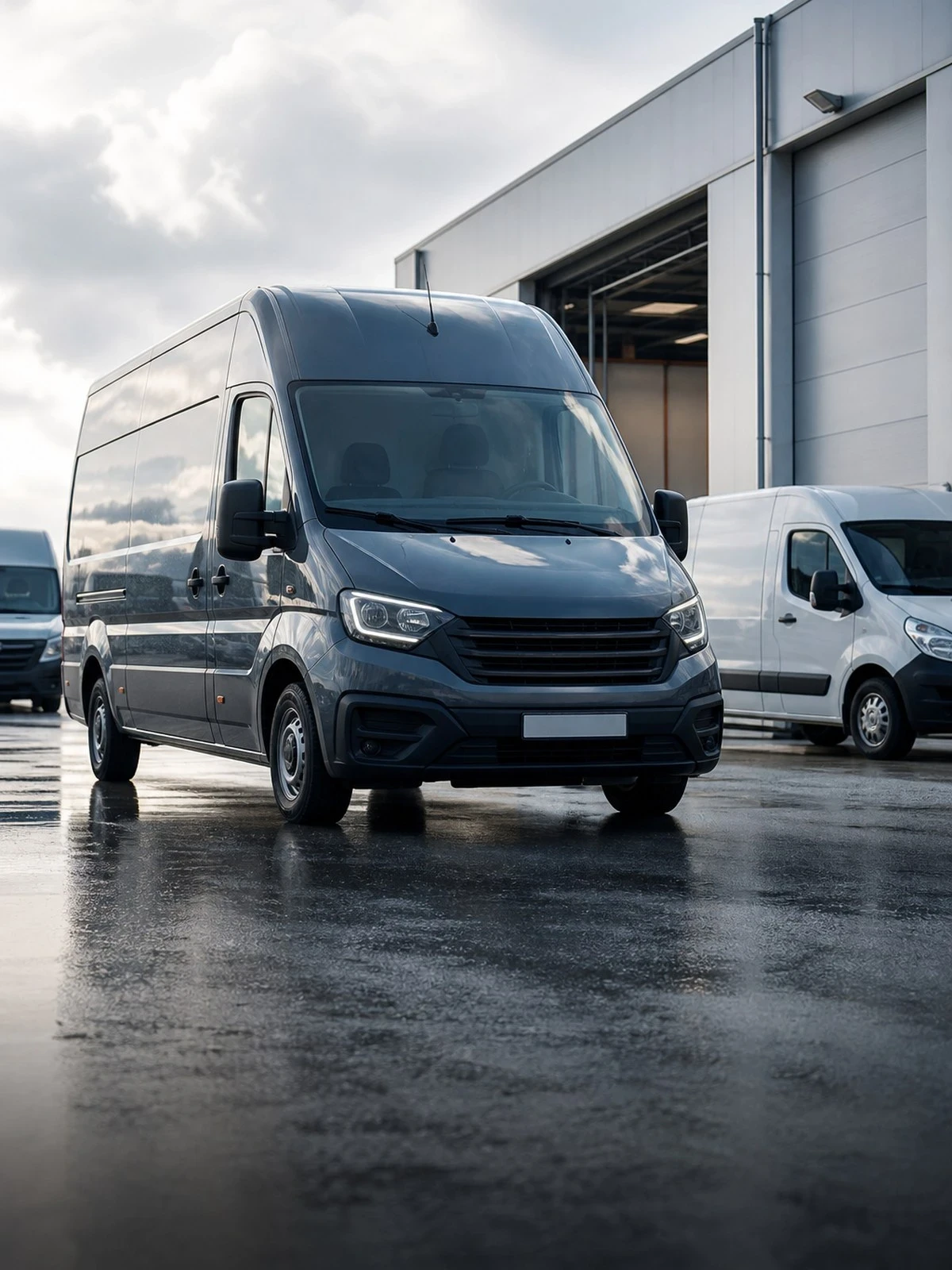 Van insurance
 Compare
 Get covered
Why arrange it through Finass Verzekert?
We look at the terms as well as the premium, and stay your point of contact when there is a claim.
Independent
We are not tied to one insurer and compare on the basis of an objective analysis of several companies.
One fixed adviser
You call or email someone who knows your file. No menu options, no changing call centres.
Switching without hassle
We cancel your old policy and align the start date, so you are never a day without cover.
Help with claims
We report the claim and monitor how it is handled. In urgent cases you can reach us on the emergency line.
What to look out for
Four arrangements to put in place before the first claim arises.
Claims burden instead of bonus-malus
Insurers review the rate periodically on the basis of the ratio between claims paid and premium paid. If it deteriorates, a premium increase, a higher excess or cancellation at the contract renewal date follows. So ask for insight into your own claims figures and for the formula by which the review takes place.
Adding and removing vehicles
Record how and within what period changes are notified and who does that within your organisation. A vehicle that has been sold but stays on the policy costs premium. A new vehicle that has not been registered costs cover. With suspension of the registration the insurance obligation does lapse, but the theft and fire risk remain as long as the vehicle is standing there.
Drivers and use
With changing drivers, the chance of an unauthorised driver is greater. Damage caused by someone without a valid driving licence is excluded and the amount paid to the other party is recovered from the driver. Also report any unusual use: delivery, hire and carriage for third parties are different risks from driving to and from projects.
Load, bodywork and trailers
The motor policy covers the vehicle, not what is in it or behind it. Goods carried belong on a goods in transit insurance or own goods in transit insurance. An uncoupled trailer that causes damage often falls outside the cover of the towing vehicle; check whether trailers are separately listed on the policy.
What does your premium depend on?
- Number and type of vehicles: cars, vans and trailers counted separately
- Claims burden over recent years: the main yardstick at renewal
- Cover chosen per category: third-party liability for older cars, own-damage cover for new ones
- Excess per event: a higher amount keeps small claims off the policy
- Driver policy: regular drivers, licence checks and instruction
- Operating range and use: regional work or journeys across Europe
Insurers weigh these details differently. That is where your saving is.
What is covered
| Situation | Third-party liability | Comprehensive |
|---|---|---|
| Break-in damage to the sliding door of a van after a night-time break-in | No | Yes |
| The tools that were in that same van and were taken | No | No |
| An employee reverses into a customer's gate and wrecks it | Yes | Yes |
| Hail damages ten cars parked next to each other on the company site | No | Yes |
| A pool car that an employee uses privately at the weekend is damaged | Provided that | Provided that |
| The leasing company claims the outstanding balance after a car is written off | No | No |
Every registration needs third-party liability cover; own-damage cover you choose per vehicle, and what is in or behind the vehicle falls under neither.
Frequently asked questions
This is what people ask us most.
From how many vehicles can I get a fleet policy?
Every insurer applies its own lower limit, usually expressed as a minimum number of registrations. Below that limit you continue with separate policies or with a collective policy on which the vehicles are listed individually. What you mainly gain with a fleet is administrative calm: one contract, one renewal date and changes without a fresh acceptance procedure per vehicle.
Is it worth paying small claims yourself?
Often it is. Because the rate moves with your claims burden, every claim paid feeds through into the renewal premium. Set the repair costs against the excess and the expected effect on the premium. Do always report the event, even if you do not claim: Article 7:941 of the Dutch Civil Code requires notification, and another party may still come to you later.
What happens if a vehicle has not been registered?
It is then being driven uninsured, unless the policy provides provisional cover for newly acquired vehicles within an agreed period. Without that clause you run up against Article 2 WAM: the keeper is required to be insured, and in the event of a claim the injured party is helped through the Waarborgfonds Motorverkeer, after which the costs are recovered from you. Put the registration deadline in writing.
Is injury to our drivers insured as well?
Not through the motor policy. Third-party liability cover is there for the other party and own-damage cover only for the vehicle. For injury to your own staff during working hours, the employer's obligations under Article 7:658 of the Dutch Civil Code and the case law on road use apply. You cover those risks through WEGAS or WEGAM.
Every situation is different. For these situations we have a separate page.