

Business car insurance through a.s.r.
With a company car, a claim is rarely just about the vehicle. The fit-out, the signwriting and the items inside determine what you are really out of pocket.
- Several insurers compared objectively
- 9.5 customer rating for a new policy
- AFM licence 12016589
- Personal 072 - 509 24 56, weekdays 9–17
This page in another language: Nederlands · Deutsch
Work out for yourself what it would cost.
Enter your details; you will receive a proposal within one working day.
- We compare the offerings of several insurers
- An adviser checks whether the cover suits your activities
- We arrange the switch, including cancellation
A premium indication, not personal advice. Prefer to talk it through? Call 072 - 509 24 56.
- Independent advice
- Several insurers
- Switching arranged
- Help with claims
In brief
Finass acts as a broker for a.s.r.'s commercial general insurance. We are not tied to this company. We compare several insurers objectively and choose on the basis of the cover you need. If you run a van, the business van insurance is often the right form. For a larger fleet, look at the fleet insurance.
The point that most often goes wrong with commercial vehicles is the value. A vehicle with a fixed fit-out, racking, an inverter, refrigeration, a roof rack or full signwriting is worth more than the registration document suggests. Those modifications are only insured if you declare them when you apply, with their cost. If you do not, a total loss is settled at the bare market value and you pay for fitting out the replacement vehicle yourself. A second detail: for a VAT-registered business, claims are usually settled excluding VAT, because you can reclaim it. Bear that in mind when you compare the settlement with a new purchase price.
What the policy not do is just as important. Tools, stock and equipment in the vehicle fall outside car insurance and belong on tools or business contents cover. If you carry other people's goods, that is a matter for a goods in transit insurance or, where you carry goods under contract, for carrier's liability. And standing still costs turnover: business interruption caused by the vehicle being off the road is no part of the car policy.
This page deals with one situation. The full overview is on Compare car insurance.
Independent, personal, sorted quickly
We compare your car insurance across dozens of insurers, explain where the real differences lie, and arrange the switch from start to finish — without you having to chase it yourself.
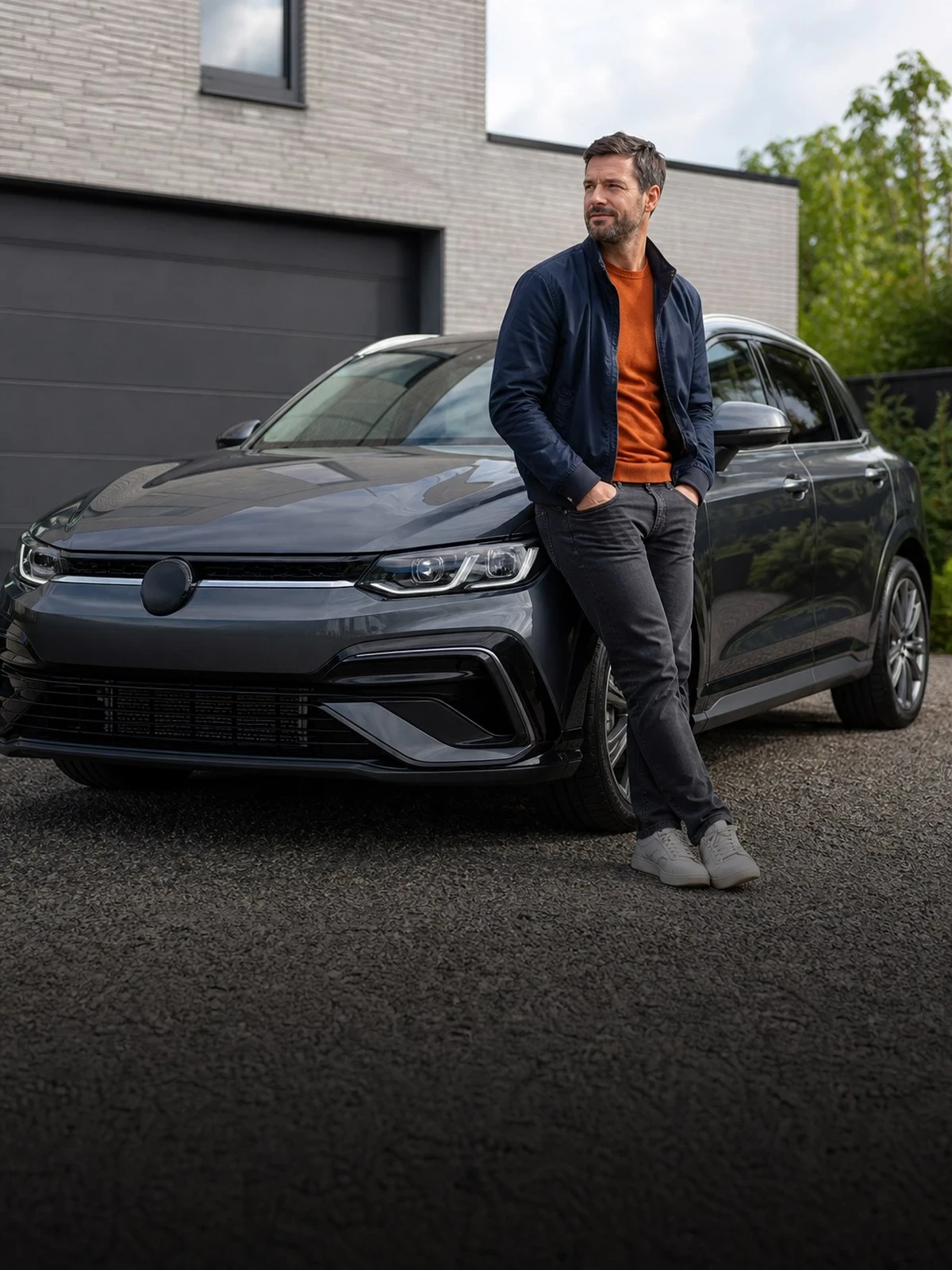 Car insurance
 Compare
 Get covered
Why arrange it through Finass Verzekert?
We look at the terms as well as the premium, and stay your point of contact when there is a claim.
Independent
We are not tied to one insurer and compare on the basis of an objective analysis of several companies.
One fixed adviser
You call or email someone who knows your file. No menu options, no changing call centres.
Switching without hassle
We cancel your old policy and align the start date, so you are never a day without cover.
Help with claims
We report the claim and monitor how it is handled. In urgent cases you can reach us on the emergency line.
What to look out for
Four elements where a commercial car policy differs from a private one.
Commercial vehicle registration and fit-out requirements
A commercial vehicle registration carries tax and technical requirements for the load space. If you convert it to carry passengers or fit an extra row of seats, the vehicle changes category. Report it: Article 7:928 of the Dutch Civil Code requires full disclosure, and after a claim the insurer will check whether the vehicle was still as declared.
Trailer, semi-trailer and coupled equipment
The towing vehicle's third-party cover continues as long as the trailer is coupled. Once it has been uncoupled and come to a stop, that cover ends. There is no cover at all for damage to the trailer itself. That needs its own cover, certainly for a trailer carrying plant and machinery.
Damage to the load and to third parties
If the load falls from the vehicle and causes damage, that is a traffic risk that can fall under WAM cover. Damage to the the load itself is never covered, and damage to goods you carry for a client runs into the care, custody and control exclusion on your liability insurance.
Standard exclusions
There is no cover for driving under the influence, driving without a valid licence, hire or paid transport without agreement, or for intent (Article 7:952 of the Dutch Civil Code). Wear, mechanical failure and damage from the wrong fuel remain outside own-damage cover, as do fines and additional tax assessments.
What does your premium depend on?
- Type and weight of the vehicle: car, van or something heavier
- Value including fit-out: conversion, signwriting and fixed equipment
- Sector: construction, installation or services each have their own claims figures
- Overnight storage: on secure premises or in the street
- Claims record: registered in the name of the business
- Additional modules: motor legal expenses cover, breakdown assistance or a replacement vehicle
Insurers weigh these details differently. That is where your saving is.
What is covered
| Situation | Third-party liability | Comprehensive |
|---|---|---|
| Your member of staff fails to see a cyclist and the cyclist is injured | Yes | Yes |
| Reversing on a customer's premises, your member of staff damages a parked car | Yes | Yes |
| A stone chip cracks the windscreen of the company car | No | Yes |
| While manoeuvring, your member of staff dents the tailgate against a loading bay | No | Yes |
| Someone scores the side of the car overnight on a public road | No | Yes |
| Theft of the company car from an unattended car park | No | Provided that |
Third-party, fire and theft sits between these two forms: fire, theft and glass damage are included, but not damage your member of staff causes.
Frequently asked questions
This is what people ask us most.
Is a claim settled with or without VAT?
If you are VAT-registered, settlement is usually exclusive of VAT, because you can reclaim the VAT on the repair invoice. If your business is exempt or the vehicle carries no right of deduction, settlement is inclusive of VAT. Declare your status when you apply; that avoids an unpleasant difference at the moment you have to pay the bill.
Are the vehicle graphics covered as well?
Only if you declared it when you applied and its value was taken into account. Full signwriting or a wrap is a real cost when repairing after a collision. Without a declaration, the market value and the repair are both based on an unmarked vehicle, and you pay to have it reapplied yourself.
What if the car is also used privately?
In insurance terms that is usually not a problem, provided it was declared when you applied. What matters more is the agreement with the user about the excess and damage outside working hours. Without a written agreement you can rarely recover damage, because Article 7:661 of the Dutch Civil Code limits an employee's liability to intent or wilful recklessness.
Do I need motor legal expenses cover?
If you have a collision with another party who will not cooperate, you have to recover your loss yourself. A motor legal expenses module arranges that, including the cost of an expert and any court proceedings. Without that module you bear those costs yourself, even if you are entirely in the right. See also the business legal expenses insurance.
Every situation is different. For these situations we have a separate page.
- Compare car insuranceThe main page
- Business car insurance for a company vehicleFitting-out, tools, load
- Business car insuranceRegistration, staff behind the wheel, duty of care
- Car insurance for the Mercedes-Benz GLCBusiness ownership, VAT, payment in cash
- Car insurance for the Citroën BerlingoCommercial registration, load and fitting out, staff