

Business lorry insurance through a.s.r.
Insuring a truck means arranging three things at once: the vehicle, your client's load and the driver behind the wheel. The own-damage policy covers only the first of these.
- Several insurers compared objectively
- 9.5 customer rating for a new policy
- AFM licence 12016589
- Personal 072 - 509 24 56, weekdays 9–17
This page in another language: Nederlands
Work out for yourself what it would cost.
Enter your details; you will receive a proposal within one working day.
- We compare the offerings of several insurers
- An adviser checks whether the cover suits your activities
- We arrange the switch, including cancellation
A premium indication, not personal advice. Prefer to talk it through? Call 072 - 509 24 56.
- Independent advice
- Several insurers
- Switching arranged
- Help with claims
In brief
Finass acts as an intermediary for the transport range of a.s.r. and of more than thirty other companies. We are not tied to one insurer. The choice follows from your journeys, your load and your fleet. For the truck itself, the insurance requirement under Article 2 of the Dutch Motor Insurance Liability Act (WAM)applies. The related products are the carriers' liability insurance and the own goods in transit insurance.
The most persistent misunderstanding is that the load is covered along with the lorry. It is not. Goods belonging to a client that you carry for payment fall under your carriers' liability, with the AVC conditions for domestic carriage and the CMR Convention for international carriage as the framework. Those regimes have their own limits and their own time bars, which have nothing to do with the limits on your motor policy. If you only carry your own equipment and machinery, that is not a carrier's risk but own-account transport.
The third component is the driver. The liability cover protects the other party, not your own driver who caused the accident. As an employer you have a duty of care under Article 7:658 of the Dutch Civil Code, including towards hired-in drivers under the fourth paragraph. There is separate cover for injury in traffic; see WEGAS and WEGAM. For the wider liability picture, look at the transport business.
This page deals with one situation. The full overview is on Compare van insurance.
Independent, personal, sorted quickly
We compare your truck insurance across dozens of insurers, explain where the real differences lie, and arrange the switch from start to finish — without you having to chase it yourself.
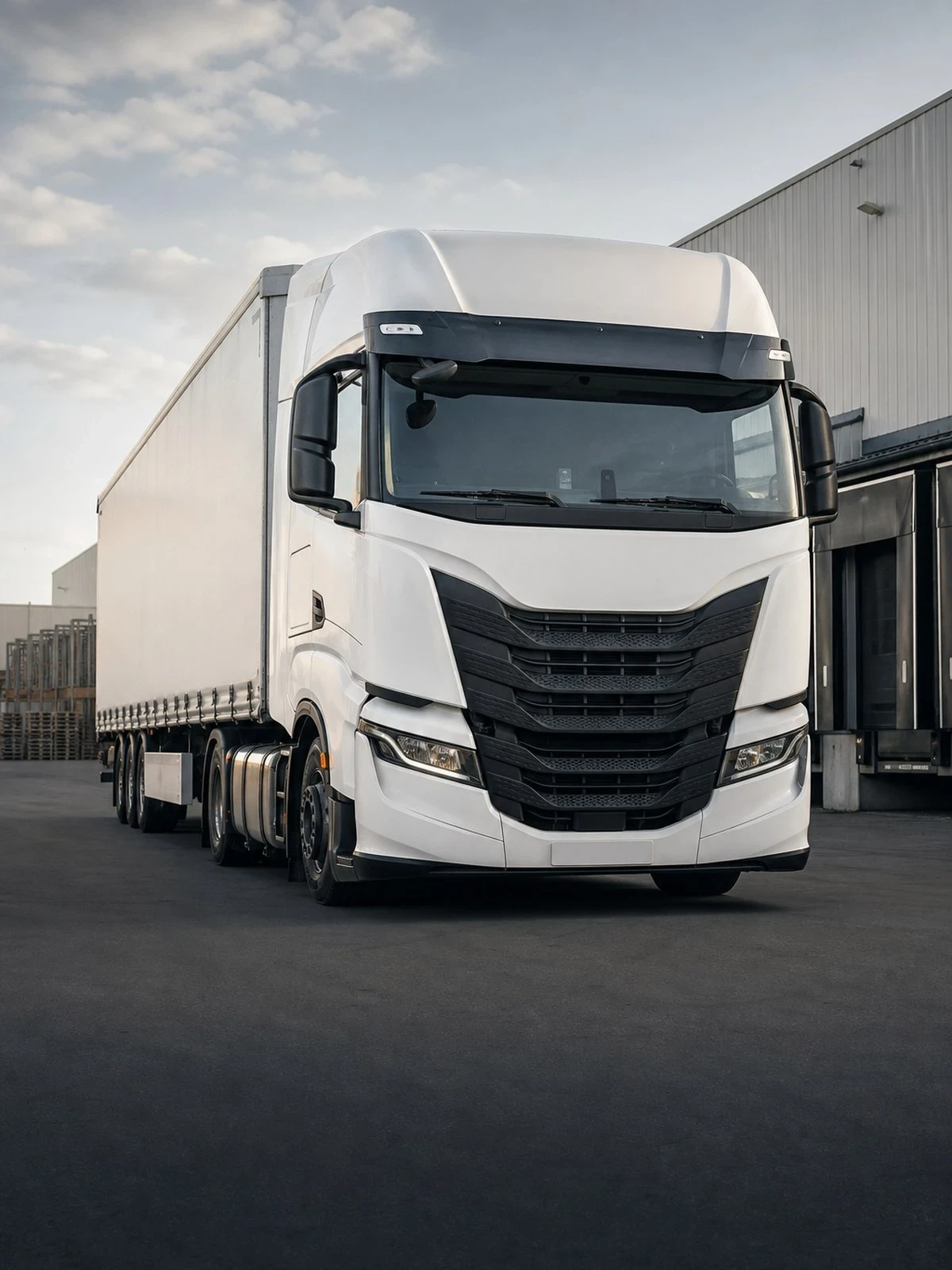 Truck insurance
 Compare
 Get covered
Why arrange it through Finass Verzekert?
We look at the terms as well as the premium, and stay your point of contact when there is a claim.
Independent
We are not tied to one insurer and compare on the basis of an objective analysis of several companies.
One fixed adviser
You call or email someone who knows your file. No menu options, no changing call centres.
Switching without hassle
We cancel your old policy and align the start date, so you are never a day without cover.
Help with claims
We report the claim and monitor how it is handled. In urgent cases you can reach us on the emergency line.
What to look out for
Four elements that work differently with heavy vehicles than with a van.
The tractor unit and the trailer are two objects
Each vehicle has its own registration number and its own cover. As long as the semi-trailer or trailer is coupled, it shares in the liability cover of the towing vehicle. Once it has been uncoupled and has come to a standstill, that cover ends and you need separate insurance. A trailer that rolls away or topples over on a yard is exactly the case in which this goes wrong.
The load is never on this policy
Truck insurance does not cover damaged, wet, spoiled or stolen goods belonging to a client, not even after a covered collision. Also, the AVC conditions and CMR apply liability limits per kilogram, so that you compensate your customer less than the goods are worth. If you carry valuable or temperature-sensitive loads, discuss additional goods in transit insurance.
Documents for driver and vehicle
If someone drives without the correct driving licence category or without a valid certificate of professional competence, that is an exclusion. The same applies to carrying dangerous goods without the required ADR documents and equipment, and to overloading. Record your checks of driving licences and certificates in your administration. After a large loss that is the first thing you will be asked for.
Loading, unloading and equipment on the vehicle
A lorry-mounted crane, tipper or tail lift is both a piece of equipment and part of the vehicle, and insurers assess damage involving them differently. If you damage a facade or a parked car while unloading, that is liability; if you damage the goods, it touches the carrier's cover. Free-standing equipment belongs on a plant and machinery insurance.
What does your premium depend on?
- Type of combination and weight: rigid lorry, tractor and semi-trailer or tipper are assessed separately
- Working area: domestic distribution work differs from international transport
- Type of load: dangerous goods, refrigeration and valuable goods weigh heavily
- Number and experience of drivers: frequent changes and hired-in staff increase the risk
- Overnight parking: a guarded site or the roadside makes a difference for theft
- Type of cover and excess: own-damage cover on heavy vehicles is a separate consideration
Insurers weigh these details differently. That is where your saving is.
What is covered
| Situation | Third-party liability | Comprehensive |
|---|---|---|
| You reverse into a concrete post and damage your own tail lift | No | Yes |
| The cab burns out while the lorry is parked on your business premises at night | No | Yes |
| A stone chips the windscreen during a journey | No | Yes |
| An uncoupled semi-trailer rolls across the yard and hits a parked car | No | No |
| The driver turns out not to have had a valid certificate of professional competence at the time of the collision | Provided that | No |
| A pallet belonging to your client is damaged in a collision for which you are covered | No | No |
With an unladen combination the pattern of losses is different from a laden journey. So have the form of cover assessed for each vehicle.
Frequently asked questions
This is what people ask us most.
Is the load covered by the truck insurance?
No. The motor policy covers the vehicle and liability towards third parties. Damage to goods you carry for a client runs through your carrier's liability under the AVC conditions or CMR, with their own limits. If you only carry your own equipment, that belongs on own-goods transit insurance. Without one of the two you pay for damage to the load out of your own pocket.
My semi-trailer is damaged while standing uncoupled on the yard.
The cover for the tractor unit will not help you. As soon as the semi-trailer has been uncoupled and has come to a standstill, it is on its own policy. So insure semi-trailers and trailers separately, even if they spend most of their time behind your own tractor unit, and pay attention to cover while parked at third-party premises.
Is a hired-in driver covered under our policy?
That depends on the definition of driver in the conditions. For liability cover, everyone driving with the policyholder's permission is usually insured, but requirements as to age and experience may apply. For injury to the driver themselves your duty of care under Article 7:658 of the Dutch Civil Code applies, including with hired-in staff; arrange separate traffic cover for that.
We also transport our own machinery to sites.
That is own-account transport and not carriage for hire and reward. The machine itself is not a load within the meaning of the motor policy and is not part of the vehicle either. Own-goods transit insurance covers the transport risk. The machine itself belongs on plant and machinery insurance, which also gives cover while it is in use at the site.
Every situation is different. For these situations we have a separate page.
- Insuring a lorryThe main page
- Lorry insurance through De GoudseTractor unit and semi-trailer, load, body
- Insuring a lorry for business useCarriage for hire and reward, drivers, liability
- Truck insurance through Vereende
- Lorry insurance for business useLoad, trailer, body
- Compare business lorry insuranceTractor unit and semi-trailer, the load separately, drivers
- Types of lorry insurance: which categories are there?Vehicle cover, load cover, liability
- Truck insurance through Turien & Co