

Insuring a holiday home through Turien & Co
With a holiday house on a park, it is not only your policy that determines what happens after a loss. The park rules, the construction type and the use you declare do at least as much.
- Several insurers compared objectively
- 9.5 customer rating for a new policy
- AFM licence 12016589
- Personal 072 - 509 24 56, weekdays 9–17
This page in another language: Nederlands
Work out for yourself what it would cost.
Enter your details; you will receive a proposal within one working day.
- We compare the offerings of several insurers
- An adviser checks whether the cover suits your situation
- We arrange the switch, including cancellation
A premium indication, not personal advice. Prefer to talk it through? Call 072 - 509 24 56.
- Independent advice
- Several insurers
- Switching arranged
- Help with claims
In brief
Through Turien & Co we can apply for holiday house insurance, among other things. This company runs its own product lines with its own conditions and clause sheet; which number of that sheet appears on your policy matters more than the brand name on the envelope. How the division of roles behind such a product line is arranged is set out under Turien & Co Assuradeuren. We set that line alongside what other insurers offer and choose on the basis of the property and the use.
With a holiday house the assessment starts with the construction type and the position regarding the land. A brick cottage on your own land, a timber chalet on rented land and a movable unit on a seasonal pitch do not get the same cover. If the unit stands on a park, the park owner insures only the communal facilities: roads, greenery, a reception building and sometimes the swimming pool. Your own cottage, the veranda, the store, the fence and the garden landscaping do not fall under it. Ask for the park rules and set out alongside your policy which parts belong to whom; that transition is exactly where claims fall between two stools.
The third point is the use declared. A holiday home is intended for recreational stays. If you live there permanently, let the cottage out in the weeks you are not there, or let family use it for a payment, the situation differs from what is on the application form. That is a circumstance you must declare under Article 7:928 of the Dutch Civil Code; concealing it can, under Article 7:930 of the Dutch Civil Code, lead to a reduced payout or to refusal. Separate conditions often apply to a chalet; see chalet insurance and chalet buildings insurance.
This page deals with one situation. The full overview is on Compare holiday home and chalet insurance.
Independent, personal, sorted quickly
We compare your holiday home insurance across dozens of insurers, explain where the real differences lie, and arrange the switch from start to finish — without you having to chase it yourself.
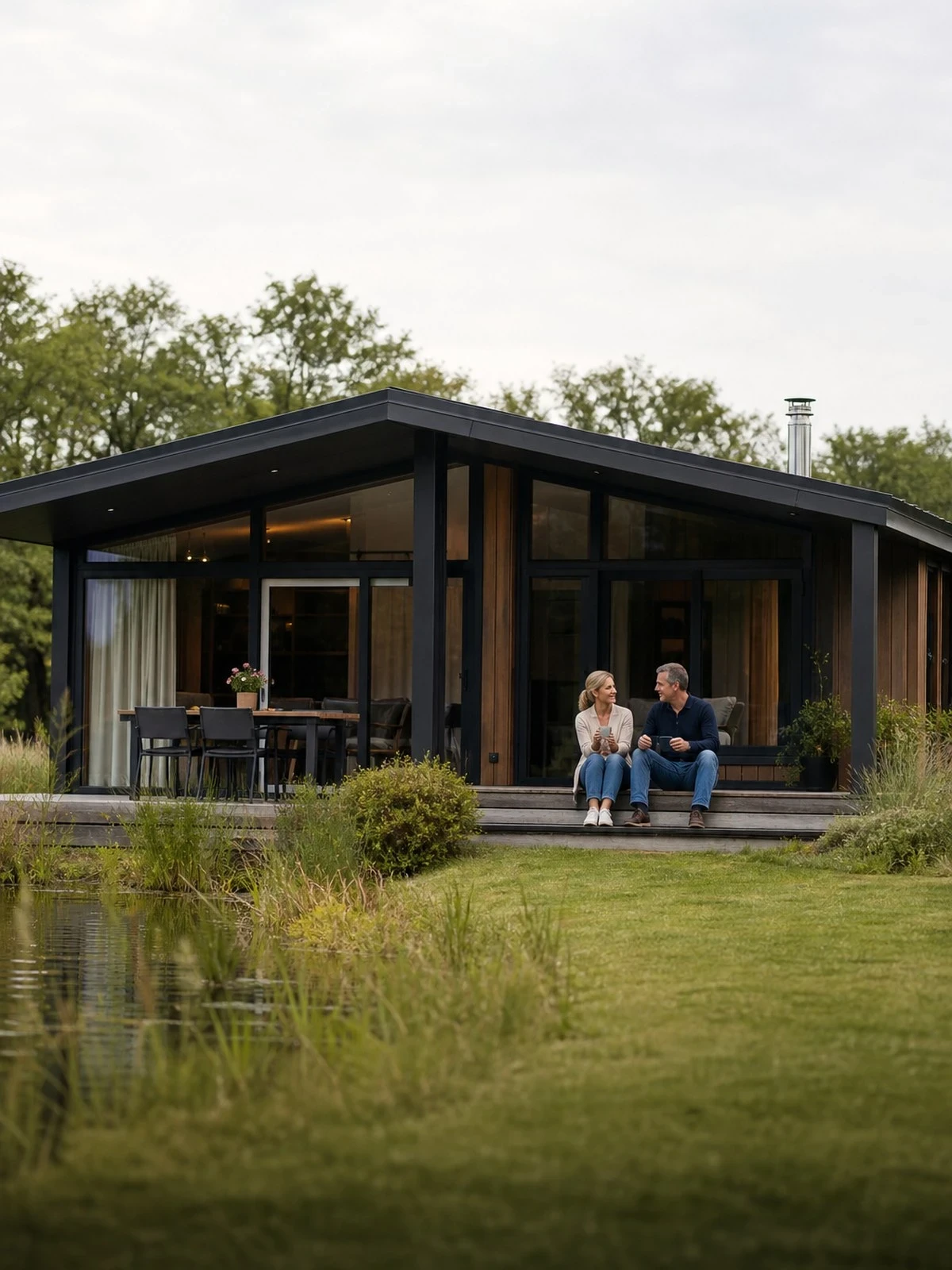 Holiday home insurance
 Compare
 Get covered
Why arrange it through Finass Verzekert?
We look at the terms as well as the premium, and stay your point of contact when there is a claim.
Independent
We are not tied to one insurer and compare on the basis of an objective analysis of several companies.
One fixed adviser
You call or email someone who knows your file. No menu options, no changing call centres.
Switching without hassle
We cancel your old policy and align the start date, so you are never a day without cover.
Help with claims
We report the claim and monitor how it is handled. In urgent cases you can reach us on the emergency line.
What to look out for
Four points that determine the outcome of a claim with a holiday house.
What stands outside the cottage
A terrace canopy, log cabin, fence, hot tub, sun blind and garden furniture are the most common storm losses on a park, and at the same time the parts most often not insured. Have outbuildings and fixed outdoor facilities specifically named on the policy schedule. Loose garden furniture, parasols and trampolines are normally excluded from storm cover.
Storm, frost and the closed season
Storm damage is usually only paid above a wind force threshold and subject to an excess. In the winter period the cottage often stands empty: insurers then require the water pipes to be drained and the stopcock closed. Frost damage to pipes and the resulting water damage are not covered if that obligation has not been met.
Break-ins on a deserted park
Outside the season a park is an attractive target and there is little supervision. Theft cover presupposes traces of forced entry; without those signs, refusal follows. Limit the contents you leave behind, do not store electronics and tools in a timber shed, and check which requirements for locks and fastenings appear in your clauses.
Liability towards visitors
If a guest trips over a loose paving slab or decking gives way, you as owner are liable under Article 6:174 of the Dutch Civil Code. That is not damage to the building and so does not come out of this policy. Check whether your personal liability insurance covers the second address; where the property is let, personal cover is not sufficient in any event.
What does your premium depend on?
- Construction type: brick, timber frame construction or a movable unit
- Rebuild or replacement value: the basis on which payment is made
- Own land or rented pitch: partly determines which type of policy fits
- Location and park management: a managed site with supervision or an open plot
- Hours of use per year: the longer it is unoccupied, the heavier the conditions
- Contents and outbuildings included: with their own sums insured per item
Insurers weigh these details differently. That is where your saving is.
What is covered
| Situation | Buildings | Home contents |
|---|---|---|
| A birch tree blows over and knocks a hole in the roof of the cottage | Yes | No |
| Through that hole the rain comes in on the sofa and the rug | No | Yes |
| The fitted kitchen is blackened by a small pan fire | Yes | No |
| The television and the coffee machine disappear after the back door is forced | No | Yes |
| After a long power cut, the entire contents of the freezer are spoiled | No | Provided that |
| The terrace slabs on your rented pitch shift out of true through subsidence | No | No |
The rule of thumb is whether something is fixed to the cottage. That determines which section pays for the damage.
Frequently asked questions
This is what people ask us most.
Does the park already insure my cottage?
No. A park owner insures the communal facilities and his own buildings. Your holiday home is your property and your responsibility. The park rules often do contain an obligation to have buildings and liability cover of your own. Ask for the rules and check that the requirements set out in them also appear on your policy schedule.
May I live there permanently?
In insurance terms that is a different situation from a recreational stay, whatever the local authority thinks of it. Permanent occupation changes the risk and must be declared. If you do not declare it and damage occurs, the insurer can rely on Article 7:930 of the Dutch Civil Code and limit the payout. Enforcement by the local authority is moreover not an insured peril.
What is the difference from chalet insurance?
It lies in the nature of the property. A chalet or static caravan is usually movable property on a rented pitch and is insured on replacement value with its own list of perils. A holiday house permanently united with the ground is immovable and can be insured on rebuild value. Choosing the wrong form leads to argument about the insurable interest when you claim.
Where do I find what exactly is insured?
On the policy schedule and in the conditions and clauses referred to there. The clauses take precedence over the general conditions and contain the arrangements that matter with a holiday house: the obligation to drain the system, requirements for locks and fastenings, and the permitted use. If you receive an amended clause sheet at renewal, read it before you file it away.
Every situation is different. For these situations we have a separate page.
- Holiday home insuranceThe main page
- Insuring a holiday home privately through OOM VerzekeringenOwn use, winter shutdown, foundation risk
- Buildings insurance (opstalverzekering) for a holiday homeHoliday policy, letting, abroad
- Insuring holiday homes for business use through OOM VerzekeringenLetting, guest damage, loss of turnover
- Insuring a second home through HienfeldAbroad, standing empty, local requirements
- Insuring a holiday homeStanding empty, letting, park conditions
- Chalet insuranceHoliday home, pitch, standing empty
- Buildings insurance (opstalverzekering) for a static caravanNot a building, holiday unit, extensions